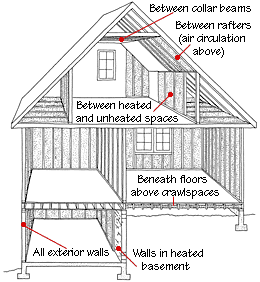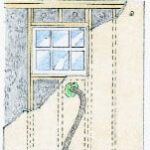
As discussed in this article, some forms of insulation can be installed by do-it-yourselfers, while others call for professional installation. You can see specifics in each of the pages listed.


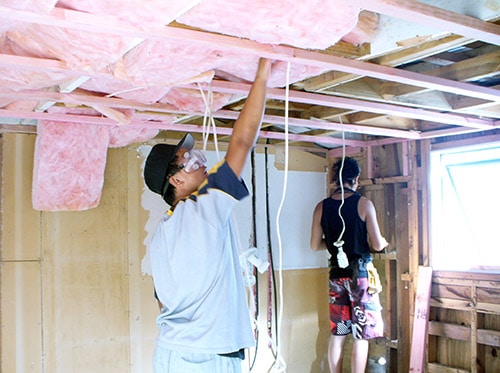
Before hiring a professional to insulate your home, get two or three bids. To compare apples with apples, be sure each bid clearly describes the material to be used and specifies the R-values that will be installed in each area of the house.
When the material arrives, bags should be labeled with R-value information; with loose-fill insulation, check to be sure the appropriate number of bags is installed.
Also talk with your contractor about both ventilation and moisture control. Ventilation is important to ensure your home’s air quality is maintained without unnecessary energy loss. And in most climates vapor barriers must be installed when you insulate to prevent vapor, naturally present in the air, from collecting inside insulated walls, ceilings, floors, and roofs. In most climates, a vapor retarder—such as the foil facing on batts and blankets or, with loose-fill, 6-mil polyethylene plastic sheeting—must be installed at the warm-in-winter side of the insulation. Existing walls that are filled with blown-in insulation can be coated with a low-permeability paint to repel vapor.
Last but not least, be sure to seal up all cracks and crevices that allow air infiltration, using caulking compound and weatherstripping. Doing so is key to capitalizing on the energy savings and comfort of your new insulation.
NEXT SEE: How to Insulate an Attic
Featured Resource: Find a Pre-Screened Local Home Insulation Contractor