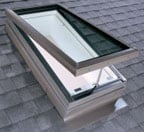
Skylights come in fixed and operable models. Most operable or “venting” skylights hinge at the top and open a few inches to allow air circulation.


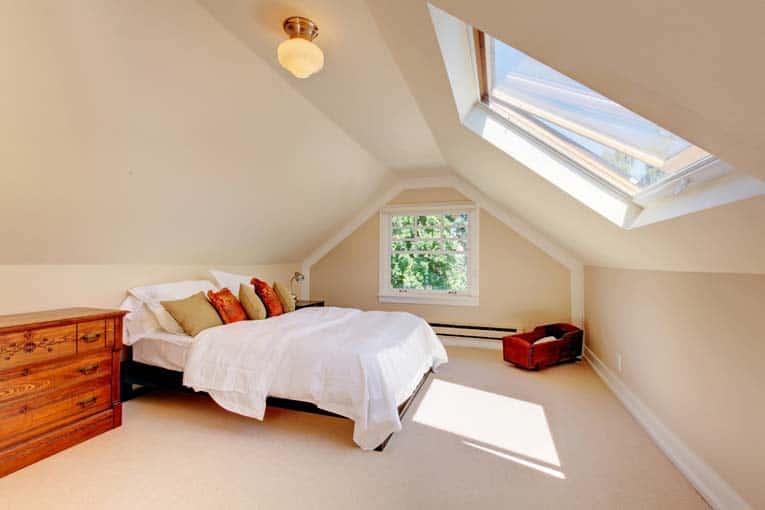
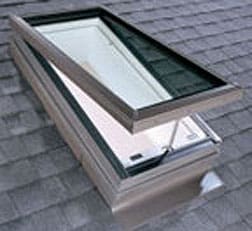
Skylights are wonderful for filling a space with natural light—but they can also create problems with heat build-up. As radiant energy from the sun pours in, it can make a room almost unlivable. That’s where operable skylights make sense. A skylight that opens can ventilate rising heat and provide fresh air, making the entire house more comfortable.
Though a venting skylight may cost about 40% more than a fixed one, it can make a terrific difference in summertime comfort.
Skylights vs. Roof Windows
Sky windows, also called roof windows, are quite different from standard operable skylights. They do more than ventilate. These are built similar to a window and pivot at the center. Meant for mounting in an attic room or similar location where you can reach them, these can be opened wide. In fact, you can pivot them all the way around for easy cleaning of the outside surface. Andersen has a similar product, called “Vent Tilt” that is essentially a venting skylight that you can rotate for cleaning.
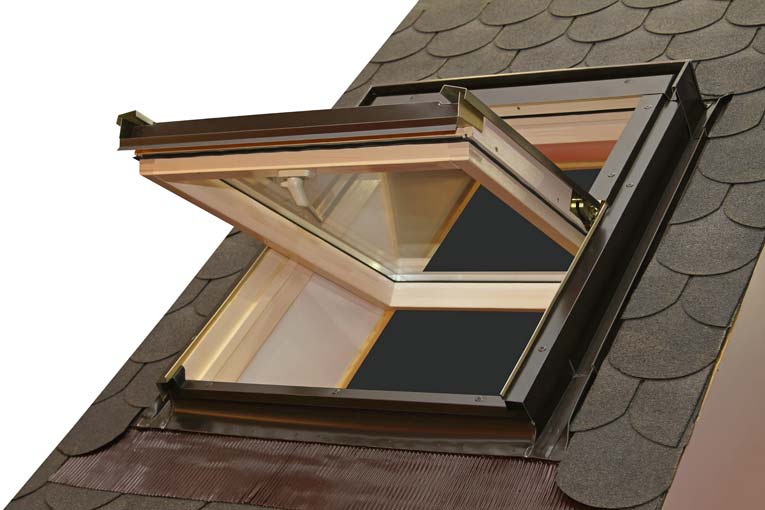
Is it a skylight or is it a roof window? Manufacturers apply different names to their products. Several manufacturers, such as Ventarama, use the term “skylight” to refer to both fixed and operable units. Some, such as Velux, call their fixed and ventilating models skylights and term pivoting units roof windows. Others, such as Benjamin Obdyke, refer to both fixed and operable skylights as roof windows. And still others have their own descriptive names, such as APC’s “Roof-Lights,” for example, for both operable and fixed skylights.
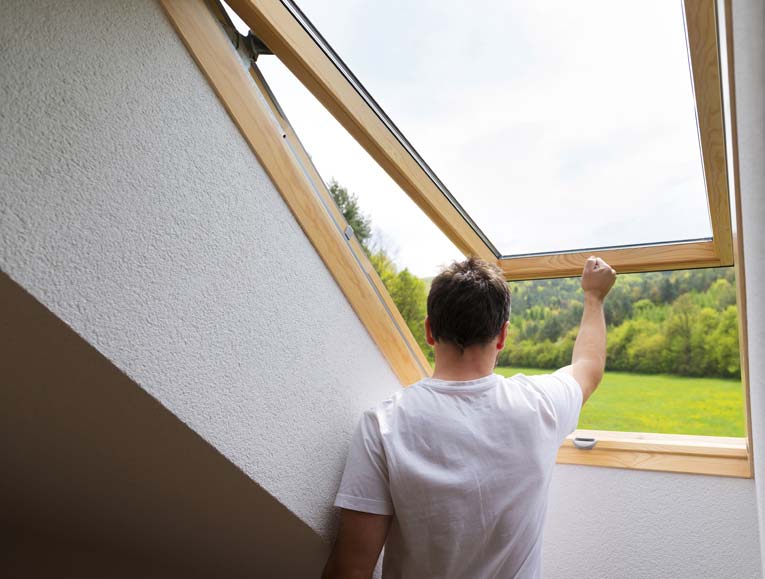
Operable Skylight Controls
Because most skylights are up out of reach, manufacturers provide several methods for opening them.
Manually-Operated Skylights
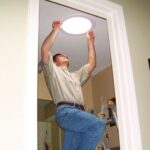
Basic manual-operating skylight models are an economical option for providing fresh air and natural light. They are opened and closed by hand in attic rooms or via an extension pole designed to be used in ceilings less than 15 feet high. Velux offers a battery-powered, motorized pole.
Motorized Skylights
Nearly all major manufacturers offer motorized operable skylights as an option. Controlled at a wall switch or by a hand-held remote, these cost a bit more than manually operated types and require routing electrical wires to the skylight, but they pay big dividends for skylights that are opened and closed frequently or that are well out of reach. A simple two-function model can be wired directly to a wall-mounted light switch. More complex models, including types with built-in shades and other features, can be controlled by a special wall console or even wireless remote control.
Automatic Skylights
The highest-end skylights can operate automatically. Velux and Milgard’s versions feature a rain sensor that automatically closes the skylight when it detects rain or moisture that would pose a threat to the interior space. In other sophisticated models, heat sensors can trigger the skylight to open when the room’s heat reaches a certain preset temperature. Some wireless remote controls can be programmed to operate the skylight at preset times.
ALSO SEE: