This expert, unbiased guide will help you buy the best storm doors or screen doors for your home. Includes information on types, construction, and combination storm-screen doors.

Storm doors block drafts in the winter, helping to minimize energy loss. Many have clip-in tempered glass panels you can remove and replace with insect screen panels for summer. In addition, storm doors protect the main door from rough weather, and newer models are so attractive they can add to your home’s curb appeal.
Following are the key factors to consider before buying a new storm door.
Sizes & Configurations
Both storm and screen doors come in standard door widths of 30, 32, 34, and 36 inches and may be hinged on either side. (When buying one, be sure you get the right size; measure the door’s opening between the door jambs, not the door itself.)

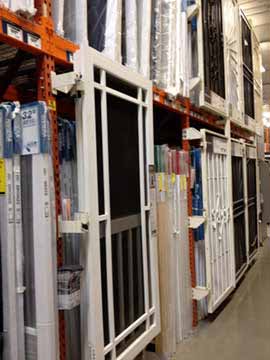
Most storm doors are sold as pre-hung units. They may be hinged on either side, and double-door kits are available. These pre-framed modules are relatively easy to screw onto existing door jambs; a do-it-yourselfer with reasonable skills can generally install one in an afternoon.
The major manufacturers also offer design-your-own-door programs, where you can mix and match components. Larson’s Designer Door series lets consumers pick the frame and its color and then choose from six styles of glass and six styles of designer hardware. You leave the store with three boxes: door frame, glass, and hardware. Both Cole Sewell and EMCO have similar programs.
Combination Screen & Storm Doors
Combination storm and screen doors are often made of metal or vinyl and sometimes of wood. In severe climates, a screen door is installed in the summer and swapped out for a glass storm door in the winter; some secondary exterior doors come with removable panels that can be changed with the season.
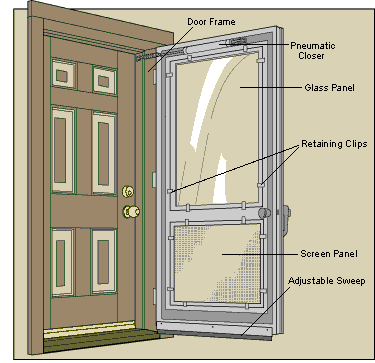
In cold-winter regions, storm doors minimize energy loss, block drafts, and add a small measure of security. They protect the prime (main) door and, when that door is open, allow more control of climate, ventilation, and light. They can also be helpful at keeping pests out and pets in. They may have two glass panels or an upper glass panel and a lower metal panel with a crossbar dividing the two. Screen doors may also have an upper screen panel and lower metal panel.
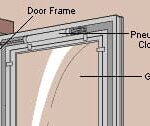
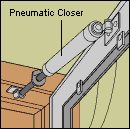
Storm and screen doors connect to their frames with hinges and have hydraulic or pneumatic closers that smoothly close the door. They may also have springs and chain stops that keep them from slamming shut or being pushed open with too much force.
But beyond practicality, the new combination screen and storm doors have great curb appeal.
The evolution of storm doors began several years ago, when the familiar aluminum mill finish gave way to white and dark brown. Then other colors—sand, almond, green—crept into the market.
After manufacturers took a major leap forward by offering colors, they began to look at ways of improving the overall look of storm doors, bringing about major changes in construction and decoration.
Visible screws are disappearing, materials are becoming more sophisticated, and a variety of options are entering the market. Now you can choose great-looking, durable doors with solid brass hardware, keyed deadbolt locks, and full-sized glass panels with etched, stained, beveled, or leaded glass, among other offerings.
Storm Door Windows & Screens
When choosing a storm door, one of your first choices will be the type and size of window and screen system. Many are made so that you can interchange the clip-in glass panels with insect screening. Some have panels that bypass each other in tracks. Still others are made so that the unused panel stores in the door. EMCO has a patented self-storing window that easily slides down inside the door, out of view.
A full-height glass panel is best if you want to display your front door or maximize light and views through the storm door. More common is the mid-view type of door that has a solid panel at the bottom third of the door; this gives you more ventilation control because you can open or close each section independently. A high-view door is similar, but the glazed section only extends to about half the door’s height.
Storm Door Construction
Another key consideration is the door’s construction. All major storm-door makers produce doors that have a solid-wood core clad with a permanently bonded skin of aluminum that has been given a baked-on enamel finish. The wood core makes these doors feel sturdy; they don’t twist, rattle, or dent. The aluminum surface is nearly maintenance-free but it can scratch.
A newer technology is a composite door called the Forever Ultra-Core, made by EMCO. The material is very tough, with a molded-through color, so if the door is scratched the color still remains. The door is also impervious to water. This door ranges in price from $155 to $190.
Larson also makes a 1 1/2-inch heavy-gauge foam-filled aluminum door called Classic View that is lighter in weight and allows for a full-frame glass panel—a good choice if you want to show off your prime door. If you want the storm door to be the main focus, it’s offered in eight colors. You can get it with any of several glazings and fitted with solid-brass levers and keyed locks. These doors cost from $200 to $250.
Vinyl-clad doors tend to be less expensive—in the $75 to $150 range. Some people like the fact that vinyl doesn’t rust and scratches barely show. On the other hand, vinyl doesn’t have the durable feel of aluminum cladding, and vinyl-clad doors are often warrantied for only five years or less.
If security is an important issue, you’ll want to opt for substance over style. Security doors often have a heavy-duty aluminum frame with a foam or solid-wood core. Choose heavy-gauge aluminum bars, designed to withstand pulling forces greater than 250 pounds or—better yet—steel bars that have been welded in place. Hinges and deadbolts should be tamper-proof.
Storm Door Buying Tips
Storm doors are sold through home centers, lumberyards, and major home improvement chains. You can also look up door and window companies online or in the telephone directory. In all but the warmest regions, large chains typically have a broad selection, often 20 to 25 models on display and then additional offerings through catalogs. Larson offers its entire line in a point-of-purchase display and promises delivery of special orders in two weeks or less.
How do you recognize a quality door? First, feel the door, and feel how it opens and closes. A quality door will have more heft, it will close more smoothly, and you will see quality of construction. The corners and moldings will be tight and finished looking. Also pay attention to the warranty; the best doors have a limited lifetime warranty.
If you know the brand of exterior door in your home, check to see if the manufacturer also provides a door kit for storms and screens. This is an especially good idea if you have a sliding or French door. The kit will match the design of the door and will fit properly over the threshold.