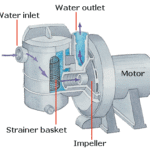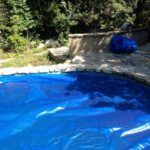
A pool’s so-called main drain is not actually a drain; that is, it is not used to drain the pool. Instead, it is an outlet, housing a pipe that runs to the pump, which sucks water through a skimmer, then through a filter, then through a heater (if you have one), and then back to the pool via multiple inlets. Most pools have two main drains, but a small pool may have only one. The drains are positioned at the pool’s deepest point.


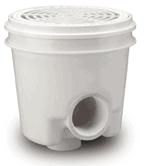
Safe Pool Drains
The pump can create significant suction at the drain. In most cases, having two main drains and at least two skimmers will lessen the suction so it cannot pull and hold a human body. However, hair on a person’s head can get caught in the drain, which can be quite painful. And it is not unusual for jewelry and other small objects to get trapped at the drain.
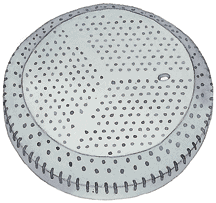
To help ensure against bodily harm, main drains are often topped with anti-vortex covers. They have a grid of closely spaced holes or slits to make sure a person’s hair and appendages will not get caught in the suction. Skimmers with equalizers—ports at their bottom that suck in water—should also be equipped with anti-vortex covers.
For additional safety, consider a safety vacuum release system, which automatically shuts the pump off when it senses something has become trapped.
Pressure-Relief Valve
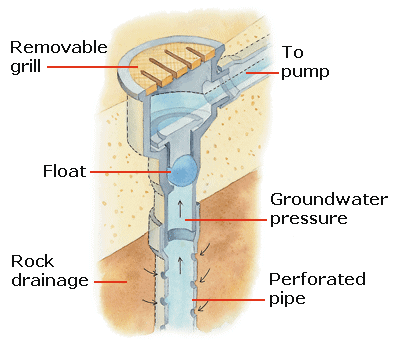
In many areas, there is natural groundwater several feet below the ground’s surface. If the pool’s bottom is below the water table, the groundwater will try to push up into the pool. Groundwater pressure can be strong enough to crack a concrete pool. However, when the pool is full, the water pressure is not nearly as strong as the water pressure of the pool water.
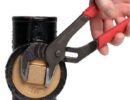
A pressure-relief valve is basically a ball in a housing. When the pool is full, the ball is pressed down to the bottom of the housing, keeping pool water from draining out. When the pool is drained, groundwater forces the ball up to the top of the housing. This allows groundwater to seep gently into the pool—definitely preferable to having it crack the pool.
Pool Inlets
The pump pushes filtered and treated water back into the pool through a number of inlets, also called jets. The narrow ports of the inlets create extra water pressure so the water is shot into the pool rather than merely flowing into it. This extra pressure helps distribute the chemical additives (and warmth, if the water is run through a heater) throughout the pool.