An expert guide on how to buy new or replacement windows for your home. Includes deciding whether new windows make sense.

If you are considering installing new windows in your home, this guide will help. It will walk you through the various types, materials, and styles so that you can make an informed choice about one of your home’s most important elements.
When it comes to a home’s comfort and energy usage, windows are critically important. Old, inefficient, leaky windows can make your home drafty and uncomfortable while wasting hundreds of dollars on heating and cooling costs every year. New windows, on the other hand, seal-in expensively conditioned air… and more.
Replacement windows can:
- Reduce energy costs (more about this below)
- Increase the resale value of your home
- Improve natural light and views in your home
- Improve comfort by reducing room temperature swings and drafts
- Improve home ventilation
- Block UV rays that can damage carpeting, floors, and furniture
- Improve security and safety
- Enhance a home’s beauty and design style
When you combine these benefits with the aging of today’s housing stock, you can see why window replacement has become very popular.
Is Window Replacement Really a Good Investment?
When you look at the list above, you can see many good reasons for replacing old windows with new ones. Whether or not window replacement makes sense for you monetarily may be another story.
Because replacing old windows with new energy-efficient windows is expensive, this project is often promoted as an investment. The theory is that you get your money back through increased home value upon selling and money saved through lower energy bills.
But before you accept this theory on face value, consider the following, beginning with this premise:
“Replacing all of your home’s windows with new windows should raise your home’s value.”
Is this premise true?
Yes, with one small caveat: Be sure to buy quality, energy-efficient windows that honor your home’s style and history.
Low-grade windows that don’t go with your house could actually detract from your home’s value. In other words, don’t put aluminum-framed sliding windows on a classic Craftsman house where divided-lite double-hung windows would be more in keeping with the style.
Will you get a full return on your investment upon selling?
No, you probably won’t. According to Remodeling Magazine’s 2020 Cost vs. Value study, complete window replacement with vinyl windows costs a national average of $17461. Upon resale of the home, this returns an average of $12,761—a 72% return on the investment (ROI). Wood window replacement returns an average of 69%. Because these values are meant for remodelers, they are tied to increased value based on a near-term sale of the house.
These numbers are national averages. The actual ROI varies considerably, based on region. In the west north central region, the ROI for wood window replacement is under 49% whereas the ROI in east south central region is above 82%.
Regardless of region, please note that these improvements don’t return as much as they cost. As an example, using averages and rounding off numbers, let’s say you spend $17,000 and get back $12,000 in value when you sell your home. Upon resale, you’re getting back $5000 less than your cost.
Then again, new windows throughout a house can add significantly to the perceived value of a home, both in terms of curb appeal and because of potential energy savings. This could get potential buyers excited and speed-up the sale of your home.
Will energy savings return your investment?
Eventually, but it may take a long time.
When you replace old windows with energy-efficient new ones, you can expect to reduce energy loss through windows by as much as 50%. This will save on a portion of your energy bills.
Figure about 30% of your home’s energy is lost through windows. As just stated, new high-efficiency windows could save half of that. So, you would trim half of 30%—about 15%—off your energy bills.
For example, if your yearly energy bills total $2400, a 15% savings would be $360 per year. Based on energy savings alone, it would take 47 years to recover the initial $17,000 cost at $360 per year. And that doesn’t take into consideration the value of interest on that $17,000 throughout the period you’re in the house.
This math is not meant to discourage you from replacing windows.
It is meant to encourage you to study your particular home and situation and do the math before being convinced that replacing all of the windows in your home would be a good investment.
Again, these numbers are averages. In many homes and communities, window replacement may be a much more important, valuable improvement than in others. And, on some older homes, window replacement may be a virtual necessity—particularly if the existing windows are beyond repair and resulting moisture is damaging the house and/or the drafty windows are causing excessive energy bills or discomfort.
Also remember that a financial return on your investment isn’t everything. Take into account the many other benefits of new windows mentioned at the beginning of this article, including comfort, your home’s curb appeal, easy maintenance, security, and more.
How much do individual windows cost?
Window replacement isn’t necessarily an “all or nothing” project. It often makes sense to replace just one or two problem windows.

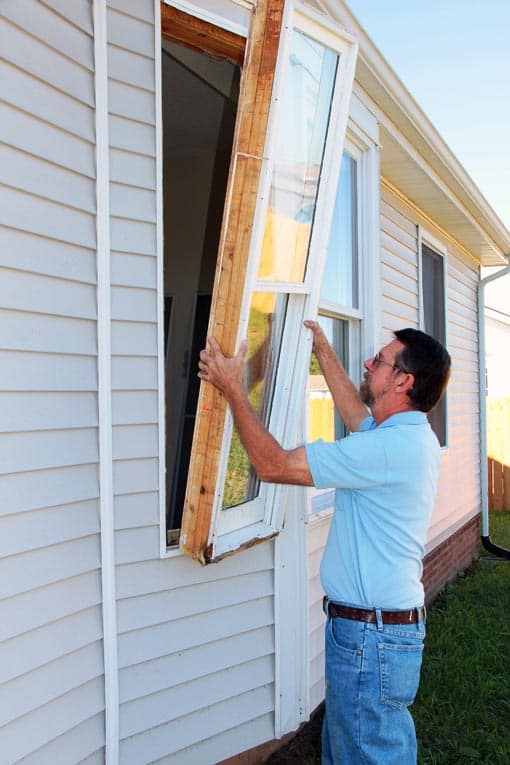
According to home services site Home Advisor, replacing conventional windows costs an average of from $300 to $700 per window, assuming that the replacement is being installed in an existing, structurally sound frame on a ground floor. Angie’s list pegs the cost of common high-end windows to be from $800 to $1200. Large and/or top quality windows can be considerably more.
But these are averages. Actual costs for your windows will depend upon labor costs in your area, the conditions of your house, and the quality and quantity of new windows you install.
The only way to pin down what replacement windows will actually cost you is to get bids.
Window Sash Replacement Kits
If you have old, drafty windows and you don’t want to afford expensive replacements, investigate window sash replacement kits. With these, you replace the working parts of the window without completely tearing out the frames and re-framing a new rough opening. In other words, you take advantage of the existing frame and replace only the window sash.
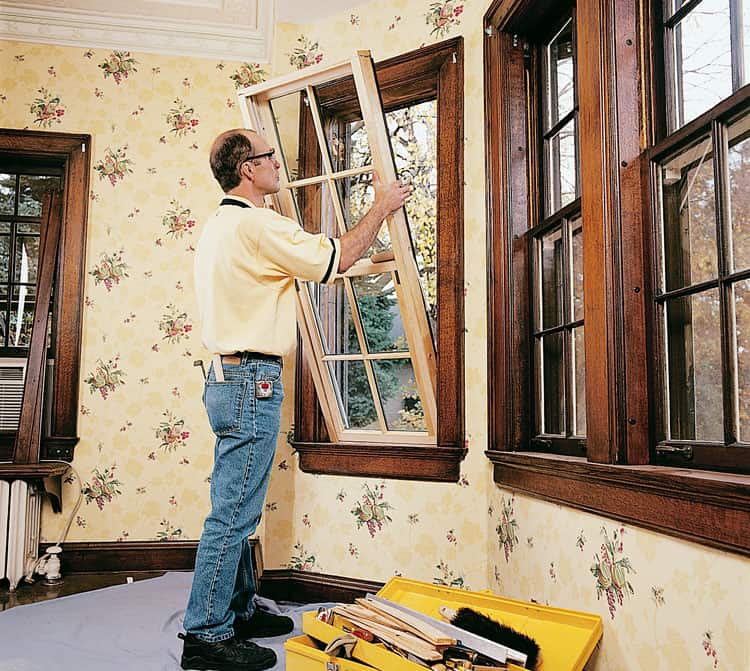
These kits make the job of changing-out poorly insulating windows much easier and more affordable because they don’t involve the same need for tear-out, reconstruction of framing, and patching of siding and walls.
Standardized sizes and styles are available to fit most frames. These kits include the hardware you need, plus installation instructions.
Here are the typical steps involved:
1 Remove the existing window stops, and then take the existing window out of the frame. Also remove all of the hardware from the jamb.
2 Space metal brackets evenly along both sides of the window frame, and fasten them there. Then install new hardware for the replacement.
3 Lift the new sash into the opening, and install it according to the manufacturer’s directions.
4 Replace the original stops , tacking them into place.
Before you meet with contractors, it’s smart to list the sizes and types of windows you want to replace. Then consider your various options in glazing, frame materials, and other elements that distinguish one window from another, as discussed below.
Types of Windows
Probably the most difficult decision to make when it comes to installing new windows is choosing the right style and materials.
When selecting windows, consider your home’s architectural style, your budget, and how the window must perform in terms of security, ventilation, and ease of maintenance. A window isn’t just meant to bring light and views into a room. It may also define a room’s shape, provide an architectural focal point, allow for ventilation, and/or provide for emergency escape.
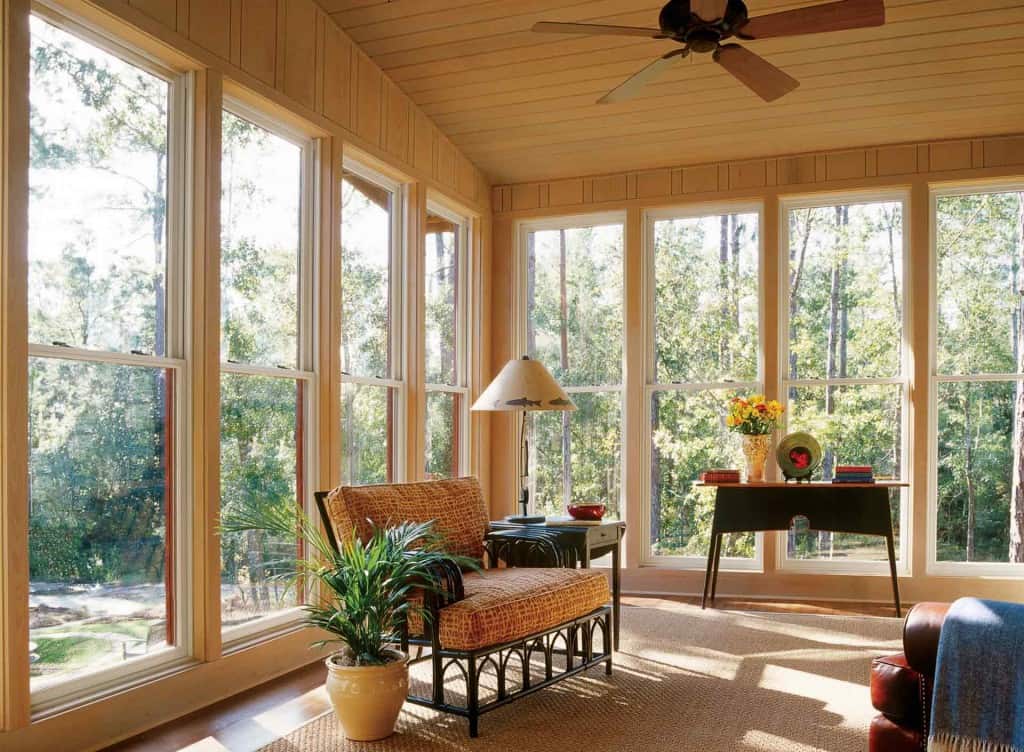
Though you may be tempted to choose new windows by their appearances, be sure to consider all of these factors before buying new windows.
The overall cost will depend on the type of window, quality of materials, type of glass being used, overall energy efficiency, and warranties.
To serve widely varying needs, windows are made in a vast array of types and sizes, each functioning differently. You can buy bent-glass corner windows, curved-glass windows, or casements with no center stile. Some bow and bay windows, made up by combining fixed and operable units, are also available. Following, we’ll take a closer look at the main types.
Broadly speaking, windows are either fixed or operable.
Operable Windows
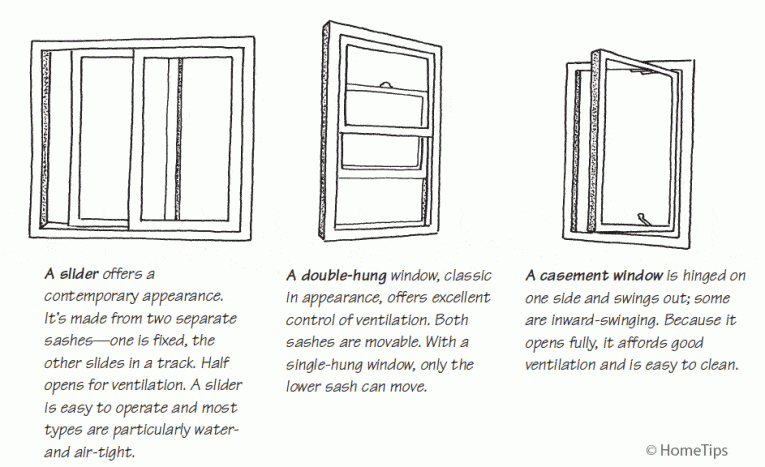
Operable windows may slide up, down, or sideways, or they may hinge outward or inward. The windows shown below represent the major types.
Horizontal Sliders
Horizontal slider windows may have one or more fixed panels in addition to one or more panels that slide in horizontal tracks. A possible drawback is that only half of the total window may be opened for ventilation at a time. If this doesn’t matter in the location where it’s installed, a benefit is that the sash doesn’t require any clearance to swing in or out.
Double-Hung Windows
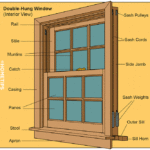
Classic in appearance, double-hung windows offer excellent control of ventilation. They have an upper outside sash that slides down and a lower inside sash that slides up. Hidden springs, weights, or friction devices help lift, lower, and position the sash.
With certain types, the sash can be removed, rotated, or tilted for cleaning. If only one sash slides, the window is called “vertical sliding” or “single-hung.”
Casement Windows
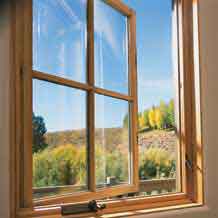
Casement windows, hung singly or in pairs, are side-mounted on hinges and operated by cranks that swing the sash inward or, more commonly, outward. They open fully for easy cleaning and offer excellent ventilation because they can “scoop-in” breezes. One drawback of outward swing casements is that screens are mounted inside.
Awning & Hopper Windows
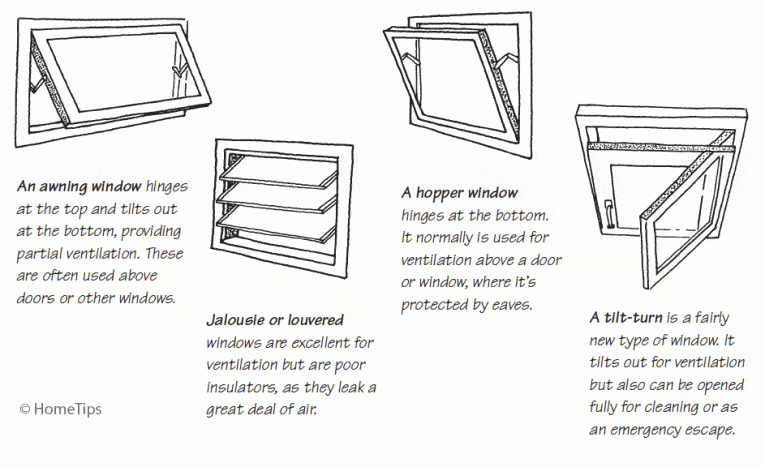
These two types of windows are like horizontal casements. Awning windows are top-hinged—they tilt out at the bottom, offering partial ventilation, an unobstructed view, and reasonably good security. Hopper windows are like awning windows except that they hinge at the bottom. Hoppers are normally used for ventilation above a door or another window, where they are protected by eaves.
Jalousie (Louvered) Windows
Also called a louvered window, a jalousie window is like a glass shutter, made from several parallel panes of glass that open in unison. The word comes from the French for jealousy and, in the 16th century, referred to shuttered covers for window openings. Like today’s wood shutters, those early coverings employed a series of wooden slats sloped to shed rain and obscure direct sun but admit in air and light.
Jalousie windows were installed in many warm-climate American homes before the widespread popularity of air conditioning. In recent years, however, they’ve fallen out of favor because most permit excessive air infiltration between the panes, allowing for uncomfortable drafts and costly heat loss.
Tilt-Turn Windows
A variation on double-hung windows is the tilt-turn window. Tilt-turn windows offer distinctive European styling and have a special advantage over conventional double-hung windows: They tilt in toward the room at the top and also turn a full 180 degrees for easy cleaning. This feature also makes them excellent emergency exits. Look for a multipoint locking system; this adds security and helps keep the window tightly closed.
Fixed Windows
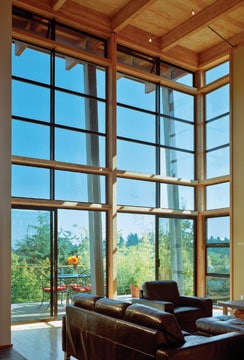
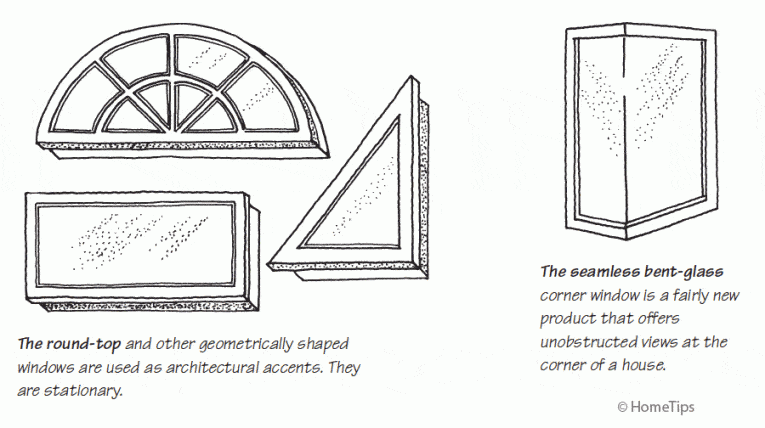
Fixed windows are used mostly as architectural accents or where light and views—but not ventilation—are important. Fixed windows include round-top windows and others that are geometrically or unusually shaped, as well as large picture windows.
Seamless bent-glass corner windows are fairly new and offer unobstructed views at the corner of a house.
Bay & Bow Windows
A bay or bow window isn’t really one window but rather a series of three windows. From the French baie or the Old French baer, meaning to gape or stand open, a bay window projects out from a house wall, forming an open interior bay or recess. Because bay and bow windows project out, they are usually capped with their own small roof or covering.
This design is particularly effective at gathering light and offering a more expansive view than a single window can. Some large bay and bow windows also surround an interior window seat.
A bay window consists of a center window flanked by two side windows that return to the house wall at an angle—normally 30 or 45 degrees. Although the center sash is usually larger and fixed (non-operable), the two side windows are often operable casement or double-hung sashes.
Back in the mid-15th century, when the term “bay window” first came into use, these windows took the shapes of rectangular, polygonal, or semicircular forms.
A bow window consists of a curving series of windows.
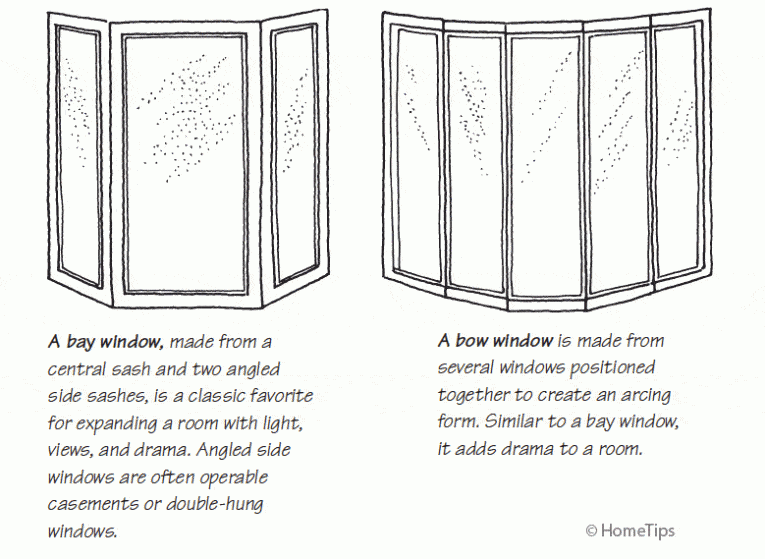
Major window manufacturers sell both bay and bow windows as ready-to-install, assembled units that are made from wood, vinyl, or aluminum.
Glass Block
Glass block is a light-allowing alternative to conventional windows, used both in exterior and interior walls. You won’t get any ventilation with a glass block window, but glass blocks offer a couple of popular benefits.
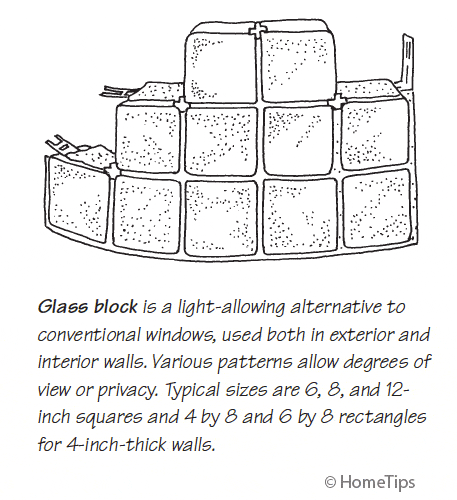
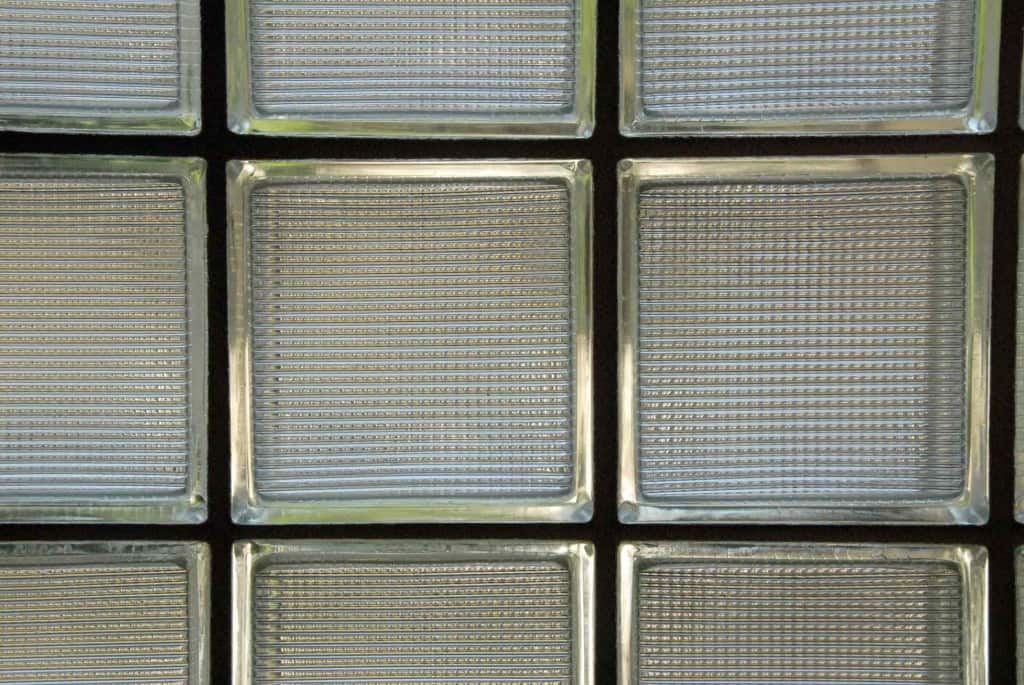
First, various patterns allow varying degrees of view or privacy. You can buy types that will flood an area with light but won’t give up any privacy. Glass block walls, which are basically mortar and glass, are also very resistant to moisture damage. These two traits combined make them popular for bathroom exterior walls.
Another benefit of glass blocks is that they can be installed to form a curve.
Typical sizes are 6-, 8-, and 12-inch squares and 4-by-8 and 6-by-8 rectangles made for 4-inch-thick walls.
Though you might think that glass blocks are better than most new windows at insulating, they’re not. Typical R-value of installed standard-thickness glass blocks is about 1.96.
Window Frame Materials
Windows are made from wood, aluminum, steel, vinyl, or fiberglass—or from a combination of these materials. In general, those that offer better weather protection cost more, but they pay off in low maintenance and energy savings.
Wood Windows
Wood tends to be the most popular window material, particularly for the parts of a window seen from indoors. Wood does not conduct cold or allow condensation as much as other materials do. However, wood is subject to shrinkage and swelling, so it will warp and rot over time—especially on the exterior—unless it is well protected.
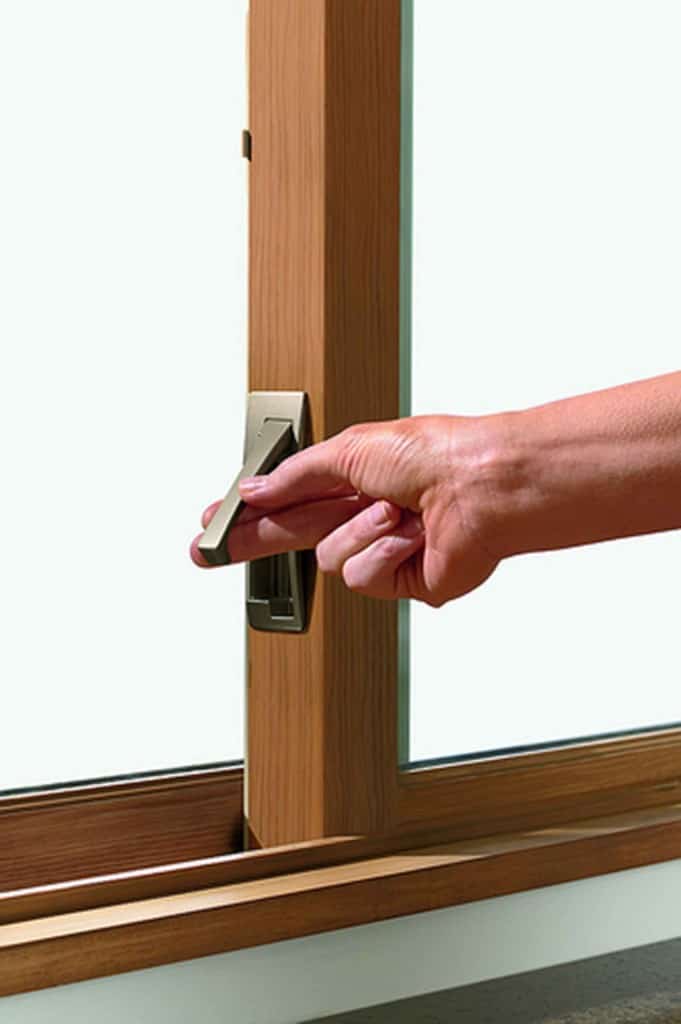
Wood windows typically come unfinished unless you order them otherwise. If you intend to paint them, you can save work by purchasing them already primed on the exterior and/or interior surfaces of the frame and sash. Or you may be able to eliminate painting altogether—some manufacturers offer pre-painted windows in a number of standard colors.
Clad Wood Windows
You will find that many of today’s windows have wood parts indoors and a tough, attractive exterior jacket of extruded aluminum or vinyl on the outside parts. The cladding, available in a few stock colors, covers both the sash and frame. It keeps windows virtually maintenance-free for years.
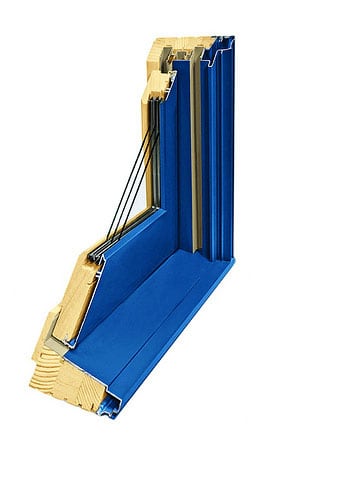
With vinyl, the color permeates the material so scratches do not show.
Aluminum will scratch, but it is more durable and easier to paint (though it should not require painting, nor, for that matter, should vinyl), and it comes in a wider variety of colors than vinyl.
Both types resist rust and rot.
Vinyl Windows
Vinyl windows are made from rigid, impact-resistant polyvinyl chloride (PVC) and have hollow spaces inside the frames that make them resistant to heat loss and condensation.
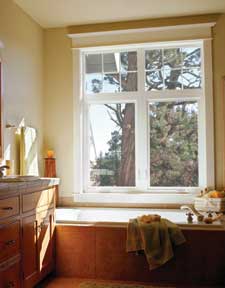
Inexpensive vinyl windows have a tendency to distort when exposed to extremes of heat and cold, making them harder to operate and allowing for air leakage.
Vinyl windows cannot be painted, and darker shades may fade over time.
Steel Windows
Steel is more resistant to the elements than both aluminum and wood, but, because of the expense of steel windows, they generally are not used in homes.
If you have the budget, however, these attractive, low-maintenance windows will last for years.
Aluminum Windows
Aluminum windows are more durable than bare wood and are also thinner, lighter, and easier to handle.
They are insulated with a thermal break of extruded vinyl and sometimes also foam, which reduces heat loss and condensation.
Finishes protect the aluminum from corrosion but moist, salty air in coastal areas because will cause them to deteriorate.
Window Glass
This window glass information explains R values, Low-E glazing, high-performance window glass, and much more.
Window glass is infamous for allowing heat to move far too freely between indoors and outdoors. Heat moving through windows dramatically reduces the energy efficiency of homes in both winter and summer. The biggest issue, of course, is heat loss in winter. But summer presents problems, too, as heat gain can burden air conditioning systems and glare can make rooms uncomfortable.
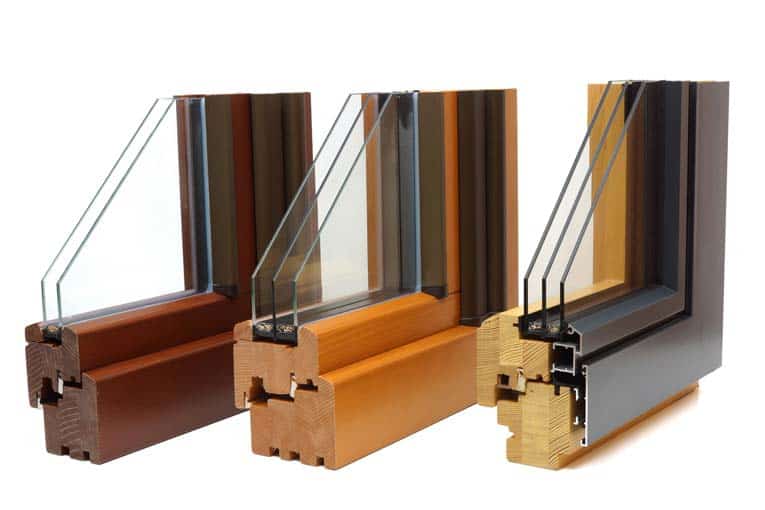
The good news is that many new types of high-performance window glazing have been produced in recent years, making possible the use of glass without the accompanying severe heat loss, heat gain, glare, and other problems.
The basic measurements of performance are R-values and U-values. In addition, other measurements include a “light-transmittance” value that rates how much light the glazing allows, and a “shading coefficient” and “UV value” that measure the amount of glare and ultraviolet light allowed through the glass. Talk with a window dealer about the specific properties and values available.
Understanding R-Values & U-Values
The energy efficiency of various windows can vary dramatically. For this reason, they are given two different types of values that measure heat loss: R-values and U-values. Windows are most efficient if they have a relatively high R-value and low U-value.
Here is a brief explanation of each:
R-value
Thermal resistance—the ability of a material to resist heat flow—is measured by an R-value. The higher the R-value, the more the material resists the movement of heat. A single-glazed window offers an insulating value of about R-1, a dual-glazed model provides twice the value at R-2. The type of glass is the most important factor when it comes to R-values. You can buy even more effective high-performance glazing.
U-value
This applies the factor of time to the heat-loss measurement. U-values measure heat that escapes per hour through a window. Windows typically have two U-values: one for the glass and one for the window, including the frame. The lower the U-value, the more energy-efficient the window.
Generally speaking, if you want to minimize heat transfer, pick high-performance glazing that has a high R-value. For maximum light, choose a type with a high visual light-transmittance value or, to cut glare, with a lower light transmittance value. To cut heat gain, select glazing with a high shading coefficient. Glazing with a high UV value will block nearly all furniture-fading ultraviolet rays.
Types of Window Glass
Basic insulating glass may have two or three panes separated by an air space. Dual-glazed have become the standard for performance; triple-glazed windows have better performance but are expensive and heavy to handle during installation.
Here is a closer look at your options:
Low-e & Insulating Glass
This type of glass has a virtually invisible metallic coating that blocks radiant heat transfer and protects carpets and furnishings from fading by reducing damaging ultraviolet rays from the sun. “Super” windows have two low-e coatings to achieve incredibly high R-8 insulation values. Even more efficient insulating windows have argon gas, a natural, colorless, non-toxic gas that is sealed between glass panes. Insulating low-e glass filled with argon gas has about twice the insulating qualities of standard dual glazing.
Tinted Glass & Reflective Glass
Tinted glass can significantly reduce heat and glare from direct sunlight and cut ultraviolet (UV) rays that can discolor furniture, carpets, and floors. It does this by absorbing the inbound solar radiation.
Tinted glass is, as its name suggests, darker than clear glass. Because of this, it slightly reduces the amount of visible light. Several different colors and shades of tints are available, and each has a slightly different effect. A gray or bronze cast, the most common tints, cut down on heat and light equally. Windows with blue and green tints, on the other hand, allow in a little more visible light. Black tints absorb more light than heat.
Like tinted glass, reflective glass reduces solar gain. From outside, it appears to be a mirror. Because tinted glass absorbs only a small percentage of light, it does not have the same mirrored appearance. Beware of blocking too much light. If you do, your energy bills are likely to go up as your home will require more artificial lighting.
If you have existing clear glass windows but want the heat- or UV-blocking benefits or the privacy offered by tinted windows, be sure to investigate window films. These thin plastic sheets, which you can easily apply to windows, can dramatically improve the performance of your window glass. Various types of window tint films are intended for blocking heat, blocking UV rays, or simply offering privacy. For more information, see Window Film.
Safety Glass Windows
Safety glass is designed for installation where a person might accidentally walk through or be injured by a window or sliding door. Most local building codes require safety glass in many different situations including but not limited to:
- A window that is within 18 (or 24) inches of the floor
• Along staircases
• Near bathtubs, showers, saunas, and the like
• In swinging, sliding, or bi-fold doors
• In railings
Check with your local codes regarding requirements.
Safety glass may be tempered, laminated, or wire-reinforced. None of these will shatter when broken. Tempered glass, for example, will crumble when broken. Laminated or wire-reinforced glazing is held together by its internal layer of plastic or wire.
Specialty Glazing
Of course, you will find decorative possibilities, too, including etched, beveled, leaded, stained, and many other ornamental glazing materials.

You can even buy glass that has a hydrophilic coating to help shed water more quickly, which basically turns a rainstorm into a window cleaning. Impact-resistant windows are now available to protect your home and family from wind-blown objects and the local Little League All-Star.
Divided Lites
Multi-paned windows may have either faux or real divided lites (panes). These are a good choice in homes with a traditional architectural style.
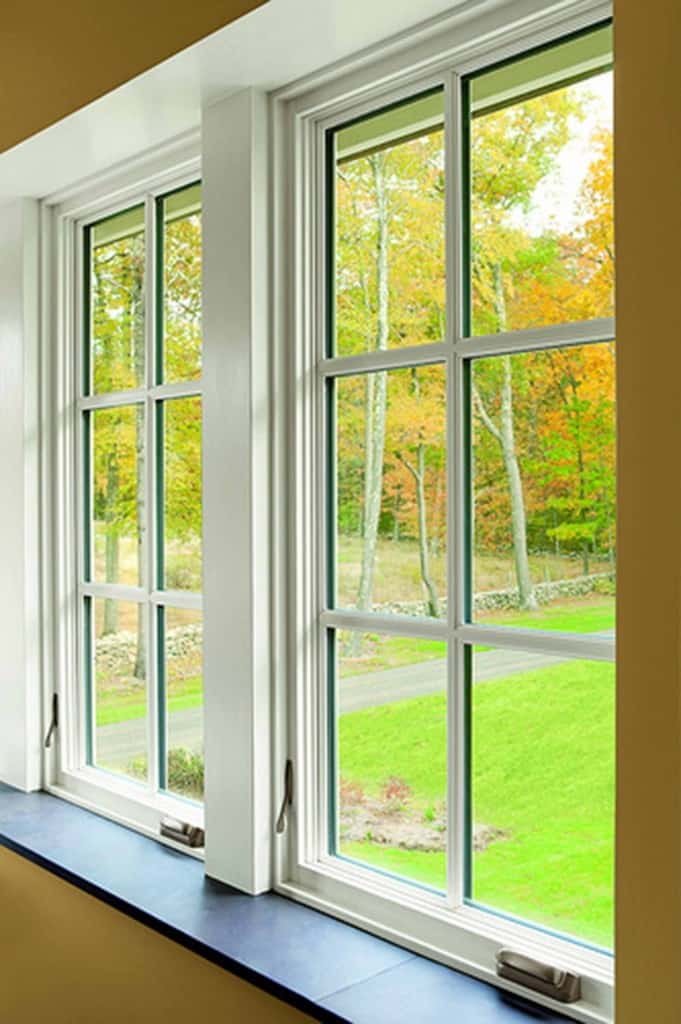
Those with real muntins (divisions between glass panes), though authentic, are considerably more expensive and a little more difficult to clean than the ones with snap-in wood grilles.
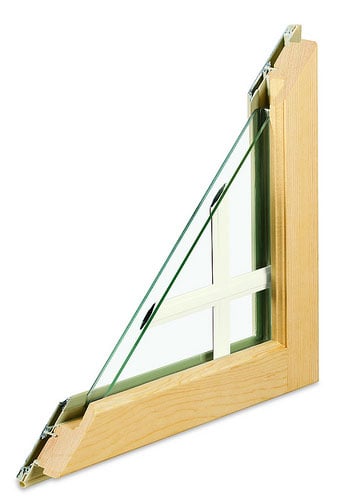
You can also buy windows that have integral shades or dual-glazed windows with mini-blinds positioned inside, between the glass panes. These are great for rejecting glare and heat gain on hot, sunny afternoons.
Window Hardware
All operable windows come equipped with hardware, the mechanisms used for opening and closing the sash, latches, and so forth.
Here is a look at the key types of hardware:
Cranks
Casement, awning, and hopper windows utilize cranks for opening and closing. Older types used push-bar operators.
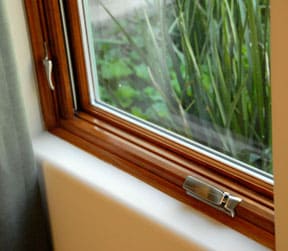
Some manufacturers offer cranks in nonmetallic finishes (notably white), and some new types have fold-down handles that are relatively inconspicuous.
Hinges
The best casement, awning, and hopper hinges pivot to allow arm space between the sash and the window frame to make washing exterior glass an easy job.
You can even find special European hardware that turns a casement window into a hopper window. Because the hardware locks tightly in several places around the frame, the windows have very low air infiltration. But, unlike American casement windows, the European-style window mechanism swings into the room, which can be awkward and inconvenient depending on furniture placement and the type of window coverings you have.
Counterbalances
On double-hung windows, the sash is counterbalanced on the sides by weights or mechanisms such as torsion screws.
Sliding Mechanisms
The sashes of most aluminum and vinyl windows are lightweight enough to slide in the sill tracks. But large, door-height sashes must be supported by heavy-duty rollers on their bottom edges.
Latches, Locks & Security
Latches are used to hold the window tightly closed. Two are recommended on tall or wide hinged windows. On double-hung windows, sash locks pull together the upper and lower sash. Keyed sash locks provide an additional measure of security. On sliders, look for security locks so the operable sashes cannot be jimmied open.
Though hinged doors are relatively easy to protect with proper latches and deadbolts, windows and sliding glass doors are not as simple to secure. Windows and doors that slide can be forced open or lifted off their tracks, and glazing can be broken.
In addition to installing locking devices, you can enhance security by replacing all ordinary glass with tempered, laminated, or wire-reinforced glass or with acrylic, as well as by installing perimeter alarm systems.
Several ready-made devices are available to make prying open a window and/or removing a sliding glass door from its track more difficult. The right locking device to choose will depend on whether you need to secure a sliding window or door or a double-hung window.
To keep a panel from sliding, use track grips, which are tightened by a thumbscrew or key, or use metal stops that straddle the lower track and are secured with a lever or thumbscrew that clamps them in place. Or use a spring bolt, which is screwed to the sill or base track and has a pin that snaps through a hole drilled into the edge of the lower track and the bottom of the sash.
Even more secure is a bar that screws to the doorjamb and swings up into a saddle on the edge of the door to lock it in place; an advantage of this type of bar is that it can be adjusted to allow the door to be partially open.
The easiest way to keep an inside panel from sliding is to drop a dowel or a piece of stiff tubing into the empty portion of the lower track. Cut it 1/4 inch shorter than the distance between the panel and the jamb.
Double-hung windows can be locked with wedge locks, key-operated latches, or locking pins that go through one sash and into the next.
Planning New Window Placement
When sizing and buying windows, their placement is very important. If you’re simply replacing existing windows, window placement is a given. But when planning where to place new windows in a major remodel or new home, you’ll want to strongly consider where you can capture the best views and provide the quality of natural light that you want.
Make every effort to look outward from the areas where you intend to put windows. Pay attention to what you want to see and what you don’t want to see.
It’s even more important to pay attention to the path of the sun, because this will affect the amount and quality of natural light and heat gain the interior of your house experiences.
The daylight that enters a structure may shine directly from the sun, bounce off bodies of water, streets, buildings, or other surfaces, or come from the diffuse, day-lit sky.
Figuring control measures, such as roof overhangs, requires a clear understanding of the sun’s path. The sun’s daily east-to-west arc changes throughout the year.
At the summer solstice, June 21, the sun rises and sets farthest to the north, meaning it is higher during the day.
At the winter solstice, Dec. 21, the sun’s arc is at its southernmost position, with a much lower elevation.
The sun’s angle at any given time of the day depends on your latitude. The farther north you live, the lower the winter sun will be in the southern sky.
Whether a window faces north, east, south, or west makes a big difference in the type of light it receives. If you want morning sunlight to spray across your breakfast table, your breakfast room window should face east.
Light from the south is bright and direct; solar houses are oriented to the south for maximum heat gain. South-facing windows are often located beneath eaves or roof overhangs to block the high, intense summer sun but allow in the warmth of the lower winter sun.
Western sun can be intense and glaring. Controlling it is more difficult because, as the sun sets, its low angle dips beneath eaves and overhangs. Shades, blinds, or glare-resistant glazing are generally required. It’s also helpful if deciduous trees are planted on the west side of a house—their spring-and-summer leaves block unwanted heat; then, when the leaves drop in the fall, the trees allow in the sun’s warmth and light.
Northern light, never direct from the sun, has cool, bluish hues because it comes from the sky. And, because it’s constant, it is favored for artists’ studios and the like. Be sure any architect you hire will take all of this into account when planning your house’s window placement.