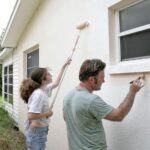
A helpful how-to on preparing wood siding for paint, with steps, detailed diagrams, and a video to help you clean, scrape, and sand more effectively.

Before painting wood siding, proper preparation is critically important. Without good preparation, all of the effort and expense that you invest in painting may be diminished by less than stellar results and a job that may not last.
Proper painting preparation includes:
• Cleaning the siding
• Scraping and sanding loose or peeling paint
• Repairing damaged areas of siding
How to Clean Wood Siding
Begin by hosing-down the siding. You can use a pressure-washer for this job, but keep the pressure low and the nozzle away from the siding to avoid eroding the wood and driving water into cracks and crevices.
(Washing alone is often not enough to remove mold or mildew from the surface.)
For a really thorough job, scrub the siding with a stiff-bristle brush mounted on a pole. Dip it into a solution of water and trisodium phosphate (TSP) or a TSP substitute, mixing 7 parts water to 1 part cleaner.
Because this solution is caustic, it isn’t recommended for use on bare wood. Wear safety goggles and rubber gloves.
After scrubbing the surface, rinse off the surface with a hose.
The following video does a good job of showing how to clean your house by first pressure washing it and then following up with a good scrubbing.
NOTE: Houses painted before 1978 may have paint that contains lead. According to the Centers for Disease Control (CDC), lead paint should be removed by contractors who are certified by the EPA.
Scraping Siding
Before sanding, scrape loose and flaking paint from the siding. Work a paint scraper from every direction, keeping the blade flat against the wood so you don’t create gouge marks.

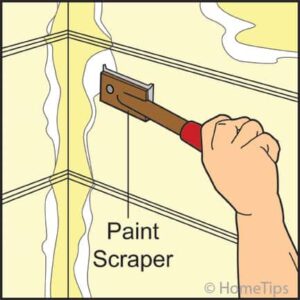
Pound-in any protruding nail heads. Note: Some paint scrapers are made with a handle that can be used as a hammer head for this purpose.
How to Sand Wood Siding
Use a power a 5-inch power disc sander to smooth the edges of scraped areas or remove paint—it is lightweight and easy to handle. Mount 7-inch sanding discs onto it for sanding the primary surfaces, and then switch to 5-inch sanding pads for places where you need tighter control.
Start with 60-grit sandpaper and then do final smoothing with 100-grit sandpaper.
As discs become clogged with paint, replace them so you don’t burn the surface.
This video does a good job of showing the scraping and sanding process. Please note that it also shows special gear you can use if you suspect that the existing siding contains lead-based paint. However, don’t scrape and sand your own home if you suspect lead paint. As discussed above, hire a certified pro for this.
Work in 3-foot sections, moving the sander horizontally across the top of each board in a wave-like pattern across the middle and horizontally along the undersides of boards.
• As you bring the sander into contact with the wall, it should be running full speed. Touch down, leaning slightly on the tool but constantly moving it so it doesn’t gouge the wood. Holding it at a very slight angle will prevent it from spinning out of control.
Siding Repair
Damaged sections of siding will need to be repaired or replaced. (For more about repairing wood siding, see How to Repair Wood Board and Shingle Siding.)
Upon completing the steps shown here, dust off the sawdust and caulk any open seams. Prime any bare wood with a latex primer that is tinted toward the finish color, and allow the primer to dry thoroughly before starting to paint.
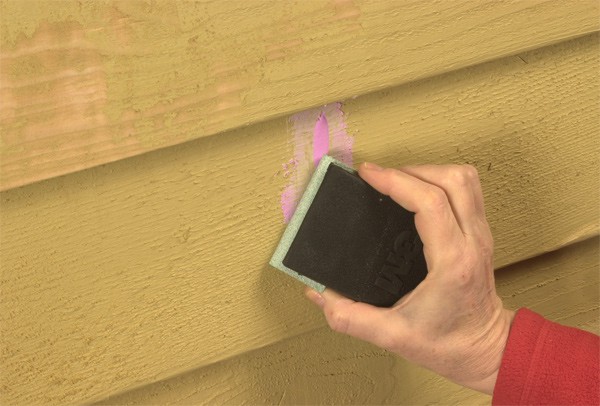
Using a putty knife and vinyl exterior spackling compound, fill any gouges. If you intend to apply a semi-transparent stain, choose matching wood-toned filler instead of spackling compound. Allow the patch to dry.
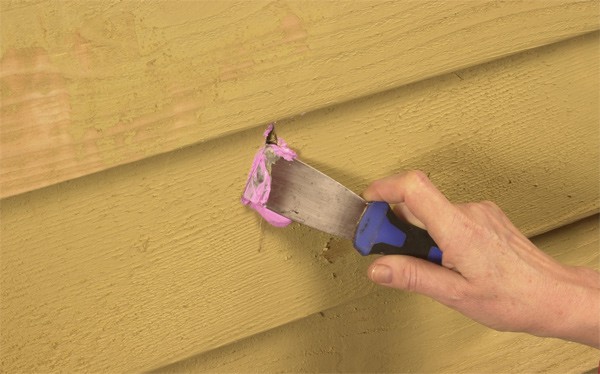

Use a sanding block or a palm sander with 100-grit sandpaper to sand each patch until it is smooth. Finally, sweep away residual dust and scrapings.