Advice about how to protect your home and family from fire, including seasonal fire hazards, avoiding accidents that cause fires, and more.

Electrical Fire Hazards
Heat & Combustibles
Seasonal Fire Safety at Home
None of us wants to see our house go up in flames—nor even think about it—yet carelessness and ignorance about fire safety turn homes into tinderboxes every day. The good news is that smoke detectors, when correctly installed and used, now save many lives and homes that once would have been destroyed by fire.
Electrical Fire Hazards
One of the most frequent causes of house fires is electricity used carelessly or incorrectly. Check your home for these hazards:
* Outlet “extenders,” or “cube taps,” which can overload electrical circuits.

* Wrong size fuses
* Extension or other electrical cords that are frayed, have broken wires, or have brittle, worn insulation; replace them, don’t repair them.
* Receptacles and appliances that are not properly grounded; if your older home doesn’t have three-hole grounding receptacles, either upgrade its wiring or have an electrician check that your appliances are properly grounded, double insulated, or polarized (the last option requires polarized receptacles as well).
* Extension cords that are not matched to the wattage of the appliance plugged into them.
* Too many appliances plugged into an extension cord, which can overload the circuit.
* Bulbs in light fixtures that exceed the fixture’s wattage limit (if you don’t know the limit, use no more than 60-watt bulbs); recessed fixtures can be especially hazardous due to heat buildup.
Heat & Combustibles
Accidental fires can start if combustible materials are too close to a fireplace, stove, or heater. At the very minimum, these heat sources present a risk for burns. Check all these points:
* Keep combustibles such as trash, newspapers, and rags to a minimum. Keep any combustible material, including upholstery, curtains, and rugs, safely away from your water heater, fireplace, furnace, gas dryer, or any appliance that heats up.
* Make sure any portable electric space heaters have a UL (Underwriters Laboratory) mark. This ensures that the heater has a safety switch that automatically turns off if the heater tips over. The UL mark also ensures safe grille design to prevent fingers from reaching the element.
* Kerosene heaters are extremely hazardous if not adequately vented. Besides creating indoor pollution, they also pose a great fire hazard if tipped over. If you have this kind of heater, seriously consider replacing it with a safer model.
* Screen off radiators with fireplace screens, preferably bolted to the floor. Floor furnaces are extremely dangerous, with temperatures reaching up to 300 degrees F. Avoid using a floor heater when children are active in the house.
* Make sure that your fireplace has a secure screen, not just a mesh curtain, to keep sparks from flying out into the room. Or have a fireplace shop install glass fireplace doors.
* Make sure that installation of your wood stove or fireplace meets local building code specifications. Keep combustibles well away from both, and only burn firewood. To reduce the risk of burns from a wood stove, you can have a detachable screen custom-built—a costly solution. The best policy is not to fire it up until your child is a little older.
* Make sure your chimney is properly installed and has a spark arrestor on the chimney cap. Keep chimneys clean: A buildup of creosote on the fireplace’s inner walls can ignite during a hot fire. To avoid this, have your chimney cleaned and inspected annually, and have a mason inspect the chimney’s mortar and bricks.
* Many furnishings, draperies, and carpets are fire-resistant. Make sure that as many of yours as is practical are.
Seasonal Fire Safety at Home
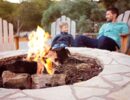
Along with a lot of fun, many holidays and other special occasions can also add up to potential fire hazards. Fourth of July fireworks, Halloween jack-o-lanterns, birthday candles, luminarias, tiki torches—all involve an element of peril.
Whenever using any decoration that involves the use of fire, make sure the item is level, firmly grounded, and is not placed near or under any flammable object such as drapes and furniture, branches and leaves.
To avoid the most common and serious fire hazard, choose the freshest Christmas tree available; cut it down yourself if possible. Keep it outdoors until it’s time to trim, and keep it in a water-filled stand throughout the holiday.
Make sure lights have the UL mark. Take the tree down before it drops quantities of needles.
Never string lights on an artificial metal tree because of the danger of electrical shock.