Save energy at home, stop wasting money, and make your home more comfortable with these high-return energy-saving home improvements.

Save Money By Insulating Your Home
Not only will you be doing your family (and your pocketbook) a favor, you’ll be helping the planet by reducing your home’s carbon footprint. The first five of these are important for both summer and winter; the last one will help you save energy at home in the summer, when controlling solar gain in your house is critical.

1Hang up thermal curtains. Thermal curtains, solar shades, and window films are a good start. Solar shades and window films will minimize heat gain and ultraviolet radiation in the summer. Thermal curtains or curtain liners will help keep your rooms warm in winter, cool in summer, and—as a bonus—can also perform as black-out curtains to darken a room at night. All of these products are inexpensive and readily available from online vendors.
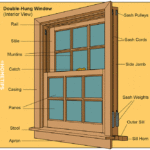
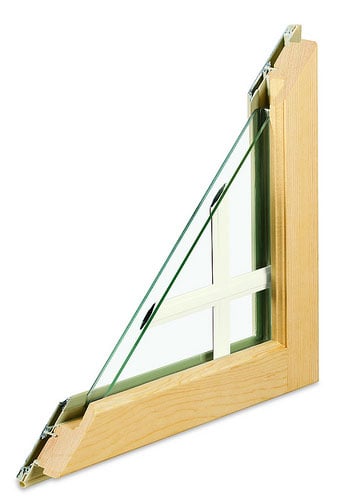
2Switch to Low-e windows. Okay, this is a major improvement that will cost thousands of dollars and repay you over many years in savings. We understand that this may be outside of your budget, and—if it is—just skip down to the next step to save energy at home. If you’ve been considering new windows, however, be sure to choose high-performance ones. Unlike the single-pane windows of old, today’s low-e (low- emission), double-glazed, argon-filled, so-called “smart” windows can save a tremendous amount of energy—and you can customize them to suit your climate. If you live in a cold climate, you can purchase a window that in winter will maximize solar gain while reducing heat loss out of the home. Or in hot climates, you can have the reverse, a window that allows only 39% of solar gain into the home during sunlit days.
3Insulate. Insulation is the gift that keeps on giving. A well-insulated house is warmer in the winter, cooler in the summer, and quieter year-round.
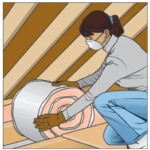
Whenever given the option to insulate more or less, the savvy energy-saving homeowner will always choose more. The most effective area to insulate (and usually the easiest) is the attic.
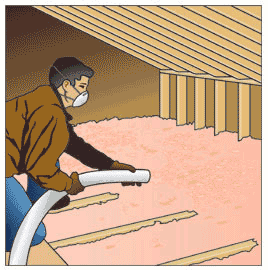
Make sure your attic is well insulated with at least 6 inches of fiberglass batt insulation or loose insulation on the floor. If you have a pull-down staircase to access the attic, put a wide band of weatherstripping around the edges as well. Take care not to compress the insulation.Fill in any gaps you find but be careful to keep the insulation from crowding electrical sockets, recessed light fixtures, and roof vents—keep it at least 3 inches away from them. For step-by-step coverage of this topic, please see How to Insulate Your Home.
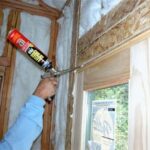
4Caulk and seal. Proper and liberal caulking of joints and seams can tremendously reduce the amount of a home’s energy consumption.
Besides reducing drafts and heat loss, a bead of caulk can also thwart moisture and pest infiltration.
Be sure to use the right caulk for the application and take your time. A rushed job can not only create a mess but also leave gaps, defeating the purpose.
Caulking compounds come in a wide variety of formulations, from simple latex caulks to sophisticated silicone mixtures and expanding foams. When buying caulking compound, study the label to make sure you buy the right type for the job. Pay special attention to the warranty.
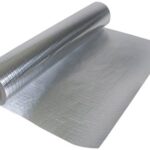
5Wrap heating & cooling appliances. Wrapping your hot water tank and freezer are effective ways of helping these appliances reduce the amount of energy they need to maintain their functionality. Kits for installing insulation wraps are sold at most home improvement centers.
Warning: With hot water tanks, make sure to read the manufacturer’s instructions—in some cases, wrapping the appliance could void your warranty.
Sleeping bags or blankets work well for covering your chest deep freezer. This will help reduce the cooling demand of the freezer and also buy your frozen food some more time during power outages. But be sure the wrap does not block air flow.
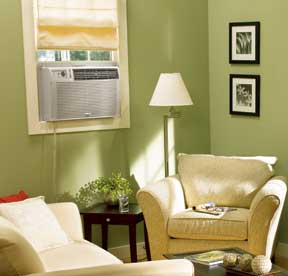
Also, build a shelter for your air conditioning unit. By keeping the unit shaded and protected from leaves and debris, you will not only extend its life but also improve its energy efficiency.
Ways to Save Money on Cooling
It’s blazing hot, but after opening your last utility bill, you don’t dare turn down the thermostat. You’re beginning to yearn for a summer place at the South Pole. Take heart! A variety of relatively simple measures can help you drop your thermostat’s mercury without raising your utility bill’s bottom line.
Here are 9 things you can do to cool your house for less:
6 Arrange furniture and drapes so they don’t restrict airflow from registers. When cooled air is delivered to your rooms, it should move freely.
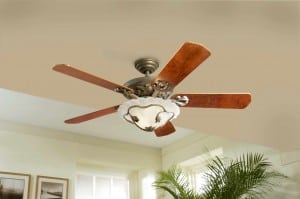
7 Keep room air moving by utilizing a whole-house fan or ceiling fans. Another option is to circulate air using the “Fan Only” setting on your heating/cooling system’s thermostat. By keeping the air moving, you will feel comfortable in a room that is 2 or 3 degrees warmer than a still room; every degree you raise your thermostat’s set point will save you about 2 percent on your energy bill.
8 Adjust your thermostat. An air conditioner uses a tremendous amount of electricity when it runs. During the summer, you can realize major savings by raising the set temperature to 78 degrees F. or higher. Conversely, turn the set temperature down during the winter (as a rule of thumb, every degree you lower a thermostat’s set temperature in the winter will save 3 percent of energy costs over a 24-hour period.)
9 Reduce your home’s heat gain by pulling drapes or shades, installing awnings, or planting trees to shade sun-facing windows.
Unlike the hulks of aluminum common a few years, most of today’s window awnings are made from long-lasting canvas. New designs are streamlined, attractive, and can provide cooling shade without destroying your view. Do-it-yourself kits are available and most can be put up in a weekend.
You do not have to know much about trees to realize that they can provide value, shade, and beauty to your home. Deciduous trees like maples, oaks, and walnuts shed all their leaves every year, which means they can provide shade for your home, driveway, and patio during the hot summer months and then allow the sun to warm your home during winter. Pine trees and hedges can block cold winds as well as noise from the street and offer backyard privacy. When selecting trees, make sure to plant ones that are appropriate to your climate, native to your area (and therefore more pest- and disease-resistant), and require no additional precious resources (like water) to thrive.
Also explore the possibility of installing inexpensive heat-reflecting film on those windows.

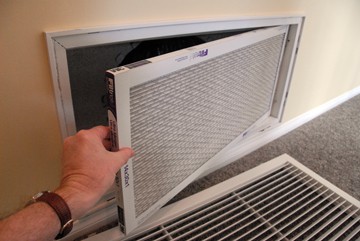
10 Increase your air conditioners efficiency by cleaning or replacing your furnace or air handler filters according to the manufacturers recommendations.
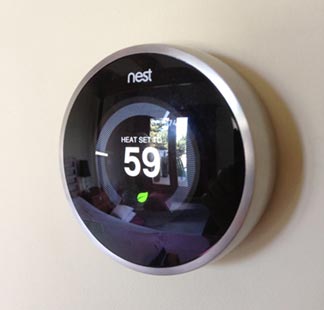
11 Install a programmable or “smart” thermostat if your system doesn’t have one—and learn to use it properly. This will give you precise control over exactly when cooling will be delivered. Raise the thermostat’s set point a few degrees when you’ll be at work; if you’ll be gone for two days or more, turn off the air conditioner until you return.
12 Reduce humidity inside your home, because an air conditioner must work hard to remove moisture from the air. Minimize mid-day washing and drying clothes, showering, and cooking. Another option is to turn on ventilating fans, but be sure to turn them off when you’re finished so that they don’t extract cooled air unnecessarily from the house.
13 Weatherize your home to reduce the loss of conditioned air. Employ caulk, weather stripping, and insulation to cut back on the movement of air from inside to out—and vice versa.
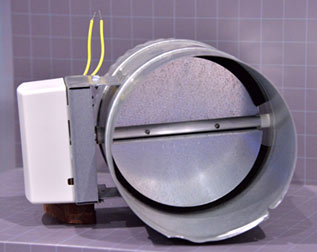
14 Consider installing dampers in ductwork to restrict the flow of cooled air to rooms that you rarely use. Talk with an air conditioning contractor about this. You can also close doors or registers in those rooms, but ask a professional about this to be sure it won’t affect your system’s efficiency.
15 Update your air conditioner if it’s old. Though this is not a low-cost solution, over-the-hill equipment may be using far more energy than necessary to cool your home. See the free Central Air Conditioners Buyer’s Guide for more about how to select an efficient, high quality air conditioner.
ALSO SEE: Insulating & Saving Energy
Ways to Save Money on Electricity

Thanks to extreme weather conditions and poor public utility policies in some states, home electric bills have shot through the roof. Unfortunately, forecasters predict no end in sight to even higher electricity prices.
What can you do to take the strain off your electric meter? Here are 10 easy ways to slash your electric bills:
16Turn off lights you’re not using. This is a no-brainer and certainly one of the easiest measures of all, and yet it is a key step toward acting with a conservation mindset. Just flip a switch to stop wasting hundreds of watts of power every day.
17Cut back on the lights you use. Indoors, use dimmers or decrease the wattage of bulbs. Opt for task lighting instead of general room lighting where possible. Outdoors, put motion sensors on light fixtures so bulbs only turn on when and where they are needed.
18Maintain your refrigerator. Because it is one of the biggest energy users in the home, a refrigerator should be operated at maximum efficiency. This means opening the door only briefly and adjusting the “Cold” control according to the manufacturer’s directions. Vacuum refrigerator coils to remove dust. Defrost it if necessary (though most refrigerators today are frost-free). To reduce the amount of power the refrigerator’s motor uses, consider plugging it into an electronic induction motor control such as the Power Planner, available in home improvement centers.
19Use electrical appliances less. Only run an electric dryer with full loads or, even better, air dry your clothes. Opt for cooking in the microwave instead of with an electric oven. And don’t forget to turn off the coffee maker when the coffee is done. When buying new appliances, check the EnergyGuide label to be sure they are energy-efficient models.
20Turn down the water heater temperature. Reduce the water temperature to a maximum of 120 degrees F. An electric water heater devours electricity! Consider switching to a gas water heater.
21Replace standard incandescent lightbulbs. Use highly efficient compact fluorescent bulbs instead, which use from about one-quarter to one-third the energy to produce the same amount of light (a 20-watt compact fluorescent will give you about the same light as a 75-watt incandescent). Though most cost considerably more than conventional bulbs, they last up to 13 times longer, which makes them a long-term good buy.

22Use natural light. Longer days and a higher summer-sun angle afford you an opportunity to let Mother Nature help with the energy bills. The trick is to admit light without summer heat gain or glare (or winter heat loss). Fortunately, you can control heat gain and glare with window coverings and window films, available at home improvement centers. To increase the amount of natural light that floods a room, bounce it off the ceiling and walls with the aid of louvers or operable blinds (light-toned ceiling, walls, and floors work best). For more about using daylight, see Daylight Techniques for Light & Warmth.
Though some of these methods may appear as though they will give you only minor relief from staggering electric bills, adopting several or all of them can result in significant overall savings. Many utilities charge higher rates for the portion of your electrical usage that exceeds baseline requirements. When you trim away the excess fat, you can dramatically lower your bills.