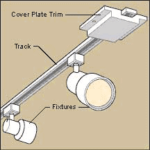
An in-depth DIY guide for installing and wiring light fixtures, with expert tips on grounding metallic fixtures and a list of methods for running wires.

One of the easiest and most economical ways to give a room in your home a new look is by installing a new light fixture. Lighting affects not only how well you are able to see your way around a room but also the way the room appears. Different types of lighting and light fixtures offer a different “feel” to the spaces upon which they shed light.

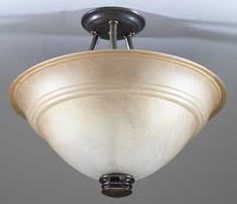
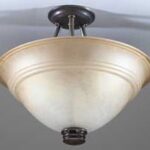
Surface-mounted light fixtures are mounted directly to a housing box, either flush with the ceiling or wall or suspended from the ceiling box by a cord or chain. Most new fixtures come with their own mounting hardware and adapt easily to any standard fixture box.
Fixtures come in different weights and sizes, and these features determine the mounting method. Lightweight, small ceiling fixtures can generally be screwed directly into the fixture box’s mounting ears. However, heavier fixtures may need to be fastened to the box with a mounting bar, hickey, or stud. Fixtures weighing more than 50 pounds will need to be secured to a joist or beam as well as to the mounting box. For information on wall-mounted lights, see How to Install Vanity Lights.
Grounding Metal Fixtures
All incandescent and fluorescent fixtures with exposed metal parts must be grounded:
• Metal boxes with the nipple or screws holding the fixture to the box will ground the fixture.
• Boxes at the end of a circuit must have the grounding wire of the cable attached directly to the box’s grounding screw or clip.
• If more than one cable enters the box, you will need to make a grounding jumper (pigtail).
Nonmetallic Fixture Boxes
A nonmetallic box does not need grounding, but you must ground the fixture:
• Purchase a box with a metal grounding bar.
• If the fixture is at the end of a circuit, attach the cable grounding wire to the bar.
• If the fixture is in the middle of a circuit, make a grounding jumper (pigtail) to join the cable grounding wire to the bar.
Hanging Fixtures
Hanging fixtures also need a grounding wire from the lightbulb socket to the box. Most new fixtures are pre-wired with a grounding wire.
As with any electrical project, the first and most important step is to disconnect power to the circuit by removing the fuse or switching off the circuit breaker. Use a circuit tester (also called a neon tester) to confirm the circuit is dead.
Methods of Running Wires
When home improvement plans call for new lighting, there are several options from which to choose. Surface-mounted, track, and recessed fixtures all come in a wide variety of styles and price ranges to suit many different lighting and budget needs. But to make them work, you have to get the power to the lights, which means running wire.
As with any electrical project, the first and most important step is to disconnect power to the circuit by removing the fuse or switching off the circuit breaker. Use a circuit tester (also called a neon tester) to confirm the circuit is dead. This will ensure no unpleasant surprises.
Once the power is off, there are three simple ways to get power to a light fixture: 1) end-of-circuit, 2) middle-of-circuit, and 3) end-of-circuit with switch loop.
All three ways to wire are simple, but, depending upon your specific needs and the type of fixtures you are installing, you will want to pick the most appropriate one.
End-of-Circuit
The standard end-of-circuit wiring is the simplest strategy when wiring light fixtures and is especially handy if you are doing major projects where open walls allow you to run wire unfettered.
To wire end-of-circuit, simply run electrical line straight from the switch box to where you are going to install the light fixture. This single source of wiring makes it easy to install fixtures down the line. Once you have the first light installed, you can run another off that line to power the rest of the room. Just make sure you are not overloading your fuse box.
Middle-of-Circuit
Middle-of-circuit wiring is a bit more complex than end-of-circuit because there are simply more wires to contend with. When more than one set of wires comes into the fixture box, the wiring is considered middle-of-circuit because the power comes into the box, through the light, and out to other fixtures.
When wiring a fixture middle-of-circuit, make sure all the white wires are connected together and all the black wires are connected together; this includes the wires for the light fixture. By doing this, you allow the electricity to not only power the light you are installing, but you also complete the circuit for fixtures “downstream.”
End-of-Circuit with Switch Loop
When the light fixture is installed with wires from the power source before the switch, this is called a switch loop. Wires come from the junction box or subpanel, then go into the fixture, and then to the switch that controls the light. Often this is the case when installing a garage light, where the switch is farther from the power source than the fixture.
The important thing to remember when wiring end-of-circuit with a switch loop is that both wires coming out of the fixture will be “hot,” or powered, because there is no break in the circuit before the light fixture. Wire the fixture as you normally would, but mark the white wire that is normally neutral as hot with either black paint or tape as it leaves the fixture box and also on the switch end.
Light Fixture Installation
Next, please refer to the following articles for step-by-step light fixture installation instructions:
- How to Install a Ceiling Light
- How to Install Vanity Lights
- How to Install Track Lighting
- How to Install Fluorescent Lights
- How to Install Recessed Lights
- Installing Under-Cabinet Lights
Featured Resource: Get a Pre-Screened Local Lighting Installation Pro