Expert advice on how to repair a kitchen or bathroom sink, with diagrams and instructions.

Other than faucet problems and pop-up stopper issues, which are discussed in Faucet & Tap Repairs and How to Fix a Pop-up Drain Stopper, most problems with sinks have to do with the drain.
If you’re not sure where the clog is occurring, see How to Diagnose and Clear a Drain Clog.

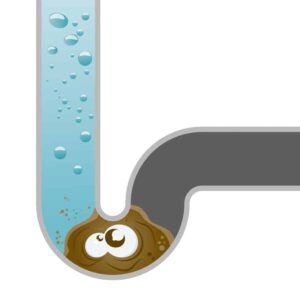
Following are the steps to take when trying to resolve drain problems. You’ll find more about each in the related articles.
How to Locate a Drain Clog
Every plumbing fixture in your home carries waste to the sewer or septic tank via a system of drainpipes. Also connected to this system are vents, which expel sewer gases out the roof. Each fixture has a “trap”—a U-shaped pipe (in the case of a toilet, part of the fixture itself)—that contains water in order to block sewer gases from entering your home.
When a fixture is blocked, check all the other toilets, sinks, and tubs in the house to see if they’re also draining improperly. If only the one fixture is clogged, the stoppage is usually located in that fixture’s trap or branch drain. If other fixtures are backed up, the blockage is probably beyond where they join a branch line.
Backups at lower points in the system—or throughout the entire system—usually mean that the main stack or sewer line is clogged. To remedy this situation, call in a plumber.
For a complete discussion of how to diagnose where a clog exists, please see Drain Clog—How to Find Where It Is.
About Unclogging Drains
It’s much easier, of course, to prevent a drain blockage in the first place. Install a strainer in kitchen and bathroom sinks to prevent hair and soap, small utensils, and other objects from slipping down the drain. Scalding hot water can clear drains of grease.
1 Plunge the drain at the fixture.
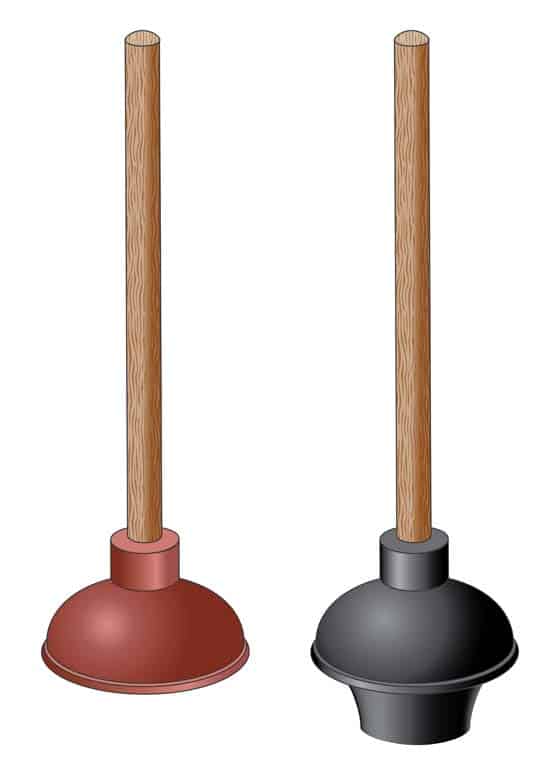
For a sink, tub, or shower, use a flat-bottom plunger.
For a toilet, use a bell-shaped plunger. Note: Some bell-shaped plungers are designed so that the bell can be folded up inside the plunger, producing a flat bottom for sinks, tubs, and showers.
If a drain is simply moving slowly, you can use a chemical drain cleaner, but beware—the caustic nature of most drain cleaners can damage certain kinds of pipes and upset the delicate chemical balance of a septic system. And, if the drain becomes fully clogged, the caustic solution can back up into a fixture, making it hazardous to plunge the drain.
Instead, try the following steps.
2 Try to clear out a hair blockage with the help of a straightened coat hanger with a small hook at one end.
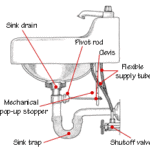
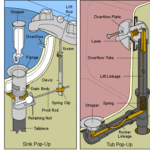
To this, you will probably need to remove the pop-up because hair and debris often collect around this assembly. Pull out the pop-up stopper by wiggling the lever and easing out the stopper.
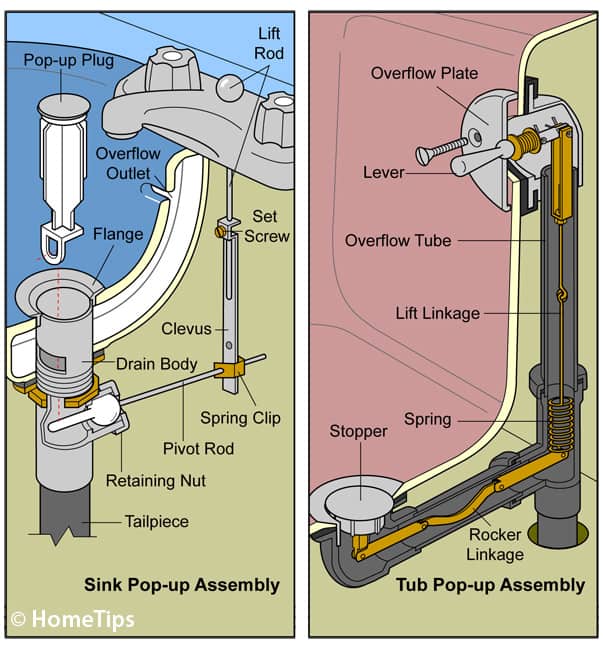
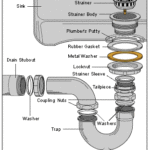
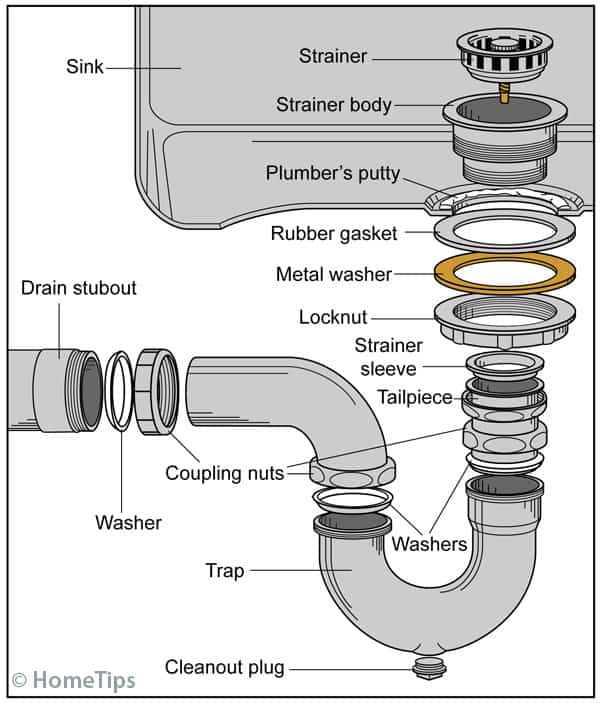
3 In the case of a sink, disassemble the drain’s trap and clean it out (see How to Repair a Sink Trap). This illustration shows a kitchen sink trap. A bath sink has a very similar set-up.
4 Try to clear the blockage with a snake, working from the drainpipe in the wall where it connects to the trap.
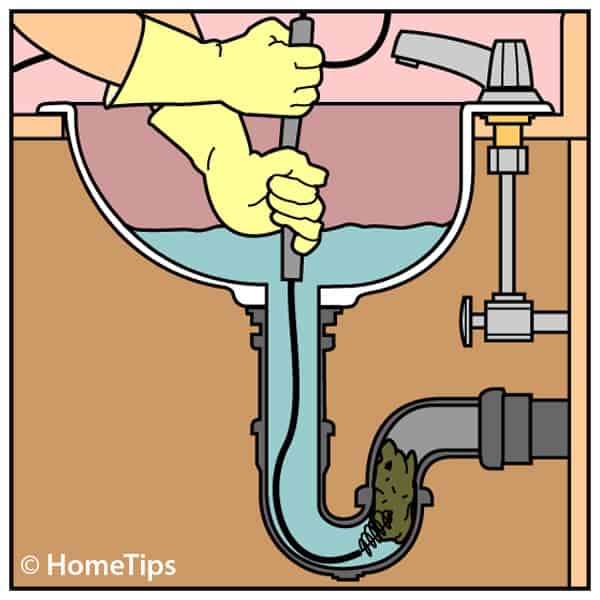
If you can’t get to the clog there, try snaking from a branch clean-out.
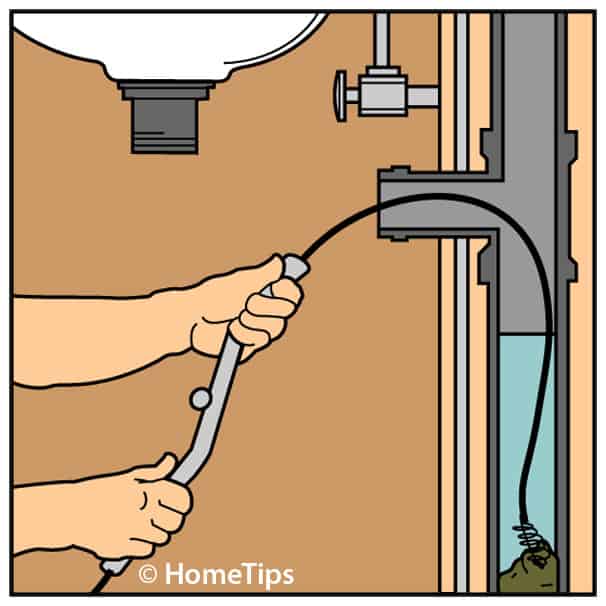
5 If you’ve taken the steps above and the drain is still slow, consider the vent line. (For more about drain-waste-vent plumbing, see Drain-Waste-Vent Plumbing Systems.) Be sure the fixture’s vent isn’t blocked with a bird’s nest or other debris. You can snake it out from the roof, but be careful not to drop the snake into the pipe!
6 If you’re on a septic system, your tank and/or drain field may be overloaded. In this case, call a qualified plumber.
How to Plunge a Clogged Sink, Tub or Toilet
When a drain is clogged—whether it’s a sink, a toilet, or a tub—the first thing to try is breaking up the clog by plunging the drain with a plunger, also known as a “plumber’s helper.”
Be sure you have one that has an elongated bell shape; the bell—needed to properly plunge a toilet—folds up so that the shape of the plunger becomes flat around the end for plunging sinks and tubs. A plunger always works better if you put enough water into the fixture to cover the plunger. When plunging a toilet, seat a bell-shaped plunger over the drain hole and pump rapidly.
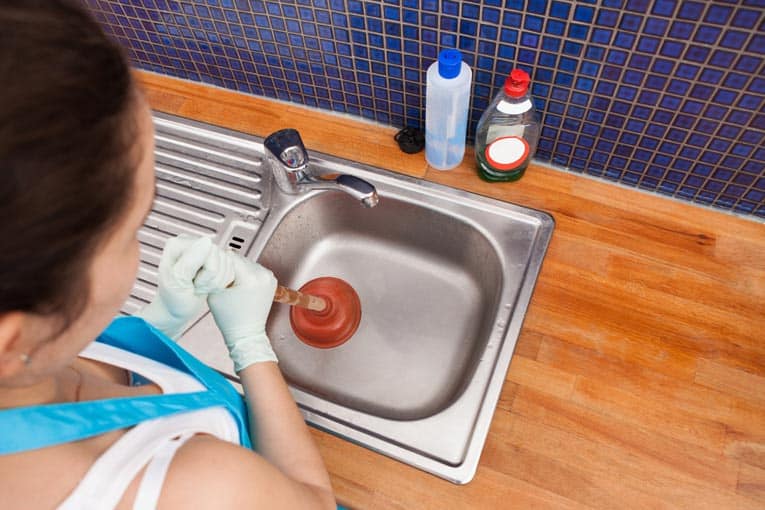
To plunge a sink or tub
- Remove the strainer and pop-up (see How a Pop-Up Drain Stopper Works).
- Stuff a rag into a plastic bag, and use this to plug the overflow hole.
- Fill the fixture with enough water to cover the plunger’s flat rubber cup.
- Plunge steadily up and down 15 or 20 times and intersperse a few powerful pushes. Keep the plunger tightly sealed against the fixture.
To plunge a toilet
- Fill the bowl about half full.
- Push the bell-shaped end of the plunger down into the drain.
- Maintaining a tight seal, rapidly pump 10 to 20 times with short strokes.

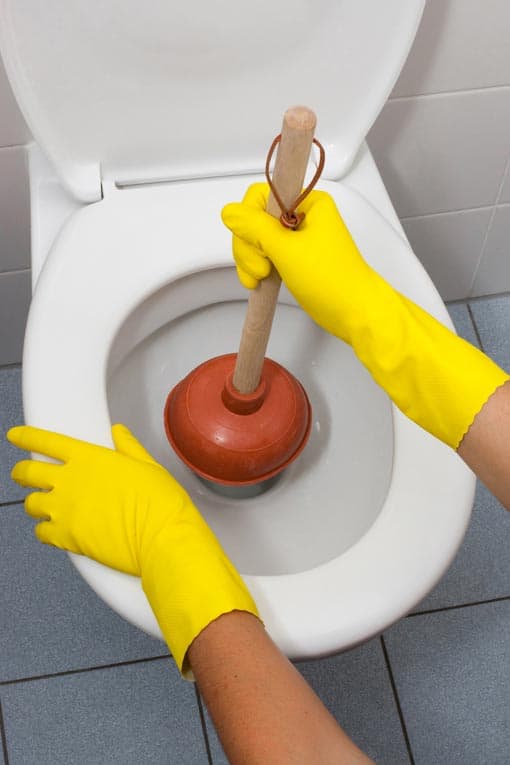

When plunging a toilet, seat a bell-shaped plunger over the drain hole. Quinn Martin / Shutterstock.com
Plunging a shower
A plunger doesn’t usually work on shower drains, but it’s worth a try; be sure the water level covers the plunger.
Eliminating Foul Drain Odors
Unless there is visible sewage from a backup, foul odors occur when sewer gases enter through drain and vent pipes. This happens most often in a seldom-used bathroom or basement area. Water in the trap evaporates, eliminating the barrier it provides.
If refilling the fixture or pouring water into the drain doesn’t eliminate the odor (give the odor a chance to dissipate by opening doors and windows), the cause may be something else, such as a dead rodent.
The worst-case scenario is that the sewer pipes are leaking—if this is happening under your house, it is creating a toxic mess that may include both bacteria and mold. If your home still has cast-iron drain pipes, they may have deteriorated over the years. Replacement with ABS plastic pipe is typically the answer.
How to Water Blast a Drain
There is a tool that’s easier and less messy to use than a snake for breaking loose clogs: a “blow bag” or “hydraulic ram,” which is an expanding rubber bladder that, when attached to a garden hose and pushed down into the offending pipe, fills with water, expands, and then blasts the clog loose.
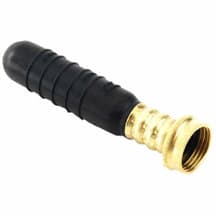
These simple little devices cost about $10 and will work on most clogs. You have to use them judiciously, however, so you do not break loose the connections of a plastic-pipe drain system.
1 Push the blow bag about 6 inches into the drainpipe, and be ready (with a bucket) for water to back up out of the pipe. If you are using one on a bathtub, push it down the overflow pipe until it passes the tee at the tub drain.
2 Turn on the water and allow the bag to fill and seal itself inside the pipe. Then it should pulse with blasts that break loose the clog.
3 Be ready to turn off the water immediately if it doesn’t work.