How to Repair Interior Woodwork & Trim
Easy do-it-yourself repairs for damaged molding and trim, plus tips on how to clean interior woodwork

By +Don Vandervort, HomeTips

In this article:

How to repair gaps along moldings
How to remove trim
How to repair molding corners that are coming apart
How to clean interior woodwork & trim

Repairing scratches, cracks, dings, and similar problems with wood trim and other woodwork is easy in most cases. One of the reasons wood is the most popular building material is the fact that it’s easy to machine and work with standard tools.

Minor scratches and gouges can be hidden or covered up, but you may want to replace pieces that are more seriously damaged.

How to repair gaps along moldings

Moldings and trim generally look best when they are fitted tightly to walls and ceilings. Small gaps show shadow lines and leave the trim looking unfinished.

To fill gaps between moldings and the ceiling or walls, apply a bead of siliconized-latex caulk. This is flexible enough to ride out any movement caused by moisture changes.

Apply a 1/8-inch bead of the siliconized-latex caulk with a caulking gun, and then dampen your finger with water and smooth the caulk.

How to remove trim

If moldings and trim are badly damaged, it’s best to replace them. This work isn’t particularly heavy or difficult, but it does take a little experience at making accurate cuts using a miter box. If this isn’t something you have done before, you’re probably better off calling a finish carpenter or cabinetmaker to do the work.

If you are removing molding and trim as part of a remodel with the intention of reusing them, you may be able to save a few dollars by doing the work yourself. Here’s how:

1. Use a utility knife to cut through any paint seal between the trim and the wall.

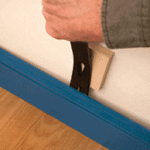
2. Slip a putty knife or scraper in behind the trim and pry it gently away from the wall, taking care not to bend the tool. Next, fit the hooked end of a flat prybar into the separation behind the putty knife and press against a flat wood block that has been placed against the wall (so you don’t damage the wall).

3. Door and window trim is often nailed with a small nail at the mitered corners. If you pry at these points, the wood may split. First, use a mini-hacksaw to cut off the nails at the joint. If you do end up splitting trim when removing it, just glue it together and then put a rubber band around it or tape it with masking tape until the glue dries.

4. When you remove the trim, don’t knock out the nails from the backside or they’ll break away the face of the moldings. Instead, use slip-joint pliers to pull them all the way through from behind.

How to repair molding corners that are coming apart

Moldings look great when they are tightly fitted together, but when gaps open up between them, particularly at corners, they can look somewhat shabby. Fortunately, fixing this situation is very easy. 

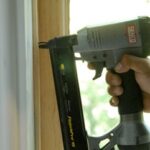
If mitered corners of base moldings are separating, squeeze a little wood glue in the joint and re-nail with finishing nails. Set the heads and fill with wood putty to match. If the nails don’t hold, ask your hardware dealer for trim screws—very narrow screws with a tiny head that can be driven with a drive bit in an electric screwdriver or drill.

If trim around windows and doors begins to separate at the corners, you can squeeze some wood glue at the joint and then pre-drill a pilot hole and drive a 6d finishing nail through the side of one molding piece into the end of the other. Gently set the nailhead beneath the surface (don’t split the wood), and then fill with wood putty or filler and touch up with paint.

How to clean interior woodwork & trim

Interior woodwork is usually protected with some kind of clear finish. To clean any wood effectively without ruining the topcoat, you need to know what it was finished with in the first place. Here’s a quick primer on finishes and how to clean them:

Natural “drying” oils like linseed and tung oil soak into the wood surface and then dry hard to form a protective film that is all but invisible. Manufacturers recommend lemon oil polish, which partially dissolves the old topcoat. As you wipe it on, you also wipe away surface grime that has become embedded in the finish.

Wax imparts a surface coating that can be felt and seen. It doesn’t dry as hard as oils and builds up in the wood pores after repeated applications. To clean waxed wood, you can use a commercial wax stripper, a mild solution of white vinegar and water, or lemon oil polish, but you’ll have to reapply a new wax topcoat afterward.

Polyurethane & varnish are basically the same, the only difference being that one is made with plastic resins and the other with natural resins. Both create a hard, waterproof coating that is impervious to most dirt and stains. Woodwork wearing these protective finishes may not look “natural,” but it can be cleaned by simply wiping with a damp cloth.

Copyright © 1997-2012, Don Vandervort, HomeTips, LLC. All rights reserved. Reproduction without permission is prohibited.


Related Articles on HomeTips

How It Works (3)
Buying Guides & Reports (4)
DIY & Installation Projects (11)