How to buy the best low flow shower head, and a look at how much it can save you in water costs. Includes information on shower head features and water-saving technologies.

If you’re like many people, you may have a shower head that offers a very satisfying shower but uses a tremendous amount of water. According to the EPA, showers make up almost 17 percent of U.S. indoor water usage. According to their data, 2,700 gallons of water could be saved annually by simply replacing one conventional shower head with a WaterSense labeled product (more on this below).
Or you may have the other extreme: an incredibly efficient shower head that makes you wonder if the water is turned on. The trick is to have a low flow shower head that offers a satisfying shower while using a minimum amount of water.
Our Top Recommended Shower Heads
- Most Innovative: Evolve Technologies ShowerStart 1.5 gpm Water Saving Shower Head
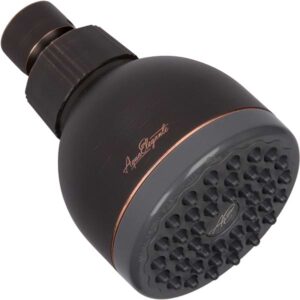
- Best Low Budget Option: Aqua Elegante 3 Inch High Pressure 1.8 GPM Low Flow Shower Head
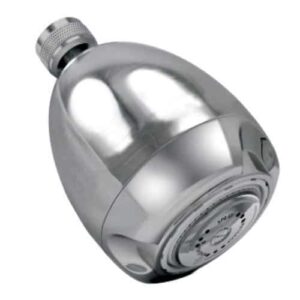
- Best for Low Flow: Niagara Earth Massage 1.25 GPM Low flow Shower Head
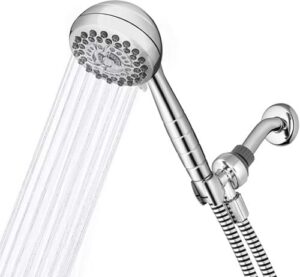
- Best for Higher Flow Rate: Waterpick XRO-763 2.5 GPM Shower Head with Detachable Hose
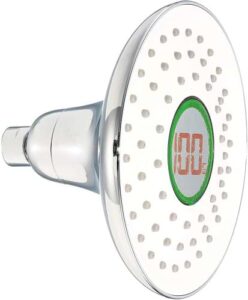
- Best Model with Extras: WaterHawk Smart Shower Head with Water Usage/Temp. LED Display
- Best Waterfall Model: SparkPod 1.8 GPM High Pressure Rain Shower Head
Water-Saving Technology
Some shower heads combine water-saving technologies. For example, the ShowerStart Evolve shower head below offers low flow at 1.5 gallons per minute (GPM) but also features an ingenious valve that allows you to save water and the energy used to heat it before you step into the shower. You can turn on the water to let it warm up and go brush your teeth—the valve automatically reduces the flow to a trickle once the temperature reaches 95 degrees Fahrenheit. Then, when you’re ready to shower, you simply flip the valve for full flow.
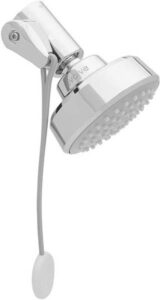
Evolve estimates the head saves about 8 gallons of water and the energy to heat it for every five-minute shower. Over a year, this can save your household more than 2,000 gallons of water.
How Water Pressure Affects Flow Rate
Shower heads are measured by flow—that is, the number of gallons they deliver per minute (GPM). Flow is affected by water pressure, measured in pounds per square inch (psi). The greater the pressure pushing water through pipes and shower heads, the greater the volume of water forced out.
Water pressure on the high side—80 psi, for example—will push a greater amount of water through a shower head than low water pressure, say 20 psi. This same principle is in effect when you don’t turn on the water full blast. Water pressure varies from community to community and even from house to house.
Shower Head Flow Rates
Before 1992, shower heads commonly released 5.5 gallons per minute or more. Following its signing into law, the Energy Policy Act of 1992 limited all residential shower heads to a maximum flow of 2.5 GPM. Some states, such as California, New York, and Colorado restrict flow to 2.0 GPM. Many modern low flow shower heads deliver only 1.5 GPM.
A quality low flow shower head will feel good at both high and low water pressures. Some have flow restrictors that can be reversed or removed to allow more water through on low-pressure lines, allowing you to achieve the right amount of water flow for your water pressure.
How to Measure a Shower Head’s Flow Rate

Judge your present shower head’s flow rate by holding a gallon container under the head and clocking the time it takes to fill. If it fills in 15 seconds, the flow rate is about 4 GPM. If it’s full in 10 seconds, the flow rate is closer to 6 GPM. A low flow shower head should take 24 seconds or more to fill a 1-gallon bucket.
For those looking for precise flow rate and temperature control, the WaterHawk Smart Shower Head has a clear temperature display to help you avoid wasting hot water while waiting for water to arrive. The display is also swappable to show water consumption, helping to measure your average water usage per shower.
EPA WaterSense Label
Choose a low flow shower head with the EPA WaterSense endorsement. According to the EPA, “WaterSense-labeled products and services are certified to use at least 20 percent less water, save energy, and perform as well as or better than regular models.”
Shower heads with this label have to meet stricter criteria for water savings, including:
- Demonstrating that they actually use 2.0 GPM or less
- “Provide a satisfactory shower that is equal to or better than conventional shower heads on the market.”
- Provide 20% or more savings when compared to similar shower heads in the same category.
The EPA also offers a product search tool that helps you find shower heads bearing the WaterSense label.
Low Flow Shower Head Types
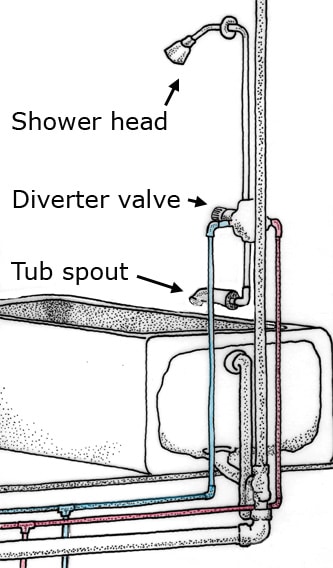
There are two main types of low flow shower heads: the regular, stationary type and hand-held models attached to a flexible hose. Most hand-held shower heads can be clipped onto a wall-mounted hanger, swivel, or bar for hands-free showering. The flexible hose screws directly onto the shower arm, onto a diverter valve between a standard shower head and the shower arm, or onto a deck-mounted diverter valve on a bathtub.

Hand-held models are generally a bit more expensive because they include a flexible hose, but they are also more versatile and use water more efficiently by directing the flow to where you want it.
As a class of fixtures, they also offer a slight energy savings over stationary heads because the water travels a shorter distance between the shower head and your body, cooling less in the air. The net result is that you can adjust the water temperature slightly lower.
Waterfall Shower Heads
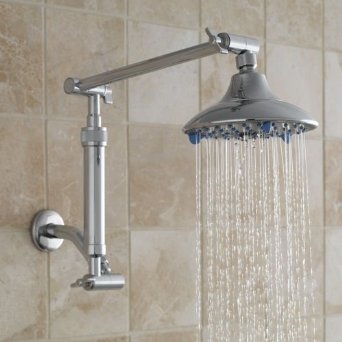
An overhead waterfall shower head mounted on the ceiling provides more of a drenching effect than conventional heads, but can tend to have slightly higher flow rates. Waterfall shower heads are also available in wall-mount styles to replace conventional shower heads, as shown in the photo below.
For a satisfying shower, look for a shower head that has holes in the center as well as around the perimeter for the best spray pattern. Some shower heads have a range of settings that will let you select the water flow you prefer, from fine spray to coarse, as well as different pulsation levels for a water massage.
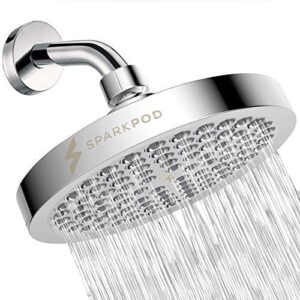
But keep in mind that overhead “rain” style shower heads might not offer the range of adjustability that you’re used to. They generally deliver water from an overhead position at a lower pressure, which mimics the feeling of a rain shower. This can be unsatisfying for those used to a more diagonal flow of water with a higher PSI. For those who don’t always wash their hair– keep in mind this style of fixture might not be for you. It can be difficult to keep your head dry!
Shop for waterfall shower heads on Amazon.
Shower Head Prices
Prices for low-flow heads range from less than $10 for simple, no-frills plastic ones to more than $100 for designer heads. The cost of a particular shower head has little to do with how well it delivers a satisfying shower, but may speak to it’s durability. Cost is more a gauge of features and the construction of materials and finish. There is a low flow shower head for any budget. We recommend browsing Amazon, as there are plenty of customer reviews to help guide your purchase decision.
Shower Head Features
One of the main features of the best low flow shower heads is their ability to adjust spray settings—narrow to wide, spray only, pulse, and so forth. This is particularly handy if different family members like different types of spray.
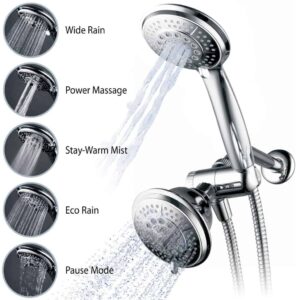
The easiest types to use are those that have an adjustment ring or lever on the outside of the head so that you don’t have to reach into the center of the water stream to adjust them. One other handy, water-saving feature is a shutoff at the head. This cuts water to a trickle while you soap up or wash pets or kids.
Other Low Flow Options
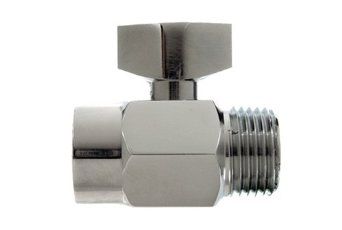
There are two other devices that aren’t really shower heads but help save water in the shower: flow-control inserts (basically a washer with a small hole to reduce water flow) and shower shut-off control valves that reduce flow and provide on/off control above the head. These fit between the shower pipe (arm) and shower head and cost about $14.
Find shower shut-off control valves online.
NEXT SEE: Thermostatic Shower Valve Buying Guide