5765
Thumbnail:
array(4) { [0]=> string(80) "https://www.hometips.com/wp-content/uploads/2012/07/brick-tile-bbq-counter-1.gif" [1]=> int(573) [2]=> int(555) [3]=> bool(false) }
NULL

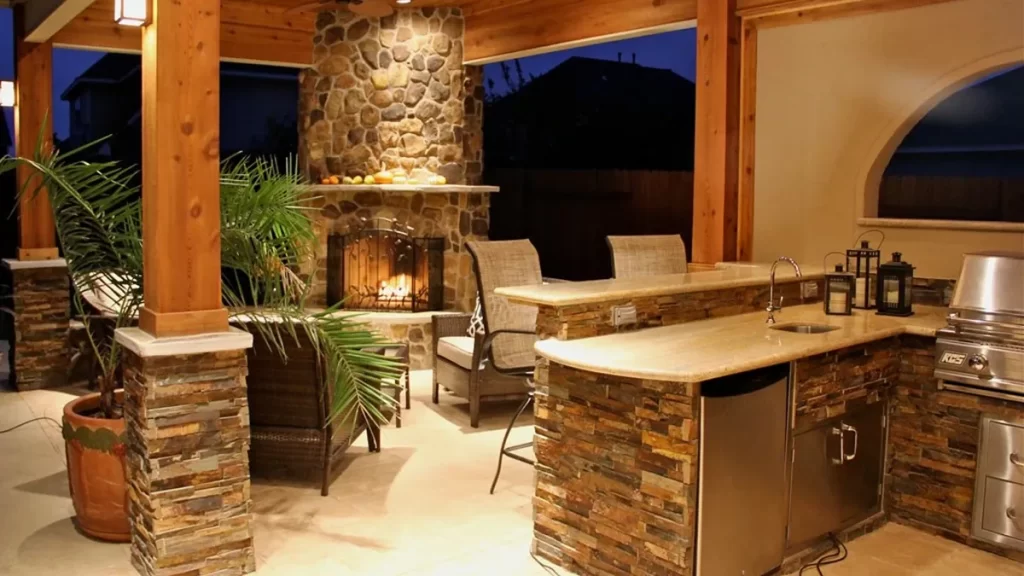
A brick-and-tile barbecue island can transform a backyard into a true outdoor kitchen. Built from concrete block, faced with brick, and topped with tile, this project creates a durable cooking and entertaining center that can last for decades when properly constructed.

In This Article:
Quick Answer
Planning Your Barbecue Island
Barbecue Island Design
Materials & Tools
Permits, Utilities & Site Preparation
Build the Foundation
Build the Block Walls
Install the Brick Facing
Build the Countertop
FAQs

Quick Answer

Building a brick-and-tile barbecue island involves constructing a reinforced concrete slab, building concrete-block walls, facing them with brick, pouring a reinforced concrete countertop, installing tile, and setting a grill, cooktop, and storage doors into the finished structure.

While the project is well within the capabilities of an experienced DIYer, careful planning and accurate layout are essential because masonry mistakes can be difficult to correct after construction.

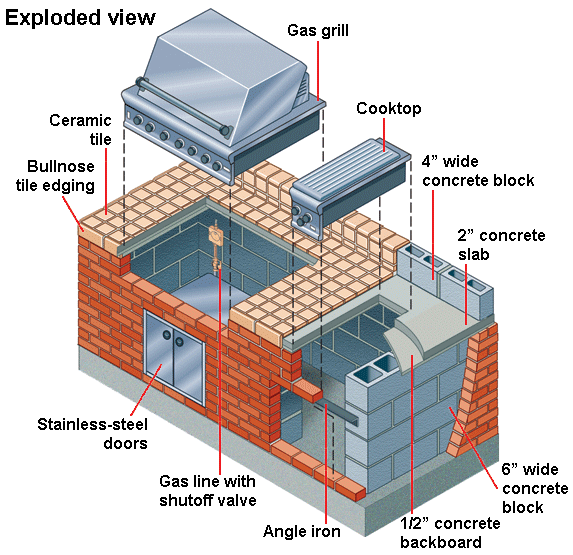
Brick-and-tile barbecue island diagram
A traditional barbecue island combines concrete block, brick facing, tile, and built-in cooking appliances.

Don Vandervort, founder of HomeTips and home repair expert

Don Vandervort
HomeTips Founder
💡
Don’s Advice

The most important step in building an outdoor kitchen is selecting the grill, cooktop, doors, and other built-in components before construction begins. Every opening in the masonry must be sized around the actual appliances—not the other way around.

Buy the appliances first and build the island around them.

Planning Your Barbecue Island

Before buying materials or breaking ground, decide how you will use the barbecue island.

Questions to consider include:

  • Will it be used primarily for grilling or full outdoor cooking?
  • Do you want storage cabinets?
  • Will you need electrical outlets?
  • Will you install a sink?
  • Will natural gas or propane be used?
  • How much countertop workspace is needed?

The design shown here includes:

  • A built-in gas grill
  • A two-burner cooktop
  • Two storage compartments
  • A tiled countertop
  • A tiled backsplash

Because masonry structures are permanent, spend extra time refining the layout before construction begins.

Barbecue Island Design

This design uses reinforced concrete block as the structural core.

The block walls are later faced with brick to create a finished appearance.

The countertop consists of:

  • Concrete backerboard
  • Reinforced concrete
  • Ceramic tile finish

The backsplash is built from masonry and finished with matching tile.

The result is a durable outdoor cooking station capable of supporting heavy appliances and resisting weather exposure.

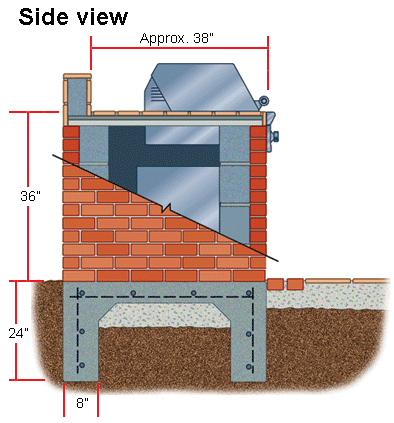
Brick-and-tile barbecue side elevation
Side elevation showing the masonry structure, countertop construction, and appliance openings.

Materials & Tools

Major Materials

  • Built-in gas grill
  • Two-burner cooktop
  • Outdoor cabinet doors
  • Concrete blocks
  • Brick veneer or facing brick
  • Mortar mix
  • Rebar
  • Concrete backerboard
  • Sand-mix concrete
  • Ceramic or porcelain tile
  • Bullnose edge tiles
  • Thinset mortar
  • Grout
  • Silicone caulk
  • Gas piping and shutoff valve

Tools

  • Shovel
  • Level
  • Masonry trowels
  • Wheelbarrow or mixing tub
  • Tile cutter or wet saw
  • Circular saw with masonry blade
  • Drill/driver
  • Tape measure
  • Framing square
  • Safety glasses
  • Work gloves

Permits, Utilities & Site Preparation

Before excavation begins, check local building codes.

Requirements may apply to:

  • Footings
  • Concrete slab thickness
  • Gas piping
  • Electrical wiring
  • Property setbacks
  • Outdoor cooking installations

If electrical outlets, lighting, or powered appliances are planned, install underground conduit before pouring the slab.

Gas piping should also be installed before foundation work is completed.

Safety Note:Gas piping installations often require permits and inspections. If you are not experienced with gas work, hire a licensed contractor to install and pressure-test the gas supply line.

Build the Foundation

A barbecue island can weigh thousands of pounds when completed.

Because of this weight, the foundation must be designed to support the structure without settling.

Step 1: Lay Out the Footing

Mark the island footprint using stakes and string.

Verify all dimensions carefully.

Check for square by comparing diagonal measurements.

Step 2: Excavate the Footing

Excavate according to local code requirements.

The original design uses a perimeter footing approximately:

  • 8 inches wide
  • 24 inches deep

Actual requirements vary by soil conditions and local codes.

Step 3: Install Reinforcement

Place reinforcing steel according to local code requirements.

Rebar strengthens the concrete and helps prevent cracking.

Step 4: Install Utilities

Before pouring concrete:

  • Run gas piping.
  • Install electrical conduit if needed.
  • Verify locations carefully.

Step 5: Pour the Slab

Pour and finish the concrete slab.

Use a long straightedge to ensure a level surface.

Allow the slab to cure several days before beginning masonry work.

💡
Don’s Advice

Resist the temptation to start building on fresh concrete. Masonry construction is far easier when the slab has cured sufficiently to support layout lines and wall construction without damage.

Build the Block Walls

After the slab has cured, construct the structural walls using concrete block.

Step 1: Dry-Lay the First Course

Before mixing mortar, place the blocks temporarily to verify layout.

Test-fit:

  • Grill opening
  • Cooktop opening
  • Storage-door openings

Make adjustments before construction begins.

Step 2: Set the First Course

Spread mortar and set the first course of block.

Check frequently for:

  • Level
  • Plumb
  • Straight alignment

The first course determines the accuracy of the entire structure.

Step 3: Build the Side and Back Walls

Continue stacking block and mortar.

Maintain consistent mortar joints throughout the structure.

Periodically verify dimensions against the appliance specifications.

Step 4: Form Cabinet Openings

Leave openings for storage compartments.

These openings will later receive the access doors.

Step 5: Verify Appliance Fit

Before the mortar hardens completely, test-fit the grill, cooktop, and doors one final time.

Minor adjustments are much easier now than later.

Install the Brick Facing

Once the concrete block structure is complete, apply the decorative brick facing.

Spread mortar onto both the concrete block and the brick as you work.

Take care to:

  • Maintain consistent joint spacing
  • Keep courses level
  • Align vertical joints attractively
  • Clean excess mortar immediately

Above cabinet openings, install steel angle irons to support the brickwork above.

Continue laying brick until the entire structure is faced.

Build the Countertop

The countertop consists of concrete backerboard topped with a reinforced concrete slab and finished with ceramic or porcelain tile.

This creates a durable, weather-resistant work surface capable of supporting heavy cooking equipment and outdoor use.

Step 1: Cut and Fit the Backerboard

Cut 1/2-inch concrete backerboard to fit the top of the masonry structure.

Make openings for:

  • The grill
  • The cooktop
  • Any utility penetrations

The edges of the backerboard should align with the outside face of the finished brickwork.

Before fastening or mortaring the panels into place, test-fit all appliances.

Step 2: Install the Backerboard

Spread mortar across the tops of the block walls and brick facing.

Set the backerboard into the mortar.

Check frequently with a level to ensure the surface is flat.

Any unevenness at this stage will affect the finished countertop.

Step 3: Support Unsupported Areas

Use temporary 2×4 supports beneath any openings or unsupported spans.

The backerboard must remain stable while the concrete is poured and cures.

Step 4: Build a Perimeter Form

Construct a temporary form around the countertop perimeter using straight 2x4s.

This form will contain the concrete.

The design shown here uses a thick countertop edge that gives the finished island a substantial appearance.

Step 5: Pour the Concrete Countertop Base

Mix sand-mix concrete according to the manufacturer’s directions.

Pour approximately 2 inches of concrete over the backerboard.

Embed reinforcing mesh or reinforcement if desired for additional strength.

Use a straightedge and trowel to level and smooth the surface.

Allow the concrete to cure fully before removing the forms.

💡
Don’s Advice

Don’t rush the countertop phase. A level, flat concrete surface makes tile installation dramatically easier and produces a more professional-looking finished project.

Install the Tile Surface

After the concrete has cured, install the tile finish.

Porcelain tile is often the best choice for outdoor kitchens because it resists moisture, staining, and temperature changes.

Step 1: Dry-Fit the Tile

Lay out the tile before applying mortar.

This allows you to:

  • Verify the pattern
  • Plan cuts
  • Avoid small sliver pieces at edges
  • Center the layout attractively

Step 2: Cut Tile as Needed

Use a wet saw or tile cutter to make necessary cuts.

Take extra care around appliance openings and corners.

Step 3: Apply Thinset Mortar

Spread reinforced thinset mortar using a notched trowel.

Work in small sections.

Press each tile firmly into place.

Periodically check alignment.

Step 4: Install Bullnose Edge Tiles

Bullnose tiles create a finished edge along the front and sides of the countertop.

These rounded-edge pieces help protect the tile edges from chipping.

Step 5: Tile the Backsplash

Apply matching tile to the backsplash.

Maintain consistent grout lines throughout the installation.

Step 6: Grout the Tile

After the thinset cures, apply grout according to the manufacturer’s instructions.

Clean excess grout from the tile surface before it hardens.

Allow the grout to cure completely before exposing the countertop to moisture.

Install the Grill and Cooktop

After the countertop is complete, install the cooking appliances.

Follow all manufacturer instructions regarding:

  • Clearances
  • Ventilation
  • Gas connections
  • Electrical requirements

Step 1: Set the Appliances

Lower the grill and cooktop into their openings.

Verify proper support and alignment.

Step 2: Connect Utilities

Connect:

  • Gas lines
  • Electrical wiring (if required)
  • Ignition systems

Perform leak testing on all gas connections.

Gas Safety Warning:After making any gas connection, test all fittings using an approved leak-detection solution. Never use a flame to check for gas leaks.

Step 3: Install the Storage Doors

Install the cabinet doors according to the manufacturer’s specifications.

Verify smooth operation and proper alignment.

Step 4: Apply Caulk

Apply exterior-grade silicone caulk around:

  • Grill openings
  • Cooktop openings
  • Storage-door frames

This helps prevent water intrusion.

Project Cost

Costs vary depending on appliance quality, finish materials, and local labor rates.

Typical DIY projects range approximately:

ComponentTypical Cost Range
Concrete & masonry materials$500–$1,500
Tile & finishing materials$200–$1,000+
Built-in grill$500–$5,000+
Cooktop$200–$1,500+
Cabinet doors & accessories$100–$1,000+

A professionally built outdoor kitchen may cost several times more.

When to Hire a Professional

Consider hiring professional help if:

  • Gas piping must be installed or relocated.
  • Electrical circuits are required.
  • The project includes plumbing.
  • You are unfamiliar with masonry work.
  • The island will support expensive built-in appliances.
  • Local codes require licensed installation.

Need Professional Help?For gas piping, electrical work, masonry construction, or appliance installation, consider hiring qualified professionals to ensure the project is safe and code-compliant.

FAQs

Can I build a barbecue island on an existing patio?

Only if the patio is structurally adequate to support the weight of the finished island. Many patios are not designed for heavy masonry structures.

Should I use concrete block or wood framing?

Concrete block is more durable, fire-resistant, and weather-resistant for permanent outdoor kitchens.

What tile works best outdoors?

Porcelain tile generally performs better than standard ceramic tile in areas exposed to weather and temperature changes.

Can I use propane instead of natural gas?

Yes. Many grills can be configured for propane, though provisions for tank storage and ventilation must be considered.

How long does this project take?

Most experienced DIYers should expect several weekends of work, allowing time for concrete curing, masonry work, tile installation, and appliance setup.

Do I need permits?

Often yes, particularly when gas piping, electrical circuits, or structural work are involved. Always check local requirements before starting construction.

illustration copyright Sunset


Back to top


Author Image
About Don Vandervort
Don Vandervort has developed his expertise for more than 40 years as a remodeler and builder, Building Editor for Sunset Books, Senior Editor at Home Magazine, author of more than 30 home improvement books, and writer of countless magazine articles. He appeared for 3 seasons on HGTV’s “The Fix,” served as MSN’s home expert for several years, and is featured as Yelp's home improvement expert. Don founded HomeTips in 1996. Read more about Don Vandervort