Learn about kitchen faucets before you buy with this expert guide, covering the various kitchen faucet types as well as materials and finishes.

Your kitchen sink has been begging for a new faucet. During one Saturday-afternoon foray through a kitchen showroom, you spot the perfect polished-brass beauty. Should you buy it? Maybe. But before you plunk down your hard-earned cash, make sure you know what you’re buying.

Because faucets receive a tremendous amount of wear and tear, you’ll want to choose one that not only looks great, but is also convenient, safe, and durable.
Price is usually a pretty good measure of quality. But it isn’t necessarily the best measure—nor does it determine whether or not a certain faucet will be best for your needs. To make a wise choice, you need a clear understanding of how faucets are made, and how they work.
With a good valve, water temperature shouldn’t change abruptly as you adjust from cold to hot. In addition, to prevent burns, a scald-guard or temperature-limit feature is offered by several makers for single-control faucets. With these, you can remove the handle and adjust the maximum water temperature the faucet will deliver—a wise feature if you have small children (most plumbing codes now require these types of valves in new construction).
For water conservation, all new faucets are now mandated to deliver no more than 2.5 gallons per minute; some provide additional adjustable flow rate restrictors.
Warranties vary. The best ones offer lifetime protection against leaks and drips, ensuring that your faucet will provide years of trouble-free service.
Kitchen Faucet Styles
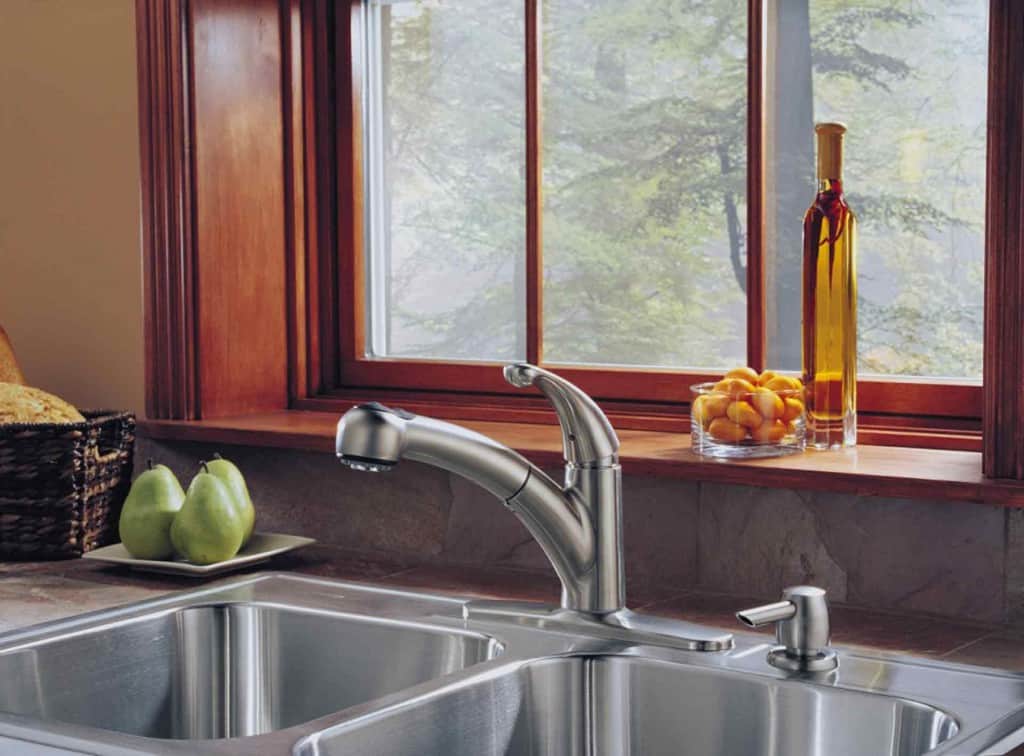
Faucets are manufactured in three basic styles. Single-handle faucets are by far the most common for kitchens because you generally need to operate a kitchen faucet with one hand while holding something with the other hand. Also called a “center set,” this type of faucet lets you control hot and cold by one lever or knob that’s often part of the spout.
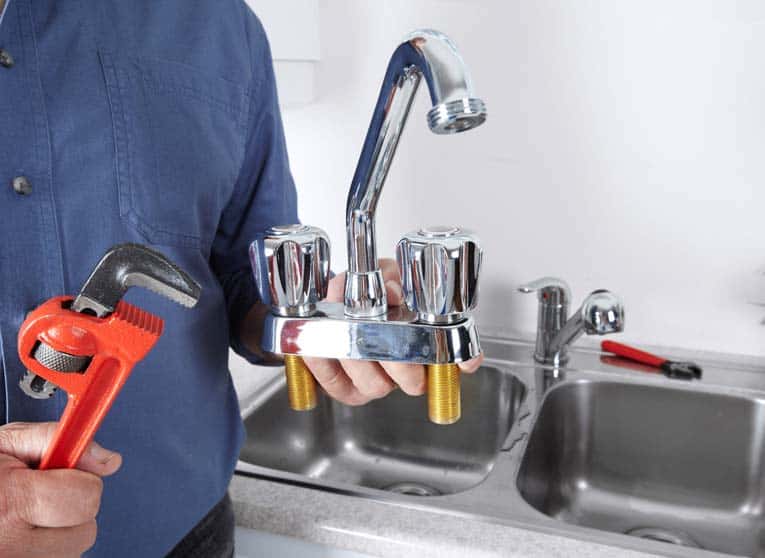
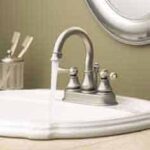
Though two-handle center-set faucets are far more common in bathrooms, some kitchen faucets also are made in this style, where the spout and both valves are combined on a single base unit.
A third type is called a widespread faucet—with this, the hot-water valve, cold-water valve, and spout are all mounted separately. These are rare in kitchens. Nearly all present-day faucets have mixing valves, where hot and cold are mixed and delivered through a single spout.
Before you buy a faucet, it’s essential to know the sink or countertop’s hole configuration unless you’ll be drilling a new countertop to suit a particular faucet. Regarding the countertop: If you’re going to want an instant hot-water spout, a soap dispenser, a sprayer, or the like, be sure to get a sink that has holes to accommodate these. Kitchen sinks generally have holes drilled for 8-inch centers or a single hole for single-handle faucets (escutcheons are made for converting multiple-hole sinks to receive single-hole faucets).
Faucet Materials & Finishes
Though faucets appear to be made from different materials, most are made from brass and are given any of several finishes, from powder-coated enamel to gold plating. Parts may be fabricated—machine stamped or pressed—or cast in molds, the better of the two methods.
Because brass is composed of copper, zinc, and lead, brass faucets can leach tiny amounts of lead into drinking water, creating a health risk. To minimize this risk, the Safe Drinking Water Act requires faucet manufacturers to use no more than 8% lead in brass faucets. Manufacturers are working on techniques to further reduce the amount of lead in their brass.
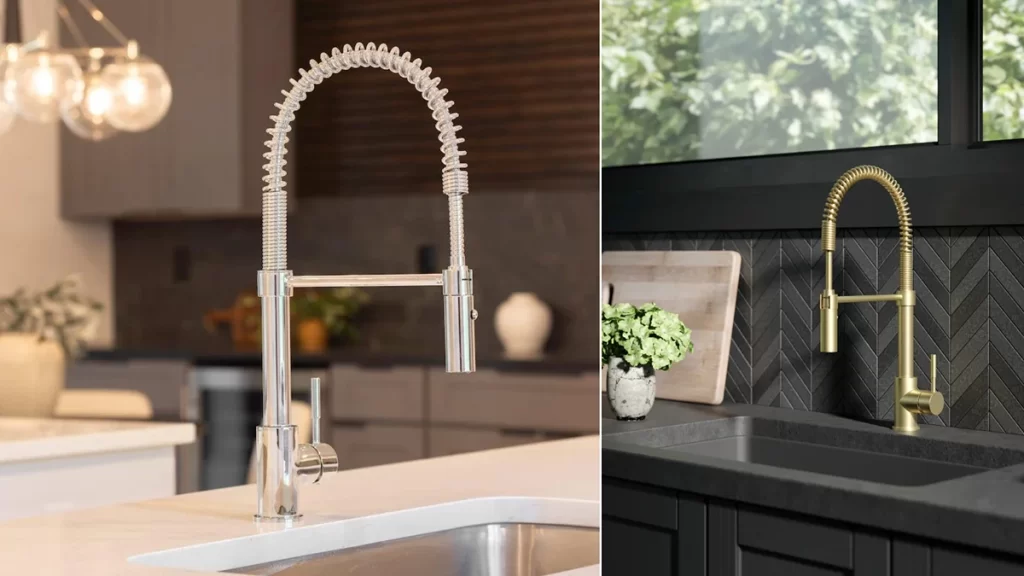
Typical faucet finishes include polished and brushed chrome; high-gloss, satin, and antique brass; gold-plating; and powder-coated decorator colors such as white, black, red, and gray.
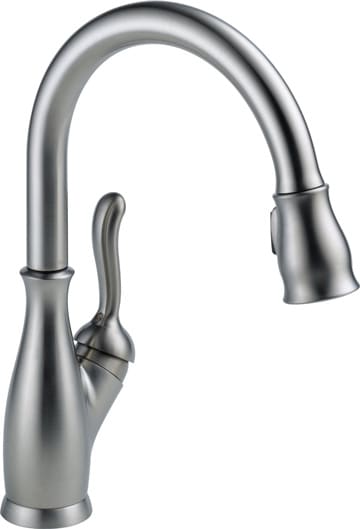
Many companies combine colors, giving the faucet body one color and accenting with another. Powder-coated colors are electrostatically applied and baked on, providing a durable finish that should last as long as the life of the faucet.
Brass faucets are actually nickel-plated before a layer of brass plating is applied. If you choose a high-gloss brass finish, a factory-applied clear coat will save you from bi-monthly cleaning and polishing. Chrome faucets are also nickel-plated before the chrome is applied, but, because chrome doesn’t tarnish like brass, it’s left uncoated.
You can also buy brass faucets that retain their brass shine and are virtually unscratchable— Delta’s Brilliance brass finish is a great example of this recent technology.
Some companies offer better finishes in their higher-priced models. For example, Kohler applies the same special-finish processes and performance requirements to all of its faucets, from its premier Kohler Sensate Touchless to the competitively priced Coralais.