What type of door is best for soundproofing? This expert advice shows you how to reduce the noise that travels through doors. It will show you the kinds of doors that block sound the best, sound reducing materials, how to seal around a door, and other noise control measures.

Doors are often the weakest link in a room’s soundproofing strategy. Because they are typically the thinnest barrier in a wall, they are a passageway for noise. Unlike a wall, they don’t benefit from the thicker—sometimes insulated—construction of walls. But with the right choices and a few simple upgrades, you can significantly reduce noise transmission through your doors and create a more peaceful living space.
So what are the best types of doors for controlling noise? Here we’ll looking at what type of doors block sound the best, and related techniques homeowners can use for reducing household noise.

Buy Solid Doors to Block Sound
There are basically two types of doors: hollow-core and solid-core doors.
Hollow-core doors. A typical lightweight interior door has what’s called a hollow core—they aren’t actually hollow because they have an inner cardboard honeycomb core that’s surrounded by a softwood frame. A hollow-core door’s surfaces are faced with very thin wood veneers. Because of the thin surfaces and the air-filled core, there isn’t much to block the movement of sound. They are essentially because built like drums.
Solid-core doors. Solid-core doors, on the other hand, block noise more effectively because they are dense. Manufacturers sell many types of solid core doors as both interior and exterior doors, ranging from expensive solid hardwood to more affordable doors that have a very solid core of medium density fiberboard (MDF).
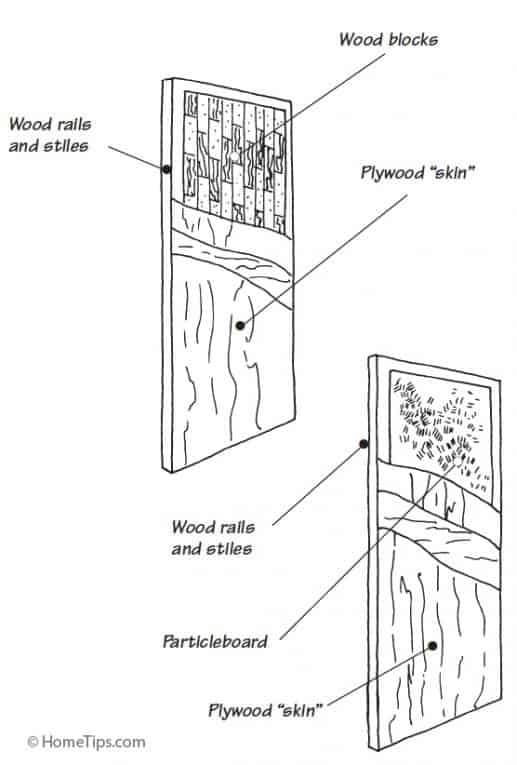
A solid-core door helps block the transference of sound by eliminating the drum-like construction of a hollow-core door.
Door thickness. Though most interior doors are 1 3/8-inch thick, exterior doors are typically 1 3/4-inch thick. Of course, the thicker the door, the better it reduces noise transfer, so a solid-core exterior door is a step up from a thinner interior door.
“Soundproof doors” are also available. These doors are made specifically for blocking sound. They typically utilize 1/2-inch-thick particle board, sound board, an interior layer of lead, and integral interlocking thresholds and sweeps.
Use Weatherstripping to Seal Out Noise
Of course, it doesn’t matter how the door is built if it’s open, right? Similarly, if gaps exist around the edges or between the bottom of the door and the floor, sound will leak around the door from one room to the next.
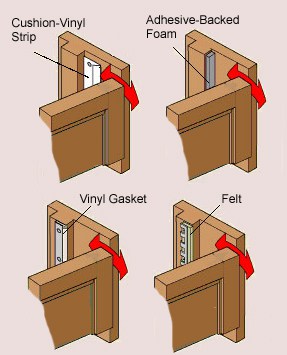
So the door should fit the jamb tightly, and weatherstripping should seal around its edges. Rubber or vinyl bulb door weatherstripping and door-bottom weatherstripping do a good job of sealing around the perimeter of a door to block noise.
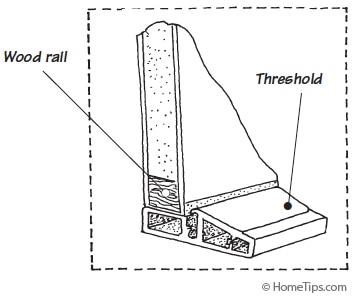
If you need a door sweep that doesn’t drag along the floor, investigate an automatic door sweep that seals the bottom of the door only when the door is closed.
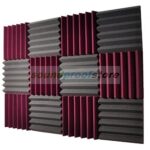
You can also buy recording-studio-grade door noise-reducing materials online as an acoustic door seal kit.
Understand Ratings for Soundproof Doors
How can you tell if a door is going to be good for soundproofing? Sound-blocking materials are rated by an STC (Sound Transmission Class) rating. If you were to replace a hollow-core interior door that has an STC of less than 20 with a solid-core door that is properly weatherstripped, what would be the result?

According to the National Wood Window and Door Association, “If you did all of this, you could probably end up with an STC rating of 34 to 36.” This would block low speech, but not loud speech or other noise.
To block loud speech, a door needs an STC rating of from 40 to 50. For excellent noise blocking, you’ll need a door with an STC of from 50 to 60 and gaskets to block noise from traveling through gaps. For more about STC ratings, please see Soundproofing Walls & Ceilings.
Cut Down Noise By Positioning Doors Properly
When planning for new doors and windows, also consider where sound travels. If possible, stagger doors along a hallway and arrange their swing so that they don’t bounce sound into adjoining rooms.
Choose hinged doors; avoid sliding, bi-fold, and pocket doors that not only make noise themselves but also don’t seal as well as swinging hinged doors.
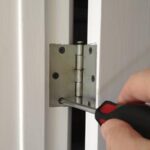
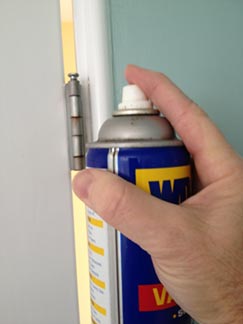
To keep a hinged door from squeaking, all you need to do is spray the hinges with a little WD-40 or penetrating oil.
NEXT SEE:
8 Soundproofing Secrets for a Quieter Home
Soundproofing Your Walls and Ceilings
How to Insulate Existing Walls
Interior Doors Buying Guide