Expert advice on buying a sump pump and controlling moisture in the home, basement, and crawl spaces. Includes choosing submersible vs pedestal pumps, and tips on using battery backup sump pumps.

In an ideal world, our houses are designed to keep us high and dry—well away from the damaging effects of ground water. But life isn’t always ideal. Flooding caused by severe climate conditions is becoming more the norm than the exception. And even in regions where flooding doesn’t occur, houses are often sited in a manner that does not protect their crawlspaces and basements from becoming flooded.
When the ground becomes saturated, water flows across the surface toward any low spot. As ground water pressure builds, it is forced toward the paths of least resistance. If the water finds cracks and fissures in your home’s foundation walls or basement floors, it easily seeps in to fill your basement.
A good sump pump system is a necessity where flooding can occur. A sump pump, which is powered by electricity, automatically pumps out any water that begins to collect in the basement or other low areas. Many types are manufactured, including models that are intended to be fully submerged or that have backup power systems in the event of a power failure.
This article will help you make informed choices about sump pumps. In addition, you will find information that will guide you through keeping your home dry and comfortable year-round.
Buying the Best Sump Pump
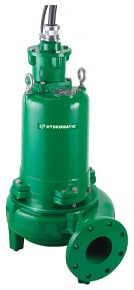
You can buy a new sump pump online, or through do-it-yourself retailers, plumbing wholesalers, or waterproofing contractors. The prices range from about $60 to $500 or more, depending on the quality and features.
Pedestal or Submersible Sump Pump?
First decide between a pedestal or submersible pump. A submersible is out of sight and earshot, an important advantage if the basement is used as a primary living area. It’s also much safer if there are children in the house. But pedestal pumps are less expensive and easier to repair than submersible pumps.
Because submersible sump pumps sit in water a good deal of the time, they have a life span of from 5 to 15 years. Pedestals, on the other hand, may continue to operate for as long as 25 to 30 years. (Because a pump’s life is closely related to the conditions and frequency of its use, most manufacturers offer limited one-year warranties.)
Sump Pump Features
Switches on sump pumps come in several types, including floats, diaphragms, and mercury switches. It doesn’t really matter which type you choose—but be sure to choose an automatic one. By the precepts of Murphy’s Law, if you put in a pump with a manual control, you most certainly won’t be home to turn it on the next time your basement begins to flood. An automatic switch can protect the pump, too. Most pumps burn out if they run “dry” for too long. An automatic switch prevents this from happening.
A unit’s strength is directly related to its price. Almost without exception, the least expensive models are also the weakest. A sump pump is measured by horsepower, which ranges from 1/6 to 1/2 HP.
But more important is the number of gallons per minute (GPM) or gallons per hour (GPH) a pump will move. This capacity is a factor of both the pump’s efficiency and the “head,” or “lift”—the vertical distance from the bottom of the sump to the highest point of discharge. A pump may advertise “2400 GPH,” but this may be measured at a 1-foot head. At a 5-foot head, that figure might drop to 2100 GPH, and at 10 feet 1800 GPH. Also note whether the pump is strong enough to pass small solids, such as leaves and twigs.
Materials that make up a pump also affect price. Look for parts and housings that won’t corrode—cast-bronze, alloy, stainless-steel, and epoxy-coated cast-iron housings are favorable, but avoid sheet metal. Polypropylene and related plastics are used in all grades of pumps. Pay attention to the power cord’s length, too. Power cords come in 5-, 10-, 15-, 20-, and 25-foot lengths. Extension cords shouldn’t be used with sump pumps.
Battery Backup Sump Pumps
To ensure that your sump pump doesn’t stop working in a storm—when you need it most—buy one with a battery backup.
You can buy a sump pump that will operate even when the electrical power goes out due to a thunderstorm, major flood, or brownout, for example.

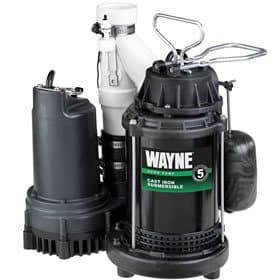
Most of these are intended to be auxiliary pumps. Used in tandem with the primary pump, they kick in if the main pump fails.
One type runs on a rechargeable 12-volt battery. If you get this type, it pays to buy one that has an automatic battery recharger that will keep the battery alive even when it hasn’t been used for months. This charger should be designed so that overcharging the battery is never a problem.
Another type of sump pump backup system is hooked up to the house’s water system and operates by water pressure. If the electrical power goes out, the water-pressure backup takes over.
Whether or not you need a backup really depends on your situation—the likelihood of a power or pump failure and the damage such a failure could cause. Because the backup system doesn’t add much to the price of a sump pump, it is usually worth paying the premium.
In some cases, an inexpensive high-water alarm will suffice. With one of these, the alarm senses rising water and sounds. On the other hand, if you’re going to lie in bed on rainy nights worrying if everything you’ve stored in the basement is under water, a backup may give you more than flood protection—it may give you peace of mind.