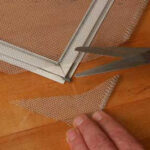
To protect flooring and furniture against fading caused by the sun, consider window film.

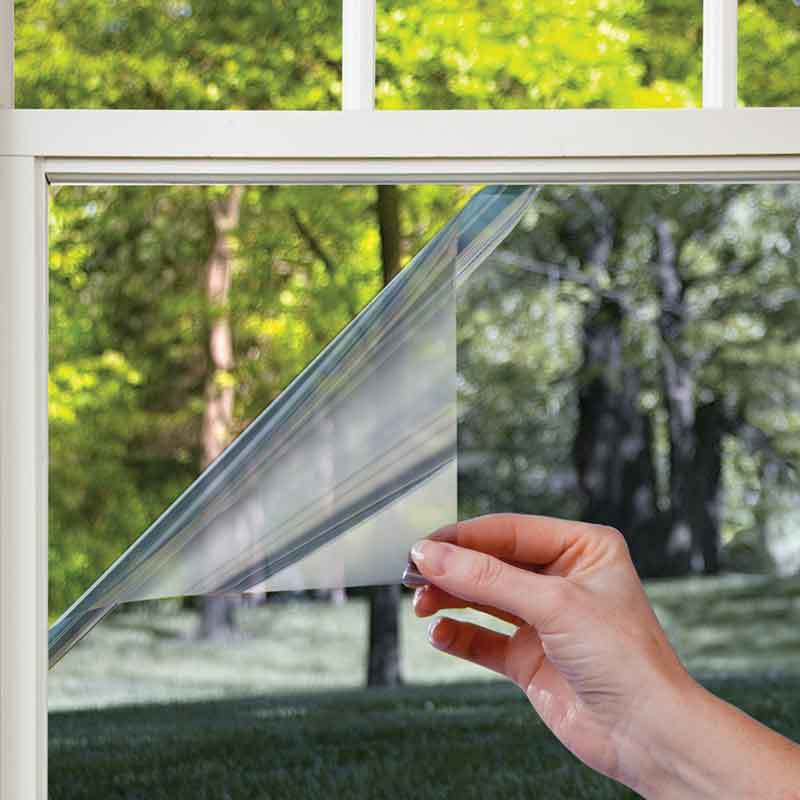
Window film is an inexpensive way to create privacy, preserve your furnishings and flooring from fading, and lower your monthly utility bills.
Direct sunlight can fade floors and furnishings—it is the ultraviolet (UV) radiation in sunlight that causes the fading. You can control this by blocking the sun with shades or curtains, but, then, of course, you may lose most of the natural light in the room. Overhangs, awnings, and shade trees can help provide partial shade.
A more effective solution is to apply window film to windows where direct sunlight is a problem. Thin plastic window film tints are designed to block UV rays and deflect heat. Some are meant to slightly reduce visible light without negatively impacting views while others are designed to offer privacy.
How to Buy Window Film
Sold in rolls online or at home improvement centers, window film tint is easy to apply to the inside surfaces of windows using a soapy solution of water (baby shampoo is usually the preferred agent for making the water soapy), a razor blade, and a squeegee.
When buying window film, pay attention to its intended use. Choose reflective low-e film to cut back on UV rays and heat. But be aware that these films have varying levels of light transmission. If you choose one of the darker films, you will sacrifice illumination.
The types of window film available include privacy, glare-reducing, and insulating film.
Privacy film allows light through but can’t be looked through from the outside, either because it is opaque or because it reflects outward. Opaque varieties look like etched glass, rice paper, or have leaf patterns. The varieties that reflect light are more mirror-like and transparent. Both will block ultraviolet (UV) rays that can fade floors and furnishings.
Privacy window film is occasionally used indoors, too. It can add an extra measure of privacy on interior windows, shower doors, transom windows, and the like.
Glare-reducing film cuts down on reflected light that causes glare.
Insulating film reflects sunlight and UV rays in the summer, which reduces your home’s heat gain. In doing so, it helps to substantially lower your energy bills during summer months. In addition, it helps lower your energy bill during cold winter moths by reflecting radiant heat back in toward your home’s interior.
Of course, pay attention to the size of the rolled sheets, too. Measure the window panes you wish to cover and make sure to buy a size of window film that will cover each glass pane in a single piece.
How to Apply Window Film
Designed for easy do-it-yourself application, window film is a thin, flexible, plastic material that is sold by the roll. It is applied to the inner surfaces of windows, typically using a squeegee, sponge, and razor blade. Directions are packaged with the film.
To apply it, you typically:
1) Clean the window.
2) Spray on a soapy water solution.
3) Cut the film to approximate size and peel the backing from it.
4) Apply the film and scoot it around until it is positioned properly.
5) Squeegee the water out from under the film, from the center to the edges.
6) Trim the edges of the film with a razor blade.