Warm summer days are a good time to take stock of any winter damage to your home. If your house wasn’t entirely buttoned up during storms, the chances are pretty good that a few problems, particularly pertaining to moisture, have become self-evident. Following are 10 post-winter repairs you may want to tackle now. If any of these are beyond your abilities, call a qualified contractor.



Repair Water-stained Ceilings
Following a roof leak, there is usually a yellow or brown stain on the ceiling below. Don’t try to paint right over the stain as it likely will show through. Simply seal the stain with a stain sealer, and then repaint the ceiling (you can try to touch up the area, but, for uniformity, you’ll likely have to repaint the entire ceiling). For more information, see How to Repair a Water-Damaged Ceiling.
Fix Missing or Damaged Roofing
Look for trouble spots on top of the roof (but only in good weather and if you can do this safely). Or, during the day, go into the attic with a bright flashlight to check for signs of wetness. You can also look for pinpoints of daylight showing through (on a wood shingle roof, you’ll probably see many such places, but these tend not to leak because they’re protected by the shingles’ overlap). When in the attic, step only on secure framing members—never on the insulation or topside of the ceiling below as these won’t support you! For more information, see the section How to Repair Roofing.
Fix Leaking Roof Flashing
Many serious roof leaks are not caused by missing or damaged shingles but rather are due to broken or improperly installed roof flashing. For information on fixing flashing, see Roof Flashing.
Fix Siding Leaks
If you’ve discovered any areas where your home’s siding doesn’t hold Mother Nature out, you’ll have to make repairs. For how to repair siding, see How to Repair Siding.
Clear Gutters & Downspouts
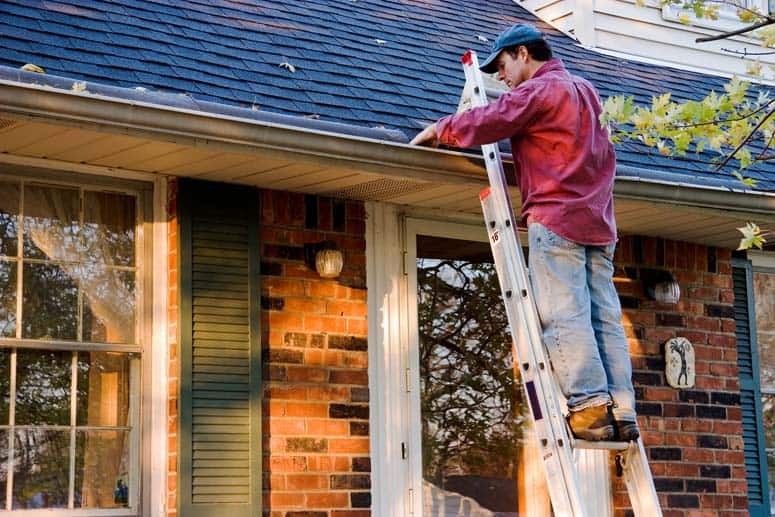
Water damage often occurs as a result of clogged gutters and downspouts. Dry weather offers a good opportunity for cleaning them out so water will drain properly once the rains come again. For information on cleaning and repairing gutters, see the section Gutters & Downspouts. For information on new gutters, see Rain Gutters Buying Guide.
Eliminate Water in the Basement or Crawlspace
Did your basement or crawlspace become flooded? If it did, it’s important to dry it out to protect against dry rot, prevent moist air from being drawn up into the living space, and arrest the growth of mold. For more information, see Basement & Crawlspace Moisture Control Maintenance. If a sump pump might be required to keep this from happening in the future, see the Sump Pumps Buying Guide.
Repair Storm Doors
Buffeting winds can leave a door closer bent, broken, or pulling away from the doorjamb. For information on fixing a storm door, see the How to Repair Screens & Storms.
Block Air Leaks
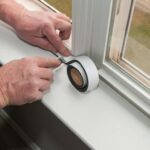
Indoors, cold weather often becomes most evident by cold drafts caused when air leaks through and around windows. One way to slow down these drafts as well as save energy is to install or replace weatherstripping.
Repair Rotted Woodwork
Where wood sills or sashes have taken serious abuse from weather, resulting in rot, you can use epoxy wood filler, available at home centers, to repair the area. Use a chisel to dislodge most of the loose, rotted wood. Drill a few 1/4-inch holes into the damaged wood. Soak the entire rotted area with liquid epoxy “consolidant” to transform the area into a sturdy base for filler. Let the wood absorb the consolidant for about five minutes, and then reapply, wait, reapply, and continue in this way until the wood ceases to accept consolidant. Knead a batch of epoxy filler, according to label directions, and mold the repair. As the material cures, dip a putty knife into the solvent and use it to sculpt and shape the repair. Sand, file, or rasp as needed, and paint the area within three days. If large areas have been affected, hire a carpenter or cabinetmaker. For more about fixing windows, see the section Windows & Skylights.
Service Your Furnace and/or Air Conditioner
With forced-air systems, air returning to the air handler’s blower first passes through an air filter designed to catch dust and debris and help clean the air before it’s recycled back into your home. A good furnace filter can help reduce allergens. When filters become clogged with dust, they cut down on a furnace’s efficiency. Change filters quarterly or sooner if they look dirty. For other repairs or maintenance, call a professional heating and air (HVAC) contractor or furnace repair technician.