If you need to work on a faucet or fixture, or shut off the water to your entire house, this article will show you how. Includes how to turn off the water supply to individual fixtures such as sinks, shower, or tub, or to the whole house.

When a home’s water supply system leaks or a repair to one of the plumbing fixtures is needed, you’ll have to shut off the water. It’s best to do this at the valve that’s closest to the problem. That way, the rest of the house will still have a functioning water supply.
How to Shut Off Water to Plumbing Fixtures
The water-using fixtures and appliances in most homes built since the 1950s have a shut-off valve that allows you to stop the water supply at the fixture without shutting off the water to the entire house.
If you need to work on a faucet, shower, or tub that isn’t served by a shut-off valve, you may need to shut off the water to the entire house in order to work on it.
How to Shut Off the Water to a Sink Faucet
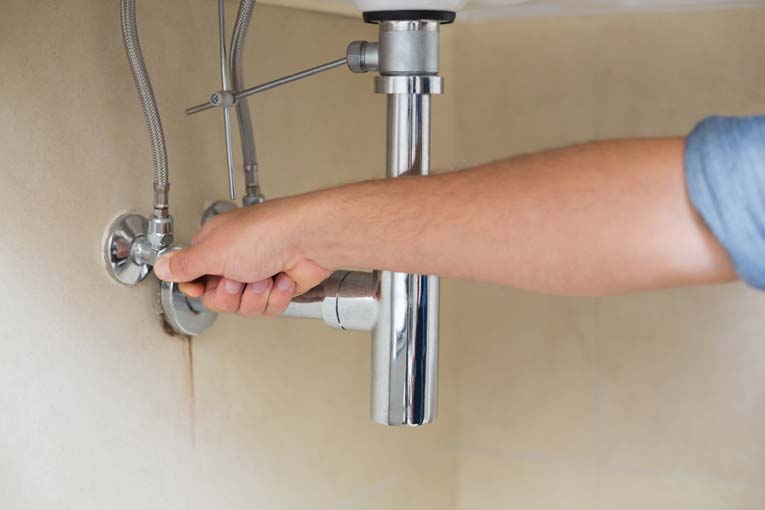
- Look for two chrome-plated or plastic stop valves under the sink, usually at the back of the cabinet. These are connected to the water supply tubes that serve the faucet—one for cold, and the other for hot. The cold is usually on the right-hand side.
- To shut off a single-handle faucet, you will need to turn off both. Turn the valves clockwise to turn them off.

How to Turn Off the Water to a Toilet
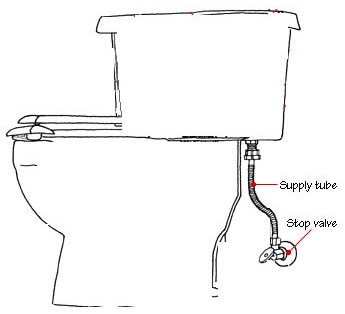
- A toilet just has a single cold-water valve, called a “stop valve.”
- Locate the “stop valve” and shut it off by turning the handle clockwise, just like the standard valves on a faucet discussed above.
- If the valve is too difficult to turn by hand, try wearing a work glove, or grip the handle with a pair of slip-joint pliers.
Browse slip-joint pliers on Amazon.
Note: Newer types of stop valves have a small lever that you twist a quarter turn clockwise to turn off the water.
How to Turn Off the Cold Water Supply to a Water Heater
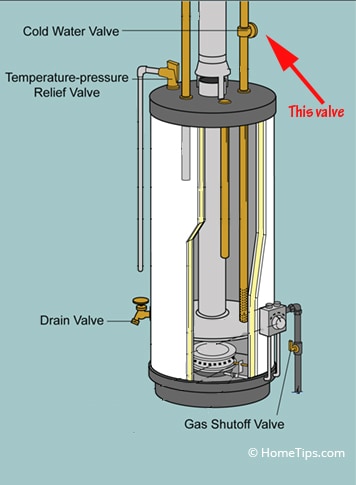
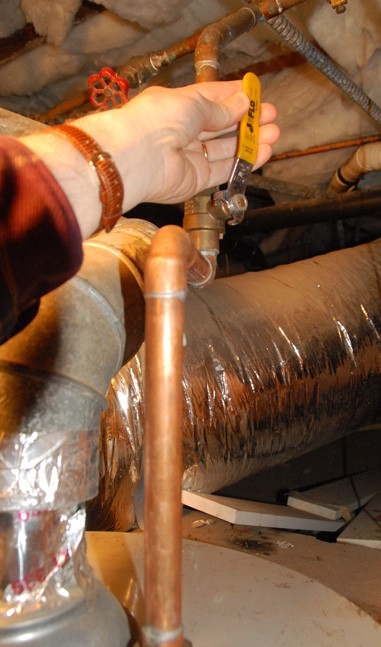
To shut off a water heater, turn off the cold water valve above the water heater. This may be a lever or a regular circular-handle valve. If it is a lever, pull it 90 degrees from its open position. If it is a circular valve, turn it clockwise until it is closed.
How to Turn Off the Water to a Washing Machine
To shut off the water supply to a washing machine:
- Locate the valve. Many washers are served by two valves that look like outdoor hose valves—one for hot and the other for cold. Hot is usually on the left. They work just like outdoor valves.
- Turn off both valves behind the machine clockwise.
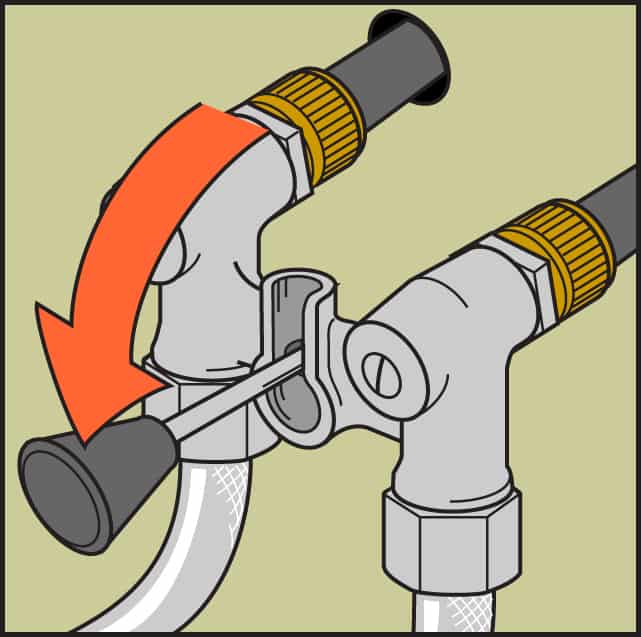
- Some washers have simple lever-style washing machine shutoff valves like the one shown here. Just pull the lever down, as indicated, to shut off the water to both hot and cold.
How to Turn Off Water to the Entire House
If you don’t find a shutoff valve near a fixture, you can shut off the valve that controls the flow of water to the entire house, normally located near where the cold water pipe enters (the valve will be outside in warm climates, inside in cold climates).
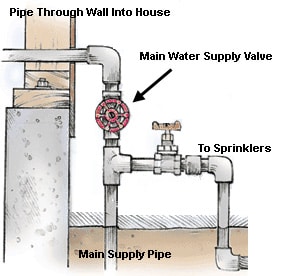
In some cases, the valve is located on a pipe right before the water heater and may have a red handle. To turn it off, rotate the handle clockwise.
How to Shut Off Water to the Whole Property
To turn off the water to your house and the rest of your property (including outdoor sprinkler systems, hose faucets, and so forth), look for the main valve just to the house side of your water meter. This is normally out by the street, often in a concrete box just below ground level.
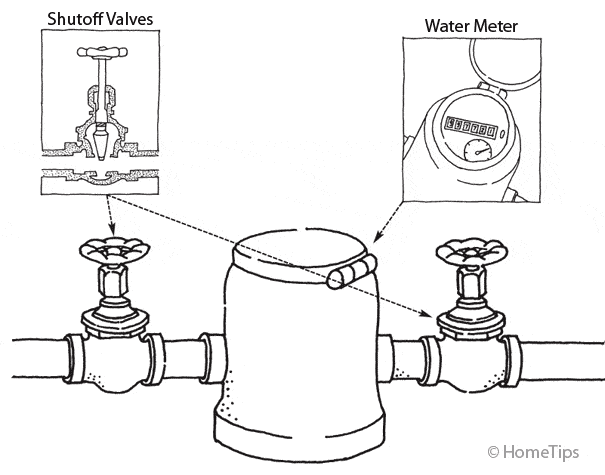
Once you locate the valve handle, turn it clockwise until it stops. If it is frozen in position, put a few drops of lubricating oil around the valve stem and wear a work glove to turn the handle or, if necessary, turn it with the help of a pipe wrench.
This valve should always be completely open or completely closed—never used half open to control the amount of flow into the house. It isn’t designed to be left partially open.
NEXT SEE:
• Plumbing Repair Basics
• How to Fix Noisy Pipes
• Trade Secrets for Hiring the Right Plumber
• How to Repair a Leaky Shower Faucet Valve
• How to Solve Water Pressure Problems