A expert guide to various types of smoke alarms and carbon monoxide detectors— features to look for, where to put them in your home, and how to install them properly.

Battery or Hardwired?
Types of Smoke Detectors
Smoke Detector Features
Addressable Smoke Detectors
Smoke-CO Detectors
Where to Put Smoke Detectors
Smoke Detectors for High Ceilings
How to Install a Smoke Detector
Types of Carbon Monoxide Detectors
Where to Put CO Alarms in Your Home
How Carbon Monoxide Detectors Work
Preventing Carbon Monoxide Poisoning
Every year in the United States, more than 3,500 people die in home fires and another 16,000 are injured. Additionally, house fires cost upwards of $14.8 billion in property damage in 2019, according to the National Fire Prevention Association (NFPA). Many victims do not die of burns but rather smoke inhalation, because fires often occur at night when victims are asleep.

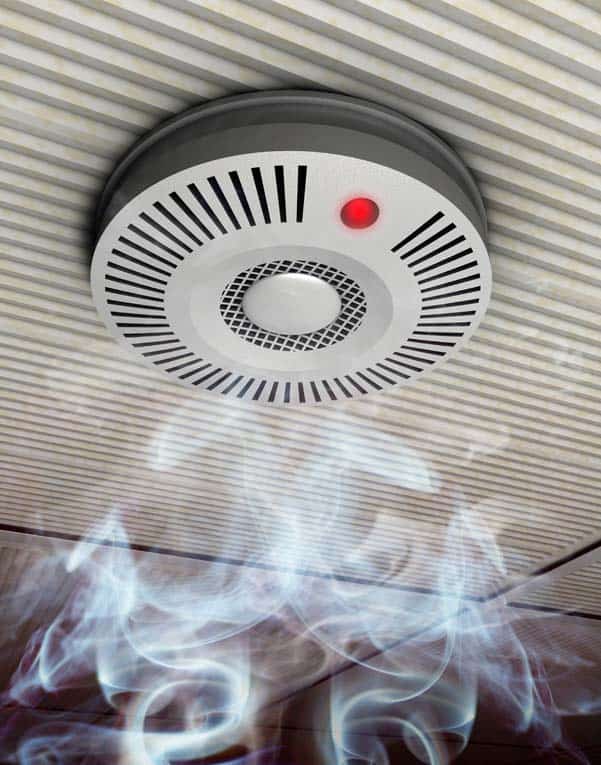
Smoke detectors are the best way to prevent these catastrophic results. The risk of dying from a home not protected by a smoke detector is twice that of a protected home. Of course, it is essential that the detector is operational. According to the NFPA, almost 3 out of 5 fire deaths occur in homes without smoke alarms or where detectors failed to operate.
A smoke detector stands guard around the clock, and when it first senses smoke, it sounds an alarm, often buying a family the precious time it takes to escape. The most common alarm is a beeping noise that is piercing and persistent enough to alert homeowners to danger.
Other types of alarms include a voice detector, which has verbal commands pre-recorded in addition to an alarm. Examples of the pre-recorded commands are ”Fire, get out!” or “Smoke alert!” or Low-battery alert.” One version of this type may even have a parent’s voice pre-recorded (studies indicate that children are more likely to respond quickly to a parent’s voice).
Strobe detectors are smoke alarms that are designed to meet the needs of the hearing-impaired. These smoke alarms use strobe lights that flash or vibrate to alert those who are unable to hear standard smoke alarms. There are also detectors that respond with tactile stimulation such as bed shaking.
Battery or Hardwired?
Most smoke detectors are battery powered, but some, particularly those installed during house construction, are hard-wired into a home’s electrical system. Most hard-wired smoke detectors run on line voltage (household current) and have a battery backup in case a fire knocks out the house’s electrical power. Battery-powered smoke detectors are easier to install. Smoke detector batteries insider both battery-operated and hard-wired smoke detectors last approximately 6 months. When they need replacing, the detector will chirp every minute or so to indicate that the batteries are expiring.
The main problem with battery-powered smoke detectors is that people don’t maintain them. All battery-operated detectors are supposed to signal a low battery, but you have to make sure they’re working; newer models won’t close if the battery is removed. New lithium battery models last up to 10 years; the entire unit is disposable.
Types of Smoke Detectors
There are many brands of smoke detector on the market, but they all fall under two basic types—ionization chamber smoke detectors and photoelectric smoke detectors. Both types have two basic parts: a sensor to sense the smoke and a very loud electronic horn to alert people.
Ionization detectors use a radioactive source that produces electrically charged molecules (ions). This sets up an electrical current within the detector chamber. When smoke enters the chamber, it attaches to the ions and reduces the flow of electrical current, which sets off the alarm. Ionization detectors are better at detecting the smaller amounts of smoke produced by fast, flaming fires.
Photoelectric detectors use an optical detector sensor (a photo beam) and go off when smoke from a smoldering fire is dense enough to deflect that beam of light.
Dual detectors Because homeowners cannot predict the type of fire that might start, a combination smoke detector—called a dual-sensor smoke alarm—is actually the wisest choice.
Smoke Detector Features
Depending upon quality of smoke detectors, some also offer:
• A remote-control mute button that can be linked to a television remote control to silence nuisance alarms.
• Safety lights to provide illumination during an alarm.
• Silence buttons that will quiet the alarm for a few minutes at a time. Detectors with this feature are commonly placed in kitchens.
• Transmission of a signal to a central monitoring station as part of a security alert system.
• Intercommunication of hardwired smoke detectors that guarantees if one alarm in the house goes off, they all go off. Even if the fire is detected in the basement, people upstairs will hear an alarm.
Addressable Smoke Detectors
Addressable smoke detection systems provide knowledge of the exact location and status of every device. The alarm decision is generally made by control equipment rather than an individual detection device.
Addressable system features include:
• The alarm can be investigated before a fire service is called.
• The system can tell you which device needs maintenance.
• Each detector is uniquely identified, and the exact location of each unit is displayed at the fire control panel.
• Any cut wires or short circuits do not generate nuisance alarms.
• Each sensor can be adjusted to its own unique environment.
• Nuisance alarms are less likely because the system uses multi-sensor detection
• Many incorporate strobe lights as a means of alerting the hearing impaired.
Smoke-CO Detectors
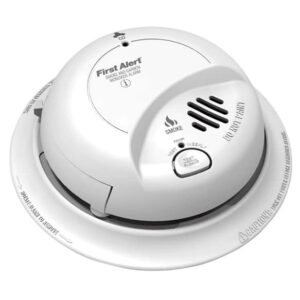
Combination detectors are gaining in popularity because they combine smoke and carbon monoxide detection. They are available as CO and ionization alarms and CO and photoelectric alarms. By purchasing these combo alarms, you would have fewer alarms to place in your home (except that many CO alarms mount in the typical wall outlet placed low on the wall while the optimum smoke alarm placement is on or near the ceiling).
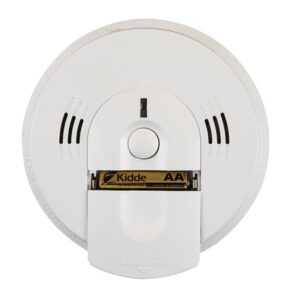
A hugely popular new innovation is the Nest Protect Smoke & Carbon Monoxide Alarm. When connected to Wi-Fi, this sends an alert to your mobile phone if the alarm is activated or the batteries run low. A voice actually tells you whether the problem is smoke or CO and where it is occurring. The connection is operated through a companion app on your phone. The carbon monoxide sensor has a 10-year life. You can buy both battery operated and hard-wired models.

How Smoke Detectors Work
The inner workings of a smoke detector include three main parts: the sensing chamber, a loud horn, and a battery (or house voltage power source). A test button lets you know if the battery, sensor and alarm are working properly. Batteries should be replaced yearly, on a regular schedule.
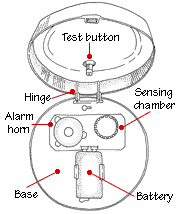
Standard smoke detectors work by ionization; some use a photoelectric cell. With ionization, a tiny amount of radioactive material conducts electricity through the air between two electrodes.
When smoke upsets the current, the alarm sounds. Photoelectric models use a small beam of light. Smoke causes the light to disperse and, when it does, the alarm begins to bleat its warning.
Some models sound false alarms when they detect kitchen cooking smoke or high bathroom humidity. It’s best not to put them within 20 feet of kitchens, garages, furnaces, hot water heaters, or within 10 feet of a bathroom. Also avoid drafty locations.
Where to Put Smoke Detectors
It is common to have one smoke detector per floor, but the U.S. Fire Administration recommends the installation of both an ionization chamber detector and a photoelectric detector or one dual-sensor alarm per floor. Choosing one battery-operated and one hardwired detector ensures your home is fully protected because it is far less likely that two detectors will be inoperable at the same time.
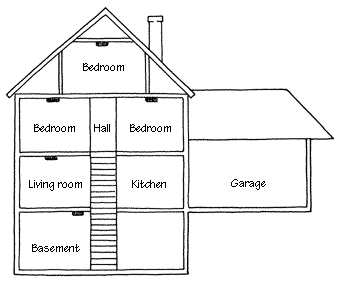
Smoke detectors should be located on each level of a house and outside each sleeping area (one hallway detector can serve several bedrooms).
To be on the safest side, place one detector in every bedroom, and at least one on every level of the home, including the basement and attic. In addition, every home should have at least one working fire extinguisher.
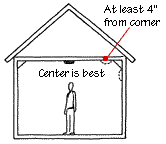
Because smoke rises, most smoke detectors are mounted on the ceiling or on a wall near the ceiling. Ceiling-mounted detectors should be placed 4 inches away from any wall at the highest part of the ceiling, with one exception: If you have a cathedral ceiling, do not place detectors at the high point of the ceiling, nor in a corner, because these are dead air spaces; instead, place detectors at the next highest level. Wall-mounted detectors should be placed on the wall several inches, but no more than a foot, from the ceiling.
Detectors should be several horizontal feet away from a heating or cooling register, window, corner of a room, edge of a ceiling fan’s sweep, and any ducts or doors to a kitchen or bathroom (because cooking smoke and bathroom steam can cause false alarms). They should also be placed as far away as possible from combustion sources such as oil- or gas-fired furnaces, space heaters, clothes dryers, and water heaters.
In basements, a smoke detector should be placed at the bottom of the stairs and an additional detector near any sleeping areas in a finished basement.
If you are unsure where to place your smoke detectors, contact your local fire department or a state building inspector for assistance.
Smoke Detectors for High Ceilings
Beam smoke detectors are uniquely suited for protecting open areas with high ceilings where other methods of smoke detection are difficult to install and maintain. The beam of the detector senses a reduction in the signal of the unit, and works effectively on both smoky and fast-flaming fires.
Beam detectors come dual-ended and single-ended, with the single-ended beam detectors the easier to install. Alignment is accomplished through an optical sight and two-digit signal-strength meter incorporated into the unit.
The most basic unit consists of a transmitter/receiver unit and a reflector. When smoke enters the area between the unit and the reflector, it causes a reduction in the signal. If the smoke level reaches the predetermined threshold, the alarm is activated.
Other, more costly models have sensitivity adjustments and testing features.
How to Install a Smoke Detector
If your smoke detectors are hardwired, you will need to have a qualified electrician do the initial installation. All you need for battery-powered detectors is a screwdriver; some brands are even self-adhering and stick to the wall or ceiling where they are placed.
For all smoke-alarm installations, be sure you follow the manufacturer’s instructions because there are differences between brands.
If you are uncomfortable standing on a ladder, ask a relative or friend for help. Some fire departments will install a smoke alarm in your home for you. You can find out whether your fire department offers this service by calling them on a non-emergency telephone number.
About Carbon Monoxide Detectors…
Carbon monoxide (CO) is an unavoidable gas produced by burning many types of carbon-based fuels such as heating oil, natural gas, gasoline, propane, kerosene, coal, and wood. In a properly built and maintained home, these toxic combustion gasses are vented outside so that they don’t pose a risk. But carbon monoxide becomes a serious threat—in fact it becomes deadly—when it accumulates as a result of ventilation equipment that is improperly installed, obstructed, disconnected from vents, or in need of repair. CO also can be formed by open flames, space heaters, blocked chimneys, using a barbecue indoors, or running a car inside a closed garage. As you might expect, most carbon monoxide poisonings occur during the fall and winter heating seasons.
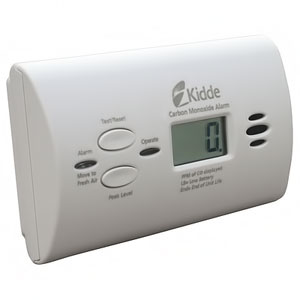
As many as 500 Americans die each year from carbon monoxide inhalation, and 15,000 are hospitalized with symptoms associated with carbon monoxide exposure. Children and seniors are the most vulnerable to the hazardous byproduct of utilizing fossil fuels in the home.
Fortunately, special, inexpensive carbon monoxide detectors are available for warning you when CO levels become dangerous. These have sensors to detect dangerous levels of this colorless and odorless gas. With these, an alarm sounds, based on the level of gas detected. The alarm gives you time to ventilate the area or safely leave your home. CO detectors do not serve as smoke detectors and vice versa, although dual smoke/CO detectors are made to serve both purposes.
Types of Carbon Monoxide Detectors
A basic carbon monoxide detector typically costs from about $20 to $40. Look for models with digital displays, which, rather than simply beeping, show relatively precise CO levels in parts per million (ppm).
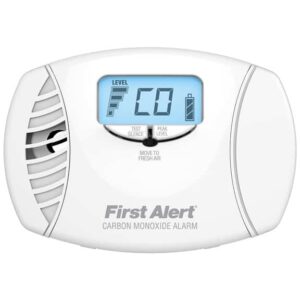
CO detectors may be battery-powered, designed to plug-in to an electrical outlet, or designed to be hard-wired to an electrical box that’s part of the home’s electrical system. Battery-operated smoke detectors are easier to install, but batteries must be changed twice a year. Plug-in smoke detectors, which typically have a battery backup, are popular because they’re very easy to install—as long as an empty standard 120-volt electrical outlet is available. Hard-wired smoke detectors are permanent fixtures, but these only make sense if an non-switched electrical box has been provided to receive them. Most have a battery backup in case the power goes out.
Before buying a CO detector, consult with your local building department to see if it requires a specific type of CO alarm, for example hardwired. Also make sure the detector meets Underwriters Laboratories Standard 2034. If you buy a battery detector, make sure to follow the manufacturer’s instructions for correct battery replacement, and adhere to its replacement schedule.
Some CO alarms are designed to integrate with your home security system. The alarm can then be heard inside and outside the house, and the central monitoring station will also receive a signal and can the proper authorities or call your cell phone.
Test your CO alarm once a month, and vacuum out dust and other debris that may collect on your CO detector as needed.
CO alarm warranties usually last no more than five years because carbon monoxide sensors lose sensitivity over time.
Where to Put CO Alarms in Your Home
For a small, one-level home, one CO alarm is sufficient. For a larger home or multi-level home, consider using one per floor, including the basement and a walk-in attic.
Choose a central location just outside or within sleeping areas and other living spaces. Don’t put alarms inside garages where initially high CO from car exhaust can trigger false alarms. Also don’t place them near doors or windows where fresh air can cause a misleadingly low reading.
CO detectors can be placed near the ceiling or near the floor as CO is very close to the same density as air.
How Carbon Monoxide Detectors Work
CO alarms differ from smoke detector alarms in that they incorporate a concentration-time function. At lower concentrations (100 parts per million), a detector will not sound an alarm for up to an hour. At 400 ppm, the alarm will sound within a few minutes. They also warn you within four hours when they reach 70 ppm or within 15 minutes if the level reaches 400 ppm. This concentration-time function is intended to mimic the uptake of carbon monoxide in the body while also preventing false alarms due to common sources of carbon monoxide such as cigarette smoke. The newest models incorporate an end-of-life signal that will tell you when you need to replace the alarm.
Some basic models of detectors only display current ppm levels, while others display both current ppm levels and spikes over a period of time. The latter type of detector provides important information to emergency responders evaluating the level of past or ongoing exposure.
Three types of CO sensors are available. They vary in cost, accuracy, and speed of response. Any of the three are fundamentally adequate because CO levels normally increase very slowly, and there is a large range between safe and unsafe levels.
1. Biomimetic. A biomimetic sensor (chem-optical or gel cell) works with a form of synthetic hemoglobin that darkens in the presence of CO and lightens without it. You can either see the colors directly or have them connected to a light sensor and alarm.
2. Electrochemical. This type of fuel cell is designed to produce a current that is precisely related to the amount of carbon monoxide in the atmosphere. Its advantages over other technologies are that it is highly accurate in its readings of carbon monoxide, requires minimal power, and has a five-year life.
3. Semiconductor. This sensor has thin wires of the semiconductor tin dioxide on an insulating ceramic base, which is monitored by an integrated circuit. The carbon monoxide reduces resistance and by doing so allows a current high enough to trigger the alarm.
Preventing Carbon Monoxide Poisoning
The best way to avoid carbon monoxide hazards is not to produce it in the first place. Preventative measures against carbon monoxide poisoning include:
• Have your heating system inspected. Making sure your heating system is in proper working order. If your furnace has a cracked heat exchanger or a blocked flue, the unit can release CO into your home.
• Have your chimney and fireplace inspected annually, even if you rarely use the unit. A nest in the chimney can cause a smoke and/or CO backup into the living space. (If you use your fireplace frequently, the chimney may also have a build-up of soot that can become a fire hazard.) Do not close the flue of a smoldering fire in the fireplace until the ashes have fully cooled because embers can generate a large quantity of CO.
• Never operate combustion appliances (such as barbecues) or gas motors indoors. Generators can be serious CO hazards. If you have one in the case of a power failure, be sure to place it away from your house so that engine-exhaust gases, which emit CO, do not migrate back into the living space. Never operate a generator in a garage, basement, or other confined spaces where CO can leak back into the house.
• Don’t allow exhaust into the house. If you have an attached garage, warm up vehicles after you have pulled them out from the space.