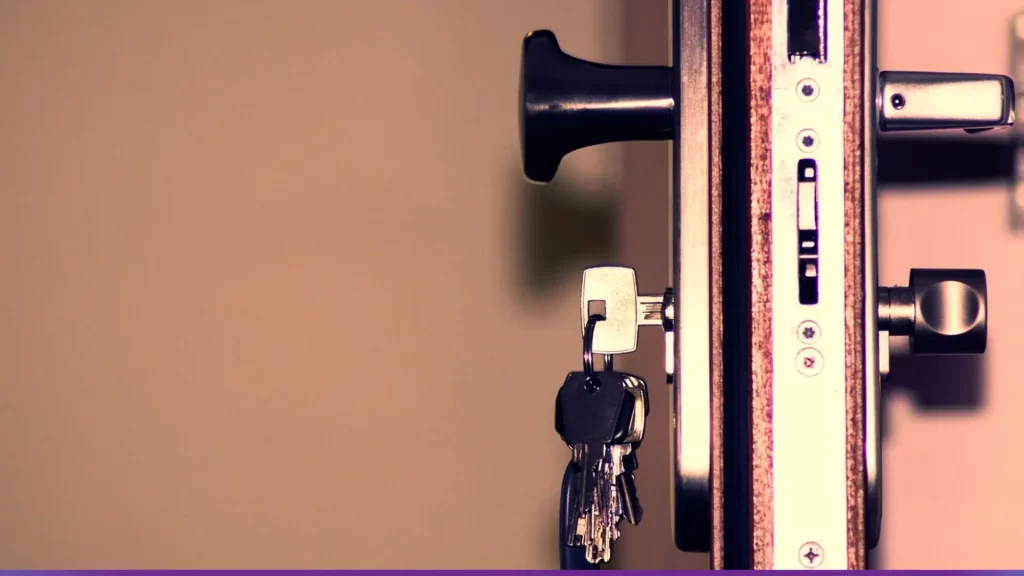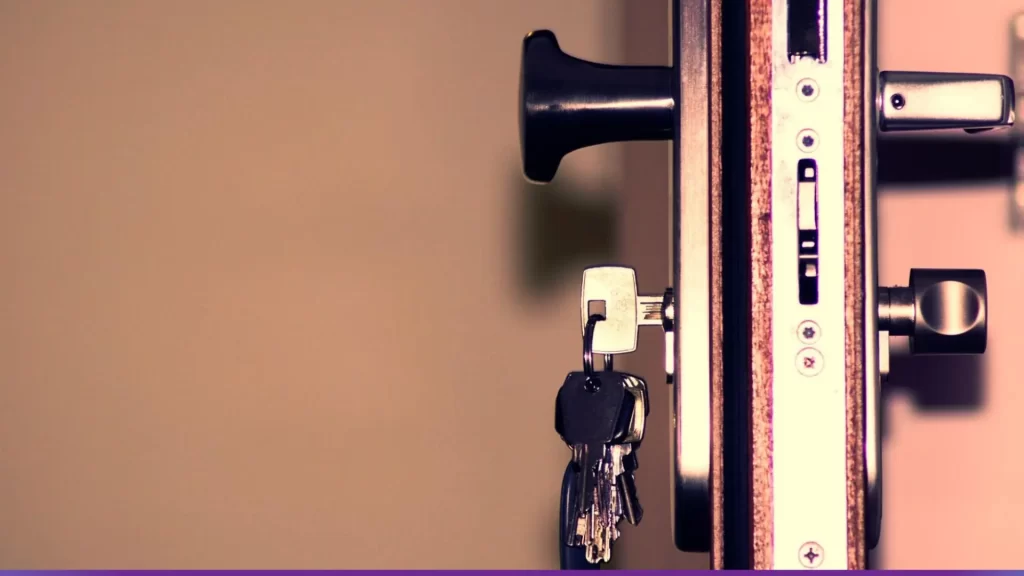
Expert DIY advice on how to repair door knob locks and deadbolts, including fixing a stuck or frozen door lock, door that won’t latch, stuck deadbolt, or keys broken off in the door lock.

Many door knob and lockset problems can be corrected before they become so serious that you get locked out or the lock does not work at all. Often, a broken door latch assembly or door lock mechanism causes the problem. If you do get locked out—or you just want a pro to fix your door lock—call a locksmith.
Here we look at DIY repairs for locks and knobs. If you have a key that won’t work in the lock, please see How to Repair Keyed Door Locks.

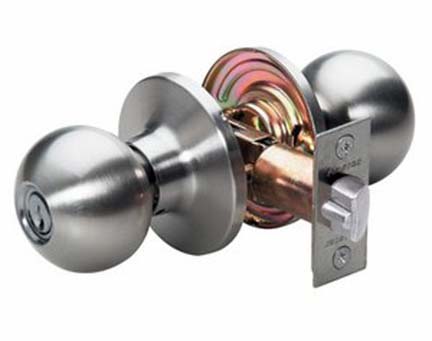
Sometimes a key or door lock mechanism may not work simply because it’s dirty or needs to be lubricated with graphite (do not use any type of oil—like WD-40—in the key slot because this will gum-up the works). An improperly functioning door latch may be the result of a poorly fitting door. In this article, you’ll learn how to fix both of these door knob problems.
For serious lock problems, it is usually best to call a locksmith or, if you can get the door open, to replace the lock entirely. Most door knobs on interior doors are relatively inexpensive to replace—in fact, it doesn’t usually pay to have interior door knobs or locks repaired by locksmith services unless the knobs or locks are special or particularly expensive because interior door knob replacement is more affordable. Exterior latches and locksets, on the other hand, can be very pricey. You can buy door knobs online at Amazon.
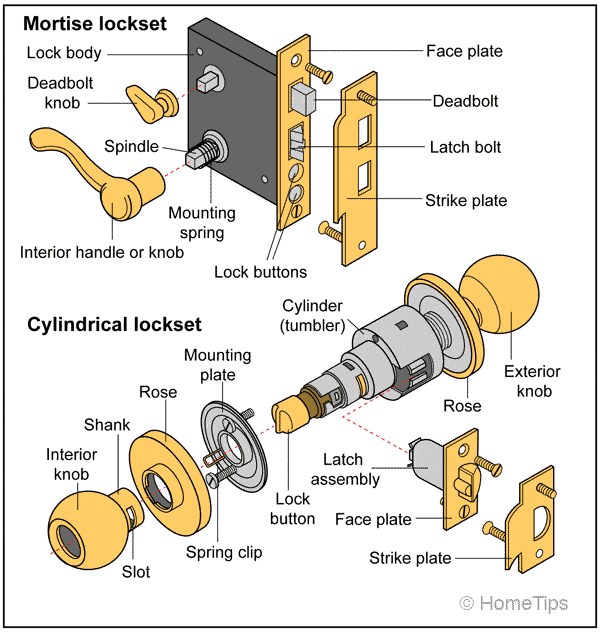
 I find that, when I need a professional locksmith to fix a high-quality door knob or lockset, it’s usually a lot less expensive to remove the hardware myself and take it to a locksmith as opposed to having the locksmith come to me. Of course, if it’s on an exterior door, I do this when the weather is nice and when it’s safe to leave the door unlocked.
Door Lock Doesn’t Latch Properly
When a door latch doesn’t click into position, it usually means the door latch and the strike plate on the door jamb are out of alignment. Tighten the door hinge screws and then, if necessary, adjust the strike plate by loosening its screws and shifting it slightly. Latch repairs range from making minor adjustments like this to completely repositioning the door.
If the latch does not catch, close the door slowly to watch how the latch bolt meets the strike plate. The latch bolt may be positioned above, below, or off to one side of the strike plate. (Scars on the strike plate may show where it is misaligned.)
It is also possible the door has shrunk because of changes in humidity, and the latch will no longer reach the strike plate. Once you have figured out whether this is the problem, try one of the methods shown here.
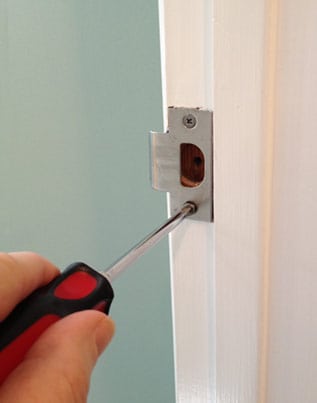
When possible, it might be easiest to file the slot in the strike plate a little bit so that it will receive the latch. For less than a 1/8-inch misalignment of the latch bolt and strike plate, file the inside edges of the plate to enlarge the opening.
You can also solve misalignment by replacing the strike plate with an adjustable door strike, available at Amazon or home improvement centers like Home Depot or Lowe’s.
For more than a 1/8-inch misalignment, remove the strike plate and use a chisel to extend the mortise as necessary. Replace the plate, fill any gap above or below the strike plate with wood putty, and refinish.
If the latch does not reach the strike plate, shim out the plate, or add another strike plate on top of it (remove the screws and run them through both plates). If the latch still will not reach, shim out the door’s hinges. As a last resort, remove the door’s hinges and shim them to adjust the door’s position. For more about shimming and adjusting a door, see How to Fix a Loose or Warped Door.
Door Knob Is Loose
Door knobs may become loose over time. Methods of tightening them depend upon the type of lock. You can tighten a simple interior mortise lockset like the one shown at left as follows:
1) Loosen the setscrew on the door knob’s shank.
2) Hold the door knob on the other side of the door, and turn the loose door knob clockwise until it fits snugly. Then tighten the screw until you feel it resting against the flat side of the spindle. The knob should turn freely.
3) If this does not help, remove the door knob and check the spindle; if the spindle is worn, it must be replaced. If the whole lockset is worn, it is best to replace it entirely.
Door Lock Is Frozen or Works Slowly
Exterior door locks can freeze, interior locks get dirty, and small internal parts eventually wear out or break. Before you buy a replacement door knob or lock, try some quick remedies:
Put some graphite into the lock’s keyhole, either by squeezing it from a tube or dusting it onto a key and pushing the key in and out. Then operate the door lock a few times to work the graphite into the mechanism.
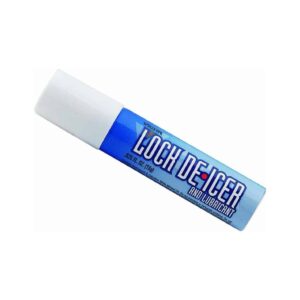
Lock de-icers contain alcohol and other lubricants that help to dissolve gummy, dirty deposits. The last resort is to disassemble the lock to see if something has jammed or is broken—you may be able to set it straight or replace the part without buying a whole new lock. Lock de-icers are available on Amazon.
Entire Lock Cylinder Turns
A cylinder turns when the setscrew(s) meant to hold it in place become loose or broken.
Mortise lockset: Remove the door knob’s faceplate (if there is one) at the door’s edge and locate the one or two cylinder setscrews. They should be in line with the center of the lock cylinder. Tighten the setscrew(s) by turning clockwise—be sure they engage the slot that runs along the edge of the cylinder (the key slot should be perfectly vertical). Replace the faceplate.
Surface-mounted rim lock: Unscrew and remove the cover (called a “case”). Tighten the cylinder setscrews. Replace the case.
Deadbolt Is Stuck
If a deadbolt is stuck, the chances are good that the bolt is having a hard time engaging the opening in the strike plate on the door jamb. Be sure the strike plate is securely screwed and in reasonable alignment with the bolt. You can file the edges of the strike plate a little, and even slightly round the edges of the deadbolt’s end. If this doesn’t work, you’ll probably have to remove the strike plate, fill the screw holes with glue and wood matchsticks, reposition it properly, and screw it back in.
Key Is Broken Off in Lock
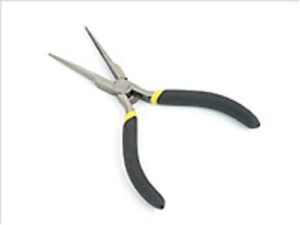
Using needle-nose pliers, try to grip and pull the key straight out. If you can’t get a grip even with needle-nose pliers, cut off a coping saw blade and, with the teeth pointed outward, insert the blade into the keyway and try to hook and drag the key out. If this doesn’t work, remove the lock cylinder. Insert a stiff wire into the cam slot at the back of the cylinder and push the key out. As a last resort, take the cylinder to a locksmith.