Expert advice on how to fix heat pump problems, such as heating or cooling poorly and more. Includes step-by-step DIY advice.

Heat pump problems are often caused by thermostat malfunctions. To test your thermostat and fix any problems, see Thermostat Repairs. If your home is heated by a furnace instead of a heat pump, please see Furnace Troubleshooting & Repairs.

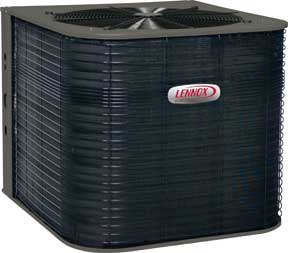
If your heat pump does not heat or cool properly, freezes up, or cycles off and on too frequently, this article will help.
Following is step-by-step advice for troubleshooting typical heat pump problems and DIY heat pump repairs.
Here we will deal with heat pump power problems; a heat pump that freezes up; improper heating, cooling, and cycling by a heat pump; blower issues; heat pump noises; and more. If these simple repair techniques don’t work, have a heat pump repair technician check out your system.
If your heat pump needs to be restarted at low temperatures, check your owner’s manual for proper techniques. If you can’t find your owner’s manual, try searching the make and model online for a free PDF manual. For models with a system selector switch, turn the switch to Emergency Heat and wait six hours. Then return the switch to the normal setting.
If the heat doesn’t come on even when the thermostat is set above room temperature, the problem is usually that it isn’t receiving power because of a tripped circuit breaker or blown fuse.
Note: If the weather is particularly cold and your heat pump doesn’t seem to be working right, please see Heat Pump Cold Weather Problems.
Heat Pump Does Not Run
If your heat pump doesn’t go on at all, there is a problem with the thermostat or the unit isn’t receiving power. Do the following:
1 Be sure the thermostat is set to the proper setting (“Heat” if you’re calling for heat) and the temperature you want the room to be. If the thermostat was replaced recently, the new thermostat may be the wrong type—it must be specifically a heat pump thermostat. Or, it may have been wired improperly. An improperly wired thermostat can fry electronic components, preventing the heat pump from working properly.
2 Be sure the heat pump is receiving power. The two circuit breakers that protect the electrical circuits providing power to the air handler and heat pump condenser may have tripped.
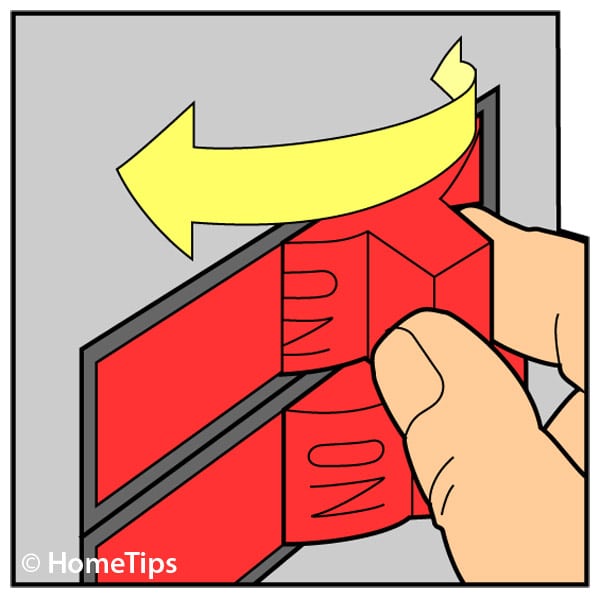
Check both the main electrical panel and any electric subpanels that supply power to the unit. If a circuit breaker has tripped, reset it by flipping it to OFF and then to ON.
If the circuit breaker trips again, there is probably a short in the electrical system that normally provides power to the furnace. Call an electrical contractor.
3 If the heat pump is connected to a power switch, either on the wall near the unit or inside the air handler cabinet (many don’t have switches), be sure the switch is turned on. If it is turned off, turn it on and wait a few minutes for the air handler to engage.
4 If your heat pump has electrical elements that provide supplemental heat as most do, the circuit breakers or fuses that protect the heating elements may have tripped or blown. They are usually located inside the air handler cabinet. Reset them.

HomeTips Pro Tip: Opening up the cabinet of a heat pump and working with electrical parts can be dangerous for the inexperienced. If you don’t have the necessary knowledge and skills, call a heating repair technician.
Heat Pump Doesn’t Heat or Cool Right
Heat pumps don’t discharge air that is as hot as the air discharged by oil or gas forced-air furnaces, so don’t expect their output to feel like that of a furnace when they’re on.
But if you’re used to a certain temperature of air and your heat pump is producing much cooler air, take the following steps.
Please note: A heat pump may go into a defrost mode to prevent icing up. When this happens, it can temporarily output cold air. Also be aware that the heat pump will have to work harder to produce heat when in defrost mode and/or when it’s particularly cold outside.
1 Be sure the thermostat is set properly. Raise the set temperature 5 degrees F. and then wait a few minutes for the heat to come on.
2 Be sure the room-heating registers are open.
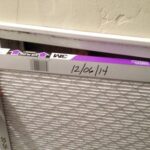
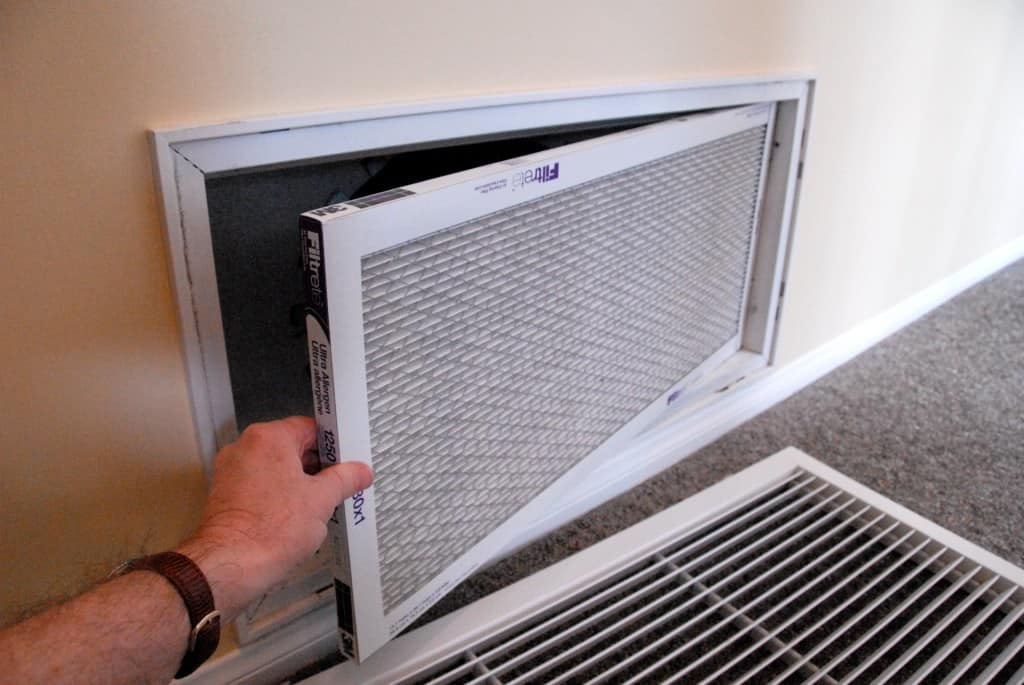
3 Check the heat pump filter. If it is dirty, change it as described in the article How to Replace a Heat Pump Filter.
4 Be sure the auxiliary heating elements are working (if your heat pump has these).
5 Clean the coils of the outdoor condensing unit (see Central Air Conditioner Repairs).
6 If these simple steps don’t work, have a professional HVAC service to check out your system. Either the blower isn’t working properly or the system is out of balance in some other way. For example, the reversing valve may be stuck in the wrong position.
Heat Pump Freezes Up or Trips Breaker
It isn’t unusual for a heat pump to ice-up in really cold weather, but it’s defrost cycle should kick on periodically to melt the ice. If the condenser unit of the heat pump is frozen up and the defrost cycle doesn’t melt the ice, turn it off.
Make sure none of the return-air registers are blocked, and then check the filter to make sure it isn’t clogged.
If there doesn’t seem to be a problem with air flow to the unit, see more information at Heat Pump Cold Weather Problems or call an HVAC service professional.
If the power to the heat pump goes out, be aware that most heat pumps have auxiliary heating elements that provide heat when the weather gets really cold and the heat pump’s efficiency drops too low. These elements automatically turn on at a fairly low temperature—around 20 degrees F. When they come on, they may be drawing too much power, which can trip the circuit breaker. Just locate the circuit breaker that serves the heat pump and reset it.
Heat Pump Blower Doesn’t Work
This may be caused by one of two things: the thermostat mounted on the wall or the limit switch located on the heat pump just below the plenum (the box that distributes heated air to all of the ducts). The limit switch in a furnace or heat pump is designed to shut off the heat pump if the air in the plenum gets too hot.
Check the thermostat to see if the Fan switch has been turned on. If it has, turn it to OFF or to Auto.
If it is set to OFF or Auto already, the heat pump’s limit switch needs to be adjusted.
Call a professional HVAC service to make the adjustment or, if you are handy with this type of repair, follow the instructions in your owner’s manual to reset the pointers on the fan side of the limit control. The lower pointer should be set to about 90 degrees F. and the upper one should be at about 115 degrees F.
If the motor runs but the blower doesn’t move air, the belt that connects the two probably has broken. Replacing it is an easy fix, as discussed below:
HomeTips Pro Tip: Opening up the cabinet of a heat pump and working with electrical parts can be dangerous for the inexperienced. If you don’t have the necessary knowledge and skills, call a heating repair technician.
1 Turn off all power to the unit. Remove the door on the front of the air-handler cabinet to give you access to the blower (it may be on a slide-out drawer.) Find the broken belt. Then check the number stamped on the belt and get an exact replacement from a home improvement center or heating supply outlet.
2 Slip the belt on the motor’s (smaller) pulley first and then start it on the blower pulley, as shown below. Rotate the blower pulley by hand, holding the belt in place but taking care to keep your fingers from getting caught between the belt and the pulley. The belt should roll right into place.
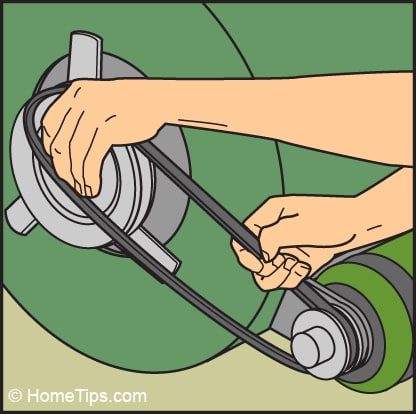
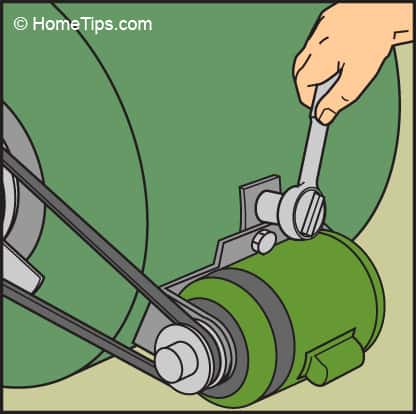
3 If the belt seems too tight or difficult to put on using this method, it may be necessary to adjust the motor mount to provide more slack. Loosen the mount as shown below Then just re-tighten the tension once the belt is in place. Check the manufacturer’s specifications for proper tension—in most cases, the belt should deflect about an inch when you press down on it.
Heat Pump Cycles Incorrectly
When a heat pump turns off and on too frequently, the problem may be that the unit is overheating because of a clogged filter or blower that is malfunctioning. Try cleaning or replacing the filter.
Check the thermostat settings if your heat pump is cycling poorly.
Then check the thermostat, which is more likely the cause. It usually means that the thermostat is improperly calibrated or that it is installed where it doesn’t sense a proper sampling of room air. If the thermostat has been located there for a long time and the heat pump has worked fine before, the latter case is not the issue.
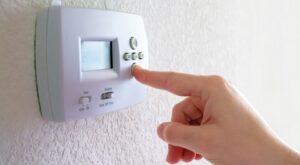
When room temperature rises higher or drops lower than the set temperature on the thermostat, the problem is usually the heat anticipator in the thermostat. See Thermostat Repairs.
If that doesn’t do the trick, call a heat pump repair technician.
Heat Pump Makes Noises
Squealing sounds and grinding noises are not good. Shut off the unit and call a heat pump repair technician—the motor’s bearings are probably shot.
If the heat pump makes rattling noises when it runs, be sure the cover panels are screwed on tight. If they aren’t, tighten them. Other noises may be coming from rattling ductwork or loose parts in the air handler.
Many heating ducts are metal, so they conduct noise quite readily from the air-handling unit to your rooms. To break the conduction of sound, you can have a heating contractor insert flexible insulation ductwork between the heat pump and the ductwork runs.
If you hear a pinging or popping sound coming from the ductwork, this may be caused by thermal expansion or by air blowing past a loose flap of metal. Track along the duct runs, listening for the sound. If you find it, make a small dent in the sheet metal to provide a more rigid surface that’s less likely to move as it heats and cools.
NEXT SEE:
• Maintenance Checklist for Central Heating Systems
• Heat Pumps Buying Guide
• Heat Pump Efficiency Rating & Sizing
• How a Heat Pump Works
• Heat Pump Cold Weather Problems & Repairs
Check out this free service to find a qualified local professional HVAC service.