Treatment: Test for pH, total alkalinity, and calcium hardness and bring the levels within recommended parameters.

Even with diligent maintenance of your pool or spa, issues will occasionally arise. The problems listed below are among the most common. Most of them can be handled by homeowners.
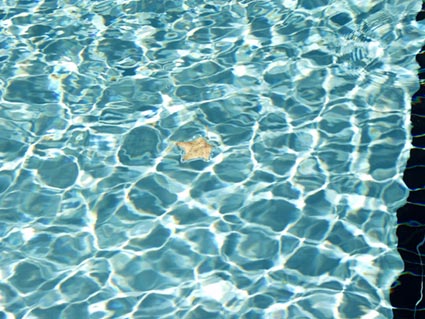
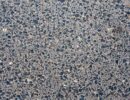
Rough, scaly surfaces on pool liner
Symptom: Incorrect balance among pH, total alkalinity, and calcium hardness.
Slippery surfaces
Symptom: An algae colony, which may have formed because of insufficient chlorination or dead spots in water.
Treatment: A pool-supply store can conduct a Langelier water-balance test (see page 185) to advise you further.
Tide mark at the water line
Symptom: Build-up of greasy deposits, such as suntan lotion and cosmetics.
Treatment: Brush the area using a cleanser recommended by a pool-supply store; be sure it will not react with chlorine in the water.
Cloudy or milky water
Symptom: Polluting residue from suntan lotion or other oils.
Treatment: Clean the skimmer baskets and filter, and operate the pump for a longer time. Superchlorinate the pool, then add a clarifier, which causes suspended particles to settle.
Cloudy, greenish water
Symptom: High pH, high alkalinity, or both, Low chlorine levels, which allow algae to colonize the pool or spa.
Treatment: Test and adjust pH and total alkalinity. Superchlorinate the water with chlorine–to 10 ppm if the water is only slightly green and to 25 ppm if the water is solid green. Also brush the interior walls to remove algae, and clean the filter to remove dead algae.
Rust-colored water
Symptom: Steel or iron fittings that have corroded because of low pH.
Treatment: Replace any metal fittings with copper or plastic piping. Then drain or dilute the rust-colored water–contact your pool installer to find out how to do this safely. Remove any rust stains from pool surfaces with a tile-and-liner cleaner. Make sure the fresh water you add is properly balanced.
Eye or throat irritation
Symptom: A too-acidic or too-alkaline pH.
Treatment: Test and correct pH. To lower it, add dry acid daily according to packaging instructions until the proper pH reading is obtained. To raise the pH, add soda ash in the same way.
Bathers’ blond or tinted hair turns green
Too many chloramines in the water. High levels of copper in the pool, either from an algicide or from copper pipes corroding because of low pH.
Treatment: Superchlorinate. Check the pH and raise it if necessary. If too much algicide has been added, add more water to bring the pool or spa into balance.
NEXT SEE: Chlorine & Other Swimming Pool Water Treatments
Featured Resource: Find a Pre-Screened Local Swimming Pool Water Maintenance Pro