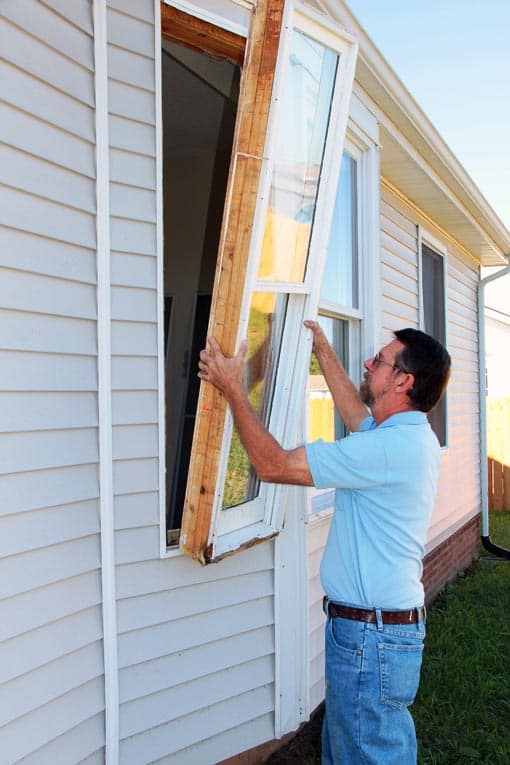
Do you have a broken window, dual-glazed windows with permanent fog, or other problems with window glass? Here are easy instructions for replacing a glass pane, solving window glass condensation problems, and removing scratches from window glass.


Though window glass tends to serve for years without the need for repairs, something bad occasionally happens to a window—like a baseball gets thrown through it.
Here we look at how to replace broken window glass, as well as other repairs like scratches and condensation between dual-glazed panels.
How to Replace Window Glass
Repairing a cracked or shattered window pane is an easy repair, especially if the broken pane is relatively small. For large panes or dual glazing (or other high-performance glass), it’s usually smarter to call a glass dealer. In most cases, a special pane will have to be ordered—you’ll want to have the replacement on hand before your remove the old pane. See more about this in the videos at the bottom of this article.
The first thing to do is remove the broken glass. Tape the cracked pane with a cross-hatch of duct tape to prevent glass shards from falling out as you work. Be sure to wear safety glasses and heavy gloves when working with glass.
If necessary, you can work on the window from outside, standing on a ladder. But if the window is in an upper story, it’s safer to remove the sash. Again, you’re probably better off calling a pro.
When replacing a window pane, try to buy the same kind of glass originally installed in the window so it will match the glass in the other panes or other windows in the room (this may not always be possible if you have an older home). Take a shard to your hardware store and ask your dealer to match any coatings or other features.
Be careful when you work with broken glass, whether large panes or smaller pieces. Wear sturdy work gloves. Before you remove any broken glass, tape newspaper to the inside of the sash to catch any fragments. Also pad the glass with newspaper when you take it to or from the store. Dispose of fragments in your regular trash; window glass usually cannot be recycled.
Wood Windows
For installing a new single glass pane in wood windows, you’ll need:
- Glazing compound (putty) to hold the glass in place
- Glazier’s points—small metal clips that you push into the wood every 4 to 6 inches
- A 5-in-1 tool
- Putty knife
- Long-nose pliers
- Chisel
- Hammer
- Safety glasses
- Work gloves
- Newspaper
- Masking tape
- Small paintbrush
- Glass cutter (if the glass hasn’t already been cut to size)
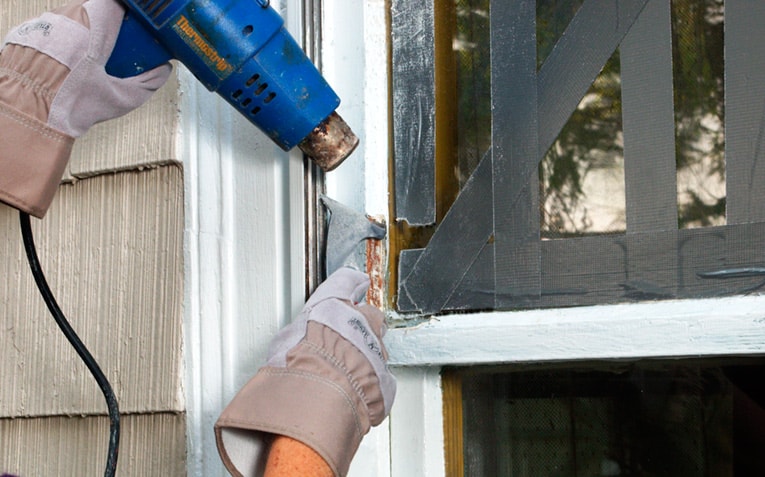
After removing the broken pane of glass, chisel out the old putty (if it’s hard, you may need to soak it with linseed oil or soften it with a heat gun). Remove the old glazier’s points with long-nose pliers. Clean and sand the wood, and coat it with wood sealer.
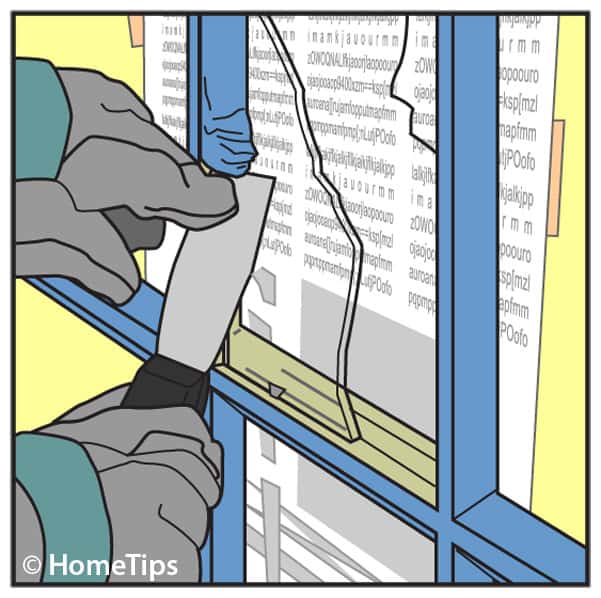
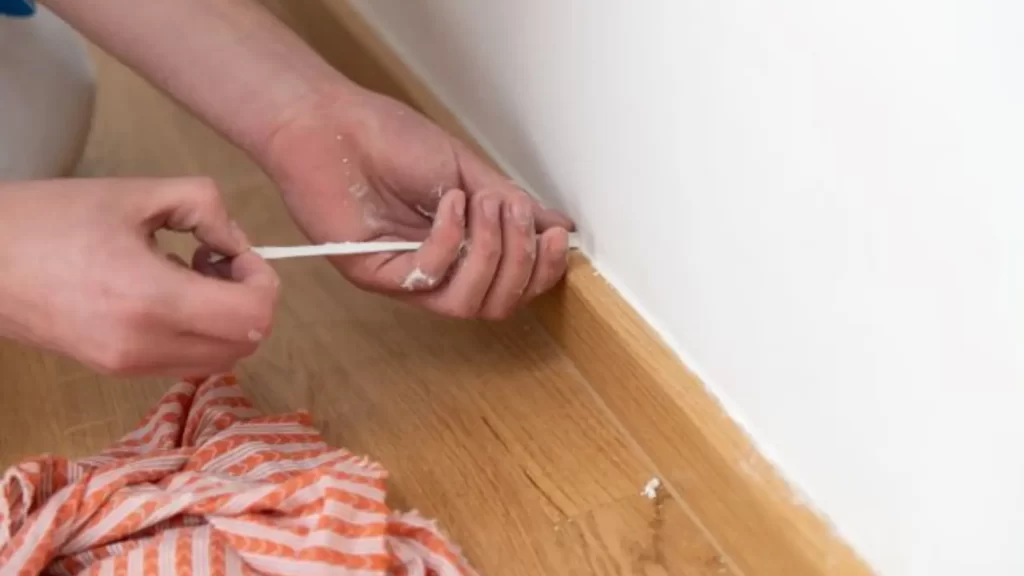
Press a rope of glazing compound putty around the opening with your fingers and a putty knife to make a bed for the new pane.
Put the pane in place and remove any excess putty. Push the glazier’s points into the frame with a putty knife.
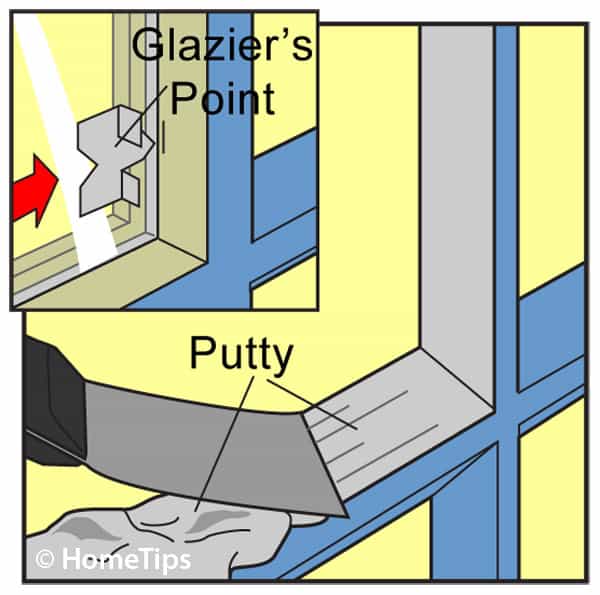
Apply more putty around the pane and use the knife to form a tidy seal. When the putty is dry, paint it to match the sash.
Metal or Vinyl Windows
Glass in a window with metal or vinyl sash is held in place with a metal spring clip, a rubber seal, and metal or plastic moldings. This type of window can be reglazed by simply removing the parts that retain the glass, pulling out the old glass, inserting the correctly sized new piece of glass into the sash and replacing the parts that hold it.
To replace glass secured with rubber seals, unscrew the two sash halves and remove the inside one. Brush out glass fragments, set a new pane against one sash half, replace the other half of the sash, and secure the sash parts with screws.
If the glass sits on a continuous rubber gasket (or four separate ones), remove the screws from a vertical end of the sash, and pull the end away from the sash. Clean out the old glass, and then pull the gasket around the new pane; slide the pane into the sash, and secure the end.
To replace glass in a sash with snap-out moldings, loosen one end of a piece of molding by inserting the tip of a putty knife where two ends meet. Pry gently, using the frame for leverage. Pull out the loosened strip of molding. When you have replaced the pane, push each molding piece into place with your hands. Pieces damaged during removal should be replaced.
Window Condensation Problems
Because windows are usually the coolest surfaces in a house, they may collect condensation in winter, when outdoor temperatures are low and indoor air is warm. These conditions encourage mold and mildew and can cause window frames and sills to rot.
Condensation On Interior Surface of Windows
If water fogs up and beads the interior surface of windows, this is an indication that you have high humidity levels in the room.
To reduce condensation, increase ventilation—just using bathroom fans and kitchen fans can make a big difference. Also keep showers short and run only full loads in washers and dishwashers to reduce indoor humidity levels.
If doing these things doesn’t help, please see the Dehumidifiers Buying Guide.
Condensation Between Glass Panes
If your window fogs up between the glass panes of a dual-glazed window, the seal around the glass’s perimeter has failed.
Unfortunately, there is no cost-effective way to remove condensation between window panes. The glazing must be replaced.
Your best bet is to buy quality thermal windows that are backed by a strong warranty (at least 10 years). One mark of quality is “IGCC approved,” a certification given out by the Insulating Glass Certification Council.
In the following three videos, you can see the process of replacing glass in the window sash. Be aware that you can have a glass replacement company do the entire job, or you can remove the sash yourself and take it to a local glass dealer to have the replacement work done.
If pays to measure the glass and order the replacement so you have the replacement on hand before your remove the sash. In some situations, it will be difficult to get an accurate measurement without at least partially disassembling the window. Be aware that you’ll need to know the glazing’s thickness in addition to its exact length and width when you order it.
Wood Window Glass Replacement. Here is a video that shows how to replace failed dual-glazed window panes:
Vinyl Window Glass Replacement. This helpful video shows how to replace dual glazing in a vinyl window, without removing the sash. If the window is easy to reach from outside the house, or if it’d difficult to remove the sash from the window’s frame, this is the way to go.
In some situations, such as with second-story windows or with sliding windows, it’s easier to remove the sash before you replace the glass. This video shows the process.
Scratched Glass or Old Glazing Compound
For an unsightly scratch in window glass, try applying a coat of clear nail polish. Remove the excess with nail polish remover on a clean cloth. Another option is to buy a very gentle metal polishing compound, such as Brasso, and polish out the scratch with a soft cotton cloth. This takes a lot of elbow grease and you do run the risk of creating tiny abrasive scratches.
Old glazing compound can become brittle and fall out. When this happens, air can leak in around the glass panes or—worse—the glass can fall out. To replace glazing compound, see Wood Windows, above.