In Flint, Michigan, as many as 12,000 children were exposed to drinking water contaminated with high levels of lead that may cause any of many serious health problems. In addition, the drinking water may be the reason for an outbreak of Legionnaires’ disease in the county that killed 10 people and affected another 77.

In this article, we look at water quality issues, how to test your drinking water, typical contaminants, and more.
It includes a link to our unbiased Water Filters Buying Guide.
Do Not Count On the Law
For the public’s protection, Congress enacted the Clean Water Drinking Act in 1974 and strengthened it in 1986, setting minimum water quality standards for most homeowners.
Unfortunately, there is no guarantee that all water utilities comply with the regulations, all testing isn’t necessarily accurate, and not all known contaminants are on the list.


Enforcement is difficult on national, state, and local levels. And, because of decreases in the budget of the EPA’s drinking water office and state drinking-water budgets since 2006, protection of public health are at risk.
Theoretically, our biggest water suppliers—large metropolitan systems—have the best drinking water because they have the equipment and resources for frequent, mandated testing (the frequency of testing depends on the number of people served).
Also, with major utilities, when something goes wrong, they are required to notify their customers. Unfortunately, this didn’t happen in Flint.
Well water is another story. Systems that serve fewer than 25 people or 15 service connections are regulated only by state and local laws or by their owners.
Testing Your Drinking Water
Unless issued by your local health department, “free home water testing” offers are usually a come-on to get you to buy water-treatment devices after a couple of carefully staged tests.
Independent lab testing. The best way to tell if your water does or doesn’t have harmful pollutants is to have it tested by an independent lab (see below).
You must test for each type of pollutant separately.
If you get your water from a municipal utility, quality can change daily, so most tests are of marginal value (and usually unnecessary).
Nevertheless, it may be a good idea to check for lead because lead can leach into the water from old lead-based plumbing—that’s what happened in Flint, Michigan.
Get on the phone. You can also discover plenty of information without testing. Call your health department or water supplier and request copies of water-treatment reports and note any violations.
Find out the frequency and scope of the tests. Ask whether your area is known for any particular hazards, especially those that might enter water between the treatment plant and your tap.
If you have a well, at the very least check it once for mineral content, lead, and radon (where radon is a threat) and once or twice a year for bacteria and nitrates.
If you have concerns about contaminants in well water, contact your local health department for a recommended course of action. It may handle certain tests, such as bacterial testing.
A partial chemical test that will detect magnesium, calcium, sodium, iron, fluoride, chloride, and nitrates is usually relatively affordable. To test for chemicals such as solvents, pesticides, and petroleum products can be very expensive because each requires its own test.
How to get an independent lab test. Find an independent testing lab by asking your water utility or your state health department for a recommendation or checking “Laboratories” in the telephone directory or on the Internet.
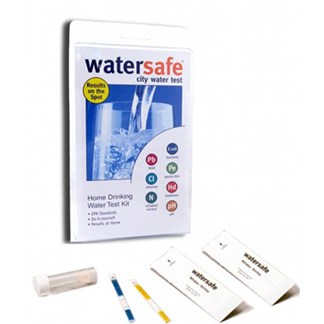
Or, buy a water test kit online.
This will include proper supplies and instructions for collecting a sample, which you mail to the testing lab.
If you have a well, be sure to get a well water test kit.
Another more comprehensive option is to contact an affordably priced water analysis company, such as National Testing Labs (800-458-3330) or Suburban Water Testing (800-433-6595). A lead-only test costs about $35; a comprehensive test for bacteria, organics, and inorganics runs $137 to$167.
Some filter makers offer this service, too. For example, you can call the GE Answer Center (800-626-2000) and request a water test kit and information on GE’s SmartWater line of filters and treatment devices.
Once you have reports or test results, compare them with the EPA’s maximum allowable contaminant levels. (For a free copy of these listings, go to www.epa.gov or call the EPA’s National Safe Drinking Water Hotline at 800-426-4791.)
Note any pollutants that exceed federal standards. Record these, and then use this list to select an appropriate water-treatment device.
When you compare results, note any pollutants that exceed federal standards. Record these and then use this list to select an appropriate water treatment device.
What Might Be In The Water?
Aesthetic water problems come from otherwise harmless contaminants that affect the color, odor, and taste of water. Such substances are chlorine, sulfur, iron, and manganese. These problems are usually easy to deal with using a conventional activated carbon filter.
But if your drinking water contains dangerous levels of other pollutants, you’ll need to choose a water-treatment technology that is appropriate for eliminating the toxins. For the sake of discussion, it’s easiest to group toxic pollutants into four categories: organic chemicals, inorganic chemicals, radionuclides, and microbiological organisms.
Organic chemicals include solvents, pesticides, synthetics, resins, and other manmade chemicals known as volatile organic chemicals (VOCs). VOCs are often linked to cancer and/or nervous system, liver, and kidney disorders. A particularly nasty compound, trihalomethane (THM), can be created after water has left a treatment plant and the chlorine reacts with decaying animal and plant matter, creating chloroform, a suspected carcinogen.
Inorganic chemicals include nitrates and nitrites, asbestos, fluoride, and metals such as arsenic, mercury, and—the most notorious—lead. Many of these occur as natural mineral deposits. Some, such as copper and lead, leach into water as it travels through pipes and treatment by your water utility doesn’t remove them.
Nitrates and nitrites are produced by industry or farming. Inorganic chemicals are linked to a variety of health problems. Lead is known to cause brain damage and is particularly toxic to infants and pregnant women. Pre-1930s plumbing in some areas utilized lead pipes, and solder used to join copper piping in homes before 1986 has a lead content of about 50%.
Radon gas, the most common radionuclide, occurs naturally in a number of regions, including Western mountain states and parts of the Northeast. The EPA estimates that up to 17 million people may have water with excessive levels of radon, which can enter the air through showers and steam.
Microbiological contaminants, including protozoa, bacteria, and viruses, are normally killed by chlorination and treatment. Cysts, such as cryptosporidium and giardia, are more resistant to municipal treatment. Normally, bacterial pollution problems occur only when water treatment breaks down or if a home’s water supply is tainted by waste. Cyst problems tend to occur during times of heavy storm runoff.
NEXT SEE: Water Filters Buying Guide
Featured Resource: Find a Local Water Treatment Installation Pro