An expert and unbiased buying guide for patio and sliding doors, for single and multiple glass panes and the various patio and sliding door sizes.

Patio doors, French doors, sliders: What are the differences between these?

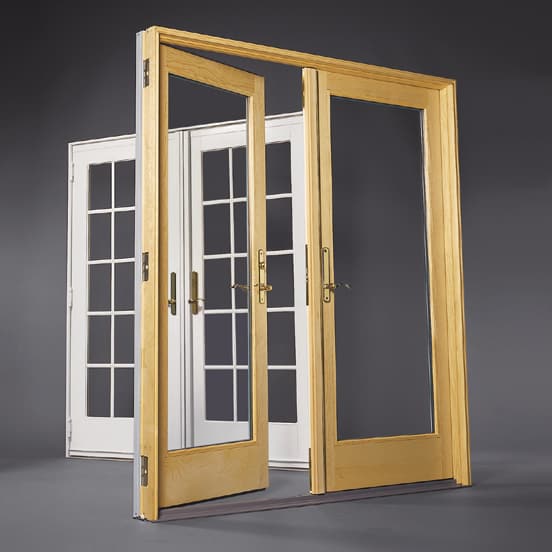
The primary difference between sliding and patio doors is that sliders glide and patio doors swing.
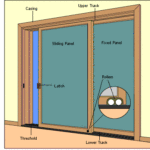
A sliding door typically has one fixed panel and a matching panel that slides sideways in top and bottom tracks. The term “patio door” usually refers to a pair of doors that has at least one hinged panel and one fixed or hinged panel. Doors swing either inward or outward, depending upon the type you buy.
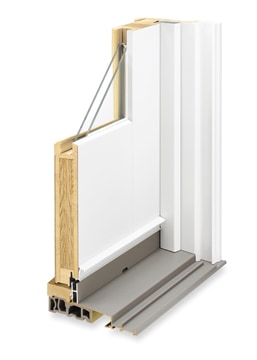
Sometimes a patio door is called a French door. The term “French door” usually refers to a pair of glazed patio doors that hinge at opposite sides and meet in the middle; when you open them both, they create a large entryway.
Sliders and patio doors are sold as a complete system that includes the jambs, threshold, and all necessary weatherstripping. The doors interlock for energy efficiency and the hardware is designed as part of the system.
Not all French doors are meant for exterior use—interior French doors are made specifically for adjoining one interior room to another, offering separation when closed or generous access between rooms when open. Any standard interior wood can be mounted in a double-wide jamb to create an interior French door.
Single or Multiple Glass Panes
True classic French doors have multiple glass panes (called “lites”) divided by wooden muntins. A true divided lite means that each pane of glass in the construction of your door is built in separately. For example, if you order a 10-lite door, it will be built with 10 separate lites inserted independently.
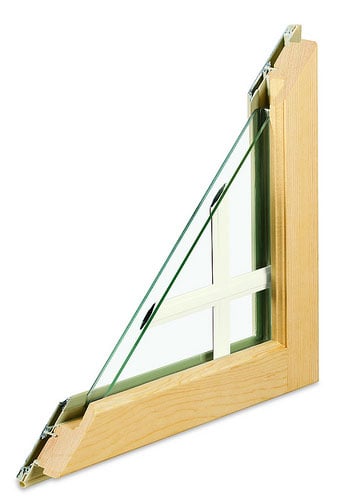
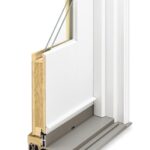
You can still buy this type of door for a premium, but most manufacturers sell more doors with faux divided lites. These have snap-in wood grilles or grills placed between the panels of dual glazing (see photo at left). They imitate the look but are less expensive to make and are easier to clean than true divided lites.
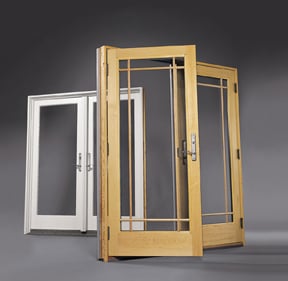
Some grille configurations create an evenly-spaced gridwork of lites in pairs: 6, 8, 10 or 12 lites. Others stack horizontally-shaped panes, yielding 4, 5, or 6 horizontal lites. Still others divide the glass into interesting patterns or designs that imitate certain architectural styles, such as Craftsman (see photo below).
Patio & Sliding Door Sizes
Most companies have a minimum door width of 16 inches and a minimum door height of 60 inches. Any variations have to be custom-made at greater expense.
The thickness of a door typically is either 1 3/8 or 1 3/4 inches. In addition to the standard 6-foot-8-inch height, doors are made 6 feet, 11 inches tall and 8 feet tall. You can also buy three- or four-door-wide configurations that run up to about 16 feet wide. Newer high-end sliding doors can actually curve around a 90-degree angle.
Some door sets come with windows at the sides (“side lites”) or windows over they tops. Most manufacturers make matching rectangular and circle-head transom windows.
Glass for Patio Doors & Sliders
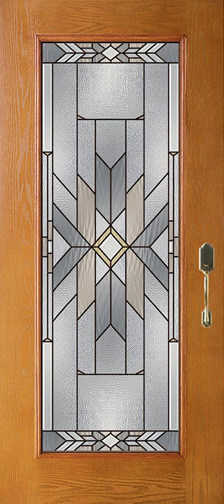
Because both sliding and patio doors are primarily glass, it’s very important that they be fitted with high-performance glazing in most climates. Strict energy requirements in building codes demand that large expanses of glass be able to perform with minimal energy loss. For this reason, double-insulated low-e or Argon-gas filled glazing is used in high-quality products. For more about high-efficiency glazing, please see High-Efficiency Glazing. In addition, UV protection helps protect floors and furniture from the damaging effects of the sun’s radiation.
When it comes to door glass, safety and security are also important so it is almost always tempered for safety. Tempered glass is four to five times stronger than standard glass and does not break into sharp shards when shattered but rather crumbles into tiny round-edged pieces. It is not storm-proof, but it is relatively reliable against the elements. If storms or intruders are a concern, you can also buy special-grade glass strong enough to withstand hurricane winds and high-velocity objects without fracturing.
Door glass can also be decorative. The varieties of glass that are the most popular include:
Frosted glass. Available in a wide variety of options, frosted glass allows in a degree of light. Frosted glass is typically used in bathrooms, bedrooms, or home offices where light is desired along with a measure of privacy.
Grooved glass. Since ancient times, grooved glass is simply glass that has been ground on the surface to make a pattern or design. Grooved glass creates a period look.
Beveled glass. The edges of this glass are ground at a slant and then polished back to clear. The bevel acts as a prism when sunlight hits it, creating a rainbow display of colors.
Tinted glass. Slightly tinting glass can save on utility bills during both summer and winter because it maintains indoor temperatures at a more constant level.
Security for Patio Doors
Sliding patio doors and French doors are often overlooked when it comes to security, making them vulnerable to break-ins. The following security measures are recommended for security.
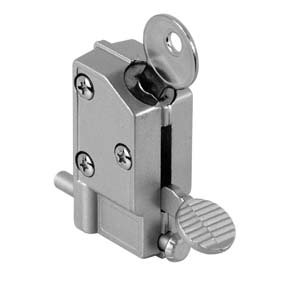
With sliding doors, the handle latch is not enough to secure the door. A sliding patio door should be protected by a keyed lock fitted to the track. Several types of sliding door locks are available online. The one shown here has a handy foot release.
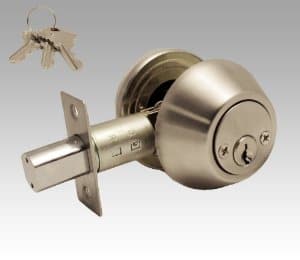
A hinged patio door requires a different type of lock. To protect this type of door:
1. Install a deadbolt lock that has a horizontal bolt at least 1 inch long.
2. Install a reinforced strike plate that is at least 18 inches in length and requires 3-inch screws.
3. Make sure the hinges are installed on the inside so that burglars cannot remove the pins.
4. Consider installing metal reinforcement around the door where it’s been drilled to accept the lock and knob.
5. Also consider installing a double-cylinder deadbolt that requires a key to open on the inside and the outside. This will prevent a burglar from just breaking the glass and reaching in to open the door. However, you will need to keep the key in a handy location in case of fire or other emergency.