Should you buy a central vacuum system for your home? What is the best central vac to buy? This unbiased central vacuum buying guide will help you make the right decisions.


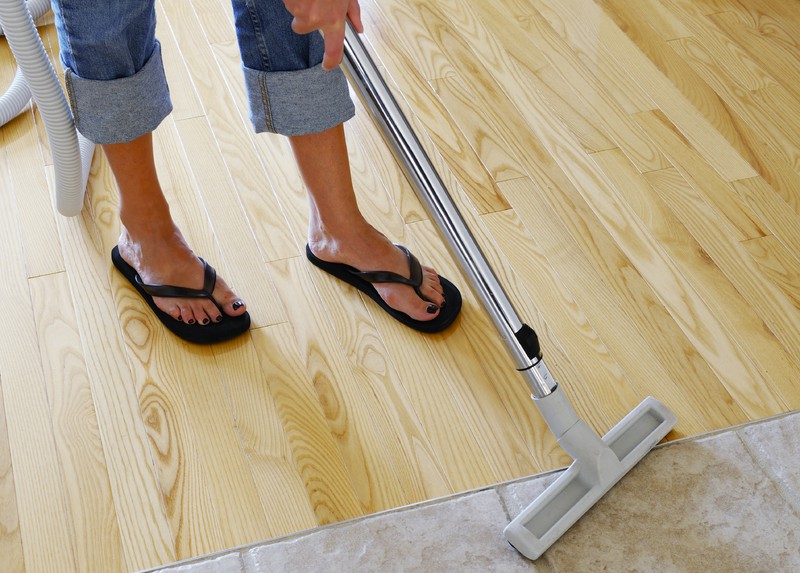
If you would like to be able to vacuum your house quickly and quietly, without dragging around a vacuum cleaner, consider installing a built-in central vacuum system.
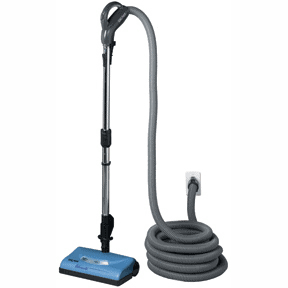
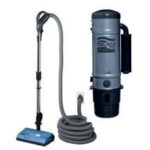
With a central vacuum, you just carry a lightweight vacuum hose and a wand with a vacuum cleaning head. When you plug the hose into a wall or floor inlet valve, the central vac turns on automatically.
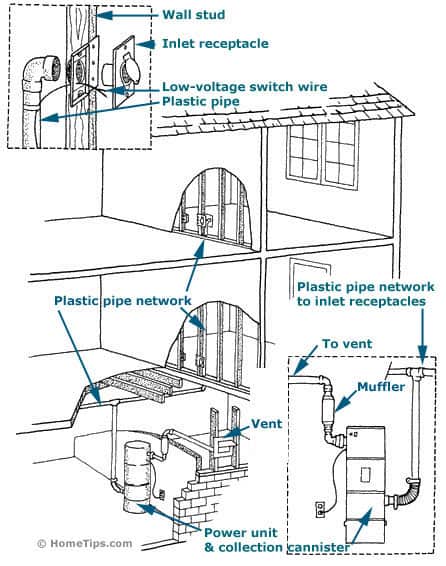
When you vacuum, dust and debris travel through the hose into a pipeline of PVC tubing. That pipeline runs through house walls, floors, or attic to a large power unit/dirt-collection canister typically mounted in an out-of-the-way place such as the basement, garage, or utility room. You can buy central vacuum systems online.
Because the central vacuum motor usually hangs outside the living area, you can vacuum quietly without disturbing TV viewing or phone conversations. In most cases, you just hear the “woosh” of air going into the vacuum head. As a result, a central vac helps minimize household noise. Furthermore, fine dust particles don’t blow back into living spaces—a problem with most portable vacuum cleaners. This is important especially for people sensitive to airborne dust. One more plus: The large canisters typically need emptying only two or three times a year.
Before buying a central vacuum system, make sure it will work for your house. If it will, you must determine the right size of unit to buy and the amount of piping and number of components necessary. To do this, you must figure out the layout of the system.
How a Central Vacuum Works
Because the motor and collector are remote, most central vacuum system units have bigger canisters and more-powerful motors than standard vacuums. As mentioned above, they also have a greater capacity for collecting dust and dirt.
Most houses need one or two central vac inlet valves on each story, centrally located. Though inlet valves are best located along the base of interior walls, you can install them in floors if you place them away from foot traffic and equip the floor inlets with metal covers.
If centrally located, three or four inlets will usually suffice for a 3,000-square-foot house. The 30-foot-long central vac hose allows vacuuming two or three rooms from a single inlet receptacle. Regardless of the number of inlets, the hose must reach from one of the inlets to every corner of the house. Though inlets and hoses are somewhat standardized, they can vary slightly by the manufacturer, so it’s important to buy a hose that is designed to fit the inlet valves.
Is a Central Vacuum Right for You?
Though central vacuum systems are a wonderful convenience in most homes, they’re not right for everyone. Built-in central vacuum systems are easiest to install in new construction. Consequently, if you’re already opening up walls for remodeling or other home improvements, this is probably an excellent opportunity for easily installing one of these systems.
About Retrofitting a Central Vac
Then again, retrofitting a central vacuum system into most existing houses can be relatively easy. Just how easy depends on your house or—more specifically—access into a basement, crawlspace, or attic for routing the central vac piping.
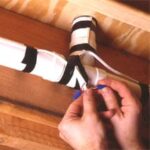
In a single-story house with a basement or crawlspace, tubing can run under the floor and stub up a short distance into walls—this method works well for interior, non-bearing walls not supported by beams or foundations. Or, tubing can directly serve floor inlets (by far the easiest method when retrofitting).
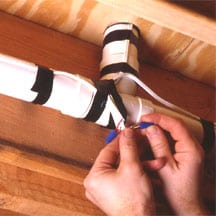
If a house has limited access below floors—as with a two-story house, for example—tubing must route elsewhere. Typical solutions are to run tubing vertically through laundry chutes, behind cabinets, exposed in closet corners, or boxed in at one of a room’s corners. Another popular option is to run tubing horizontally in an attic and then drop it down through a wall or into a closet or cabinet. The best runs are short, straight, and direct.
Sizing a Central Vacuum
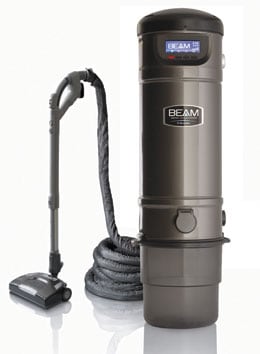
When buying a central vacuum system, it is very important to match the power unit to the house so that the unit is powerful enough to effectively pull dirt through the system from every nook and cranny on every floor. Buying the right size unit isn’t rocket science, but it can be a little tricky. You must take into consideration the square footage of your house, the length of pipe required to service the system, and the suction necessary.
When we’re talking about sizing here, we’re referring to the vacuum system’s main component: the power unit. Most manufacturers offer several models that differ in canister size, suction power, and price.
Though vacuum manufacturers rate their products by air power, air flow, and horse power, these measurements don’t indicate effective suction.
The most reliable measure of suction is “waterlift,” established by a factory test of a sealed vacuum system’s sucking power. Check the manufacturer’s specifications for this number when comparing one model with another. Smaller systems have a waterlift rating of from 105 to 120 inches. As a rule of thumb, these will handle a 2,500-square-foot house. Power units of equal strength do not vary much. In fact, the same manufacturer makes many of the motors for competing products.
When it comes to selecting a brand, pay particular attention to price, service, and warranty. Look for a company that stands behind its product.
Central Vacuum Accessories
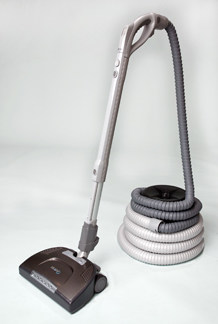
A variety of accessories like the ones used on standard vacuums are available for central vacuums: flooring, dusting, and upholstery brushes; crevice tools; and two types of beater-bar carpet brushes—electric and turbo-powered. Electric heads are the strongest but some models require an electrical receptacle near each vacuum inlet so you can plug in a power cord that runs alongside the hose. Turbo heads utilize the air rushing through the head to spin the beater bar.
Manufacturers offer a variety of improvements on the basic accessories—collection canisters with mold-killing coatings, canisters that can be used with or without vacuum bags, retractable hoses, and sock-like covers that prevent hoses from marring wood floors. Some also have digital controls that alert you to a full canister or required maintenance.
Here are a couple of examples: Beam, manufactured by Electrolux, offers an “EasyReach” electrified 13-foot-long hose that is easy to manage but, when a longer reach is required, has an inner hose sleeved in the main hose that expands to a full 30 feet. Simply pushing a button on the handle retracts the extended hose.
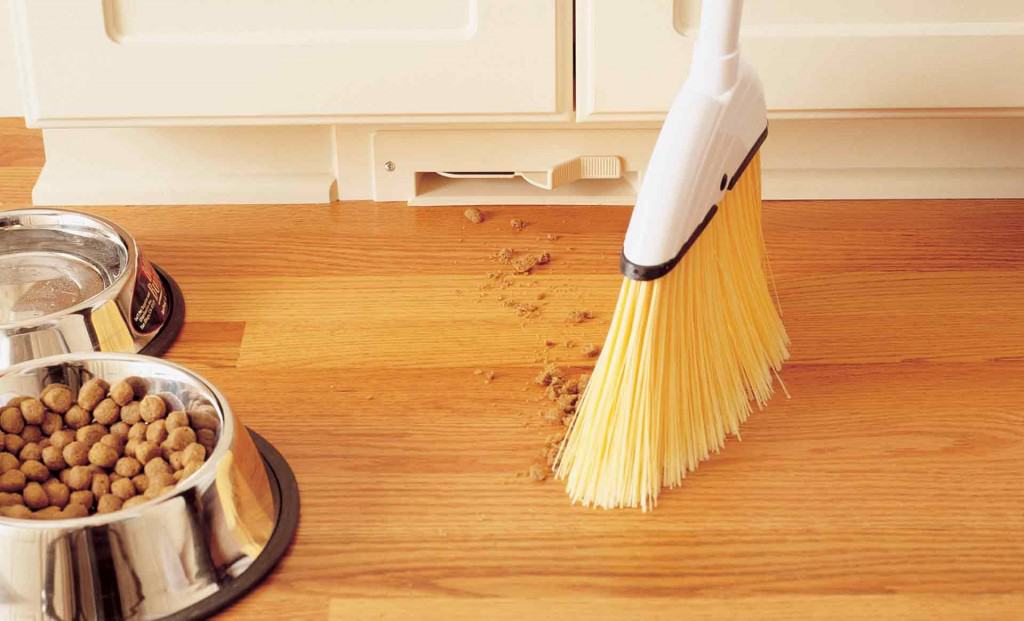
KickSweep, one of several makes of floor sweeps, combines the common dustpan with a central vacuum. The result is a baseboard-mounted receptacle that, when opened, sucks in dust and debris as you sweep with a broom.
Central vacuums cost from $600 to $1,500, depending on the power unit and the amount of pipe and fittings needed. Dealers often quote a price based on both installation and materials, but if you plan on installing the system yourself you can request a price for materials only.

Featured Resource: Get a Pre-Screened Local Central Vacuum Pro