Want to cool down your house without turning on the AC? Keep your home comfortable even on the hottest days using these simple cooling methods.

If you are working at home, you may be experiencing one of the downsides of not going to the office every day: no air conditioning. Or, even if you’re fortunate to have AC in our home, you may be facing the reality that the cost of running AC constantly is virtually unaffordable.
Don’t despair. Here are eight easy, low-cost ways to make your home more comfortable and energy efficient whether or not it has air conditioning.

Ventilate When You Can
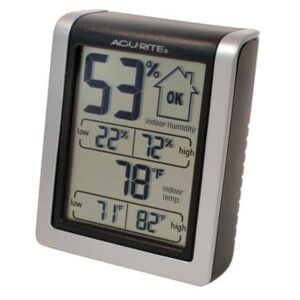
Closely monitor temperatures both inside and out with an indoor/outdoor thermometer (below). When outdoor temperatures are cooler than indoor temps, open up windows and doors to expel the indoor heat and allow the cooler air inside. (Be sure your windows and doors have adequate screens to prevent an influx of bugs.)
If you have operable skylights or transom windows high on walls, be sure to open them to let out super-heated air and create convection currents.
Encourage air circulation by arranging furniture and drapes so they don’t restrict airflow.
One caveat about ventilating is this: If you live in a humid climate and you’re using air conditioning to lower room temperatures, one of your AC unit’s main jobs is to remove humidity from the air. In humid conditions, ventilating a room allows humidity back into the house, sending comfort out the window.
Note: Don’t ever operate the AC when windows and doors are open—you will waste a tremendous amount of energy!
Get the Air Moving
Electric fans, ceiling fans, box fans, and whole-house fans can all contribute significantly to feeling cooler in your home.
As air moves across your body, it increases evaporation from your skin, which makes you feel cooler.
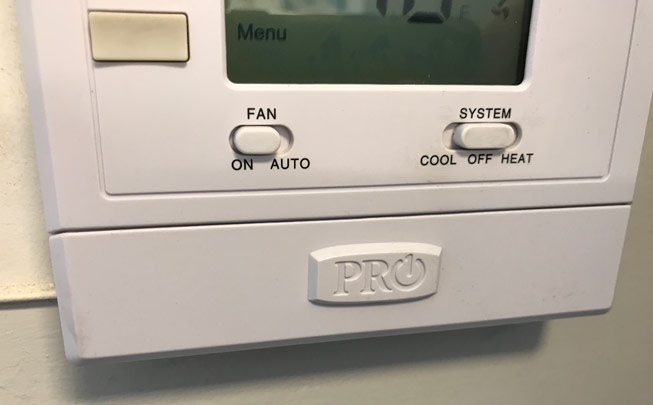
Forced-air system’s blower. Give air circulation an additional boost by setting your thermostat FAN to “Fan Only” or On.” Be sure the thermostat’s “MODE” or “SYSTEM” is “Off,” not set to the “Heat” or “Cool.” This will circulate room air throughout the house without running the AC. The furnace blower is relatively inexpensive to run and will get the air moving throughout your home, making temperatures feel lower.

Box fans. If the temperature is hotter outside than indoors, don’t open windows and doors, but do use fans indoors to keep the air moving. If it’s cooler outside than in your home, open as many windows and doors as you can and use fans to circulate the air. In this situation, it’s best to face a fan in a window so that it’s blowing into the room.
When positioned in a window at night, a box fan can draw in cool air and expel hot air through other windows. Remember that heat rises, so be sure open upper-story windows are open to let out the hot air. Convection currents will draw air through your home and evacuate it out of the upper windows.
You can also use an electric fan in conjunction with an air conditioner, using the fan to blow cool air to exactly where it is needed.
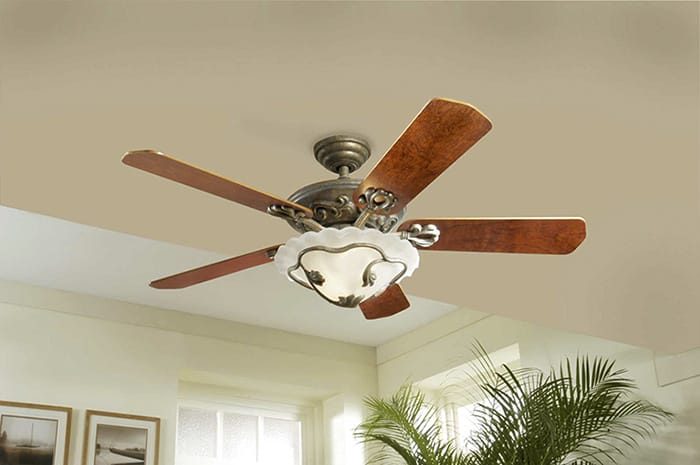
Ceiling fans stir up breezes and, in doing so, increase the evaporation from your skin, increasing the feeling of coolness. Ceiling fans spin counterclockwise for cooling.
Be aware that, as a feature, most ceiling fans can be reversed to help circulate heated air in the winter. Be sure your ceiling fans are spinning counterclockwise in the summer. If you’re not sure how to change the direction, you can do an online search for an owner’s manual of your fan’s make and model.
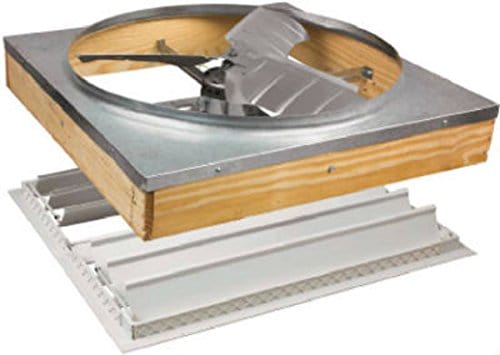
A whole-house fan, installed in the attic, works in a similar way, but even more efficiently and powerfully. For more information, see How to Install a Ceiling Fan and Buying a Whole-House Fan.
Minimize Heat Gain
Obviously, your house will feel cooler if the heat can’t get inside in the first place. Close drapes, shades or blinds, and use shelters to prevent direct sunlight from streaming in through windows on the south- and west-facing sides of the house.
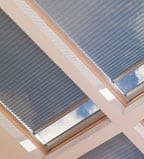
Overhangs, patio overheads, latticework, and awnings all work well to prevent solar heat gain. Over the long term, it also pays to plant shade trees and greenery.

Reduce Indoor Humidity
This will make room air feel cooler. Minimize midday clothes washing and drying, showering, and cooking.
When you must do these, turn on ventilating fans to help extract warm, moist air. But don’t leave ventilating fans on indefinitely if you’re using the AC because they will suck expensively conditioned air out of the house.
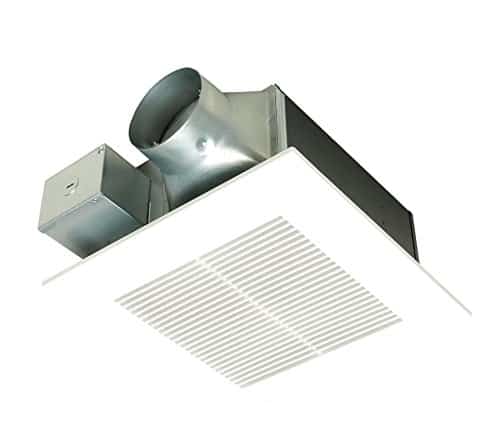
For more information about reducing humidity, see dehumidifiers.
Turn Off Heat-Generating Lights and Appliances
Unless you absolutely need them, avoid using lights and appliances. Incandescent lights, in particular, generate more heat than you might think. If possible, switch from incandescents to LED or CFL bulbs.
Of course, stoves and cooktops generate a lot of heat. When it’s time to cook, opt for the barbecue instead of the range.
Weatherize Your Home
To reduce the loss of conditioned air, employ caulk and weatherstripping. This will cut back on the transfer of air around windows and doors. For complete coverage of how to do this, see Weatherstripping Doors and Windows.

Install Heat-reflecting Window Film
On windows that face the sun, consider applying inexpensive heat-reflecting film. This will keep your house cooler and reduce glare and ultraviolet rays that damage furniture and floors.
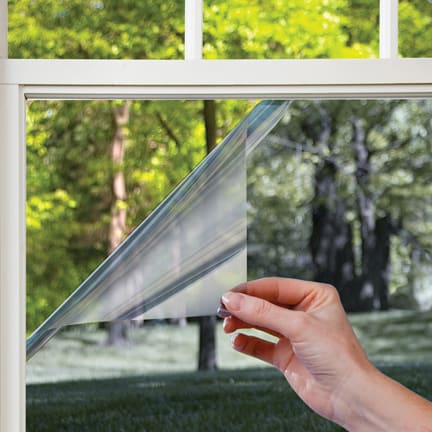
For hot climates, sun-control types are most effective, but be aware that they will also reduce the amount of light that comes in through the windows. In climates where cold seasons are a problem, choose a combination film—but do not apply it to south-facing windows if you want to benefit from the sun’s warmth during winter.
For more, see How to Buy and Apply Window Film.
Let Hot Air Out of Your Attic
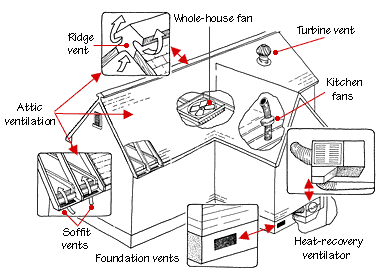
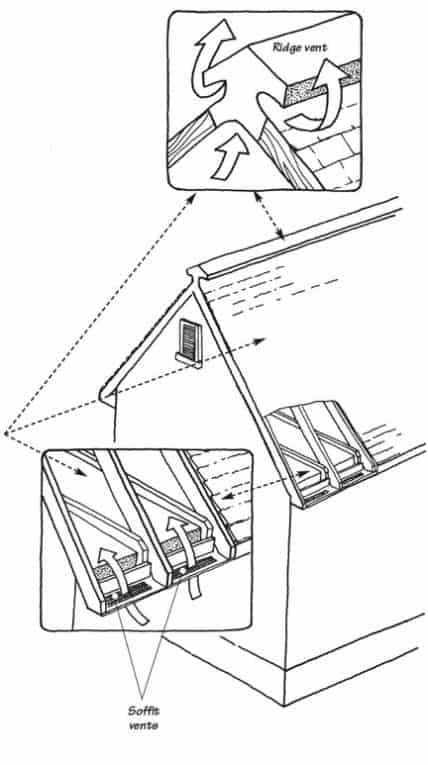
(and, hence, your whole house) by installing a ridge vent and possibly roof vents. And let cooler air be drawn in by soffit or eave vents. (For more on ventilation, see Ventilating Your Home and Understanding House Vent Options.)
If you try all of these measures but are still suffering from the heat, maybe it’s time to consider installing a window air conditioner. (See the section on room air conditioners for information on how to select an efficient, high-quality model.)