Knowing how to turn off—and on—the power to your house is a fundamental safety practice that all families should learn.

Briefly:
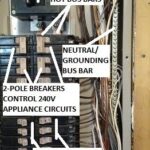
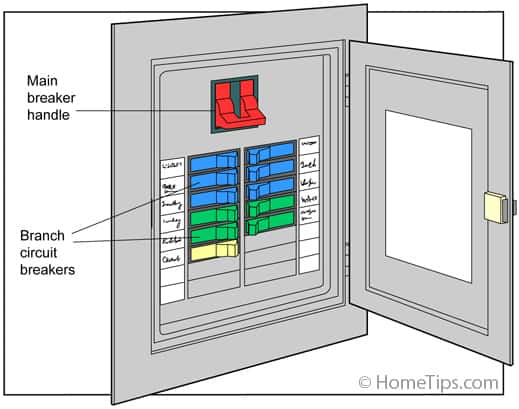
To shut off the electrical power to your entire house, locate the main electrical panel (it pays to know where this is before you need it!) and flip the main circuit breakers at the top (usually a pair) to OFF.
To shut off the power to individual rooms or circuits, shut off the branch circuit breakers.
If you home is equipped with an older fuse box, pull the main disconnect or pull out the fuse block to shut off the power to the house. Unscrew (counterclockwise) individual fuses to shut off individual circuits. Beware: Do Not Touch Any Electrical Wires, Connections, or Sockets!

In Depth:
The main circuit breaker, usually located inside the main panel at the top, shuts off all of the electricity to the house. In a dire emergency, this is the one to turn off. Otherwise, shut off only the breaker that serves the problem circuit—that way, other parts of your house will continue to have lights and power. The main circuit breaker does not shut off the wires that run from the main panel breakers to the electric meter—these are always hot (electrically charged).
When you open the main panel’s cover, be sure there are no exposed electrical wires except for an exposed (non-insulated) solid copper ground wire. A protective panel should conceal all wiring—only the breakers or fuses should be exposed.
If this is not the case, call an electrician to have your electrical panel made safe. Touching the wrong wire or bare metal contact in an exposed electrical panel can electrocute you. Never touch bare metal contacts inside a disconnect panel.
To shut off a circuit breaker, simply flip it to the off position.
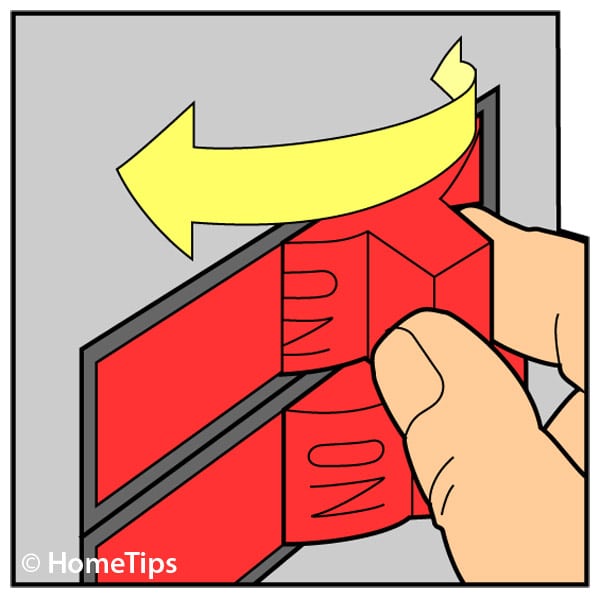
To reset a circuit breaker, first turn it to off and then flip it to on.
To shut off a circuit protected by a pullout fuse block, grasp the block’s handle and pull it toward you. Once the block is out, you can remove the fuse from its mounting clips in the block—a special tool called a fuse puller makes this an easier job.
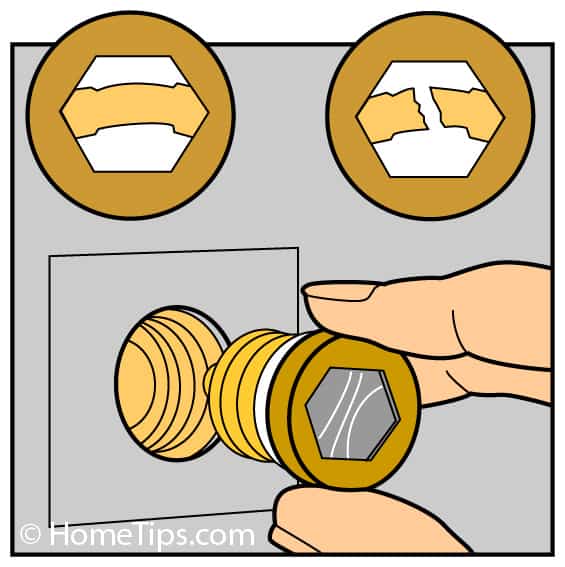
To shut off a circuit protected by a screw-in fuse, grasp the fuse’s glass rim and unscrew it (counterclockwise). Do not put your fingers near the socket. A special pliers-like insulated fuse-pulling tool, available at home centers, makes this job safer.
How to Turn Off Your Home’s Electricity FAQs
- Where is the main electrical panel usually located in a home?
The main electrical panel is typically located near where the electrical power lines enter the house—usually through a pipe-like “service conduit” that leads to the electrical meter and the main panel.
- How do you shut off electricity to your entire house?
To shut off electricity to the entire house, locate the main circuit breaker(s) or “main breaker handle” at the top of your main electrical panel and flip them to the OFF position.
- How can you shut off power to individual rooms or circuits in your house?
You can shut off power to individual rooms or circuits by turning off the branch circuit breakers in your electrical panel.
- What should you do if your home has an older fuse box instead of circuit breakers?
If your home has an older fuse box, shut off power to the house by pulling the main disconnect or pulling out the fuse block. To shut off individual circuits, unscrew the individual fuses counterclockwise.
- Is it safe to touch the electrical wires or connections when managing your home’s power supply?
No, it is not safe to touch any electrical wires, connections, or sockets. Always avoid touching bare metal contacts inside a disconnect panel.
- What safety precautions should you take when opening your home’s main electrical panel?
Make sure that there are no exposed electrical wires except for an exposed solid copper ground wire when you open the main panel’s cover. A protective panel should conceal all wiring.
- What should you do if the wiring inside your electrical panel is exposed?
If the wiring inside your electrical panel is exposed, call an electrician to have your panel made safe. Touching the wrong wire or bare metal contact can result in electrocution.
- How do you reset a circuit breaker in your home?
To reset a circuit breaker, first turn it to the OFF position, then flip it back to ON.
- How do you shut off a circuit protected by a pullout fuse block?
To shut off a circuit with a pullout fuse block, grasp the block’s handle and pull it toward you to remove it—then you can take the fuse out of its mounting clips in the block.
- What tool should you use to remove a screw-in fuse?
To remove a screw-in fuse, use an inexpensive pliers-like insulated fuse-pulling tool, which is available at home centers, to grasp the fuse’s glass rim and unscrew it counterclockwise without putting your fingers near the socket.
Find an Electrical Pro Near You