How does an air conditioning system work? This expert article, along with diagrams and video, clearly explains how a central air conditioner cools a house by cycling refrigerant through its system and delivering chilled air through ductwork.


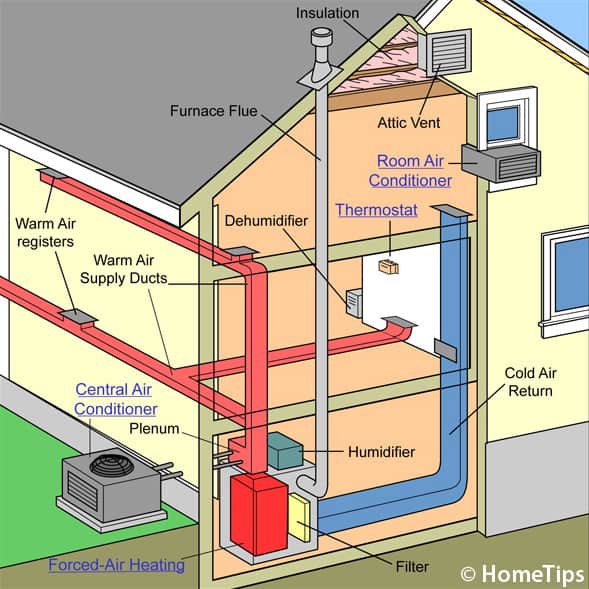
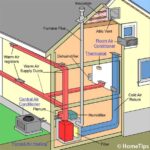
A central air conditioner is like a giant refrigerator for your house. In fact, it employs the same types of components, materials, and systems as a refrigerator, including a refrigerant that changes from liquid to gas and back to liquid as it travels through a system of tubes and coils or fins that collect and give off heat.
As it goes through this cycle, it gathers heat from one place and transfers it to another. At the same time, it creates cold (the absence of heat) in one place and delivers that chill to another. In the case of an air conditioner that place receiving the cold is an air handler or furnace cabinet that is equipped with a blower that pushes the chilled air throughout your house.
The air handler or furnace is typically located in an out-of-the-way place such as a basement or attic. This appliance pumps chilled air throughout the house through a system of air ducts—often the same system utilized by a forced-air furnace during the heating season. One or more thermostats in the house serve as the controls for turning the cooling system off and on as room temperatures rise and fall.
A central air conditioner runs on electricity. During summer months, when it runs a lot, it can consume a lot of energy, so the efficiency of the air conditioner can be a very important feature. If you’re buying a new air conditioner, this means choosing one that is designed for energy efficiency and sized properly for your house. For more about buying a new air conditioner, please see Central Air Conditioners Buying Guide. For information on buying the right size, see Sizing a Central Air Conditioner and How Much Does Central Air Conditioning Cost?
How AC Works
When the thermostat signals the air-conditioning system to lower air temperature, a whole sequence of events begins.
First, the air-handling unit kicks on, drawing room air in from various parts of the house through return-air ducts. This air is pulled through one or more filters, where airborne particles such as dust and lint are removed—in fact, sophisticated filters may remove microscopic pollutants as well. Then the air is routed to air-supply ductwork through which the blower pushes it back to the rooms.
But how does the evaporator coil get cold in the first place? That is where refrigeration principles come into play.
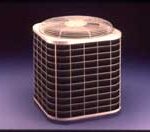
Every air conditioner has three main parts: a condenser, an evaporator, and a compressor. With a typical “split system,” the condenser and the compressor are located in an outdoor unit. The evaporator is mounted on or in the air-handling unit, which is often a forced-air furnace. With a “package system,” all of the components are combined in a single outdoor unit that may be located on the ground or on the roof.
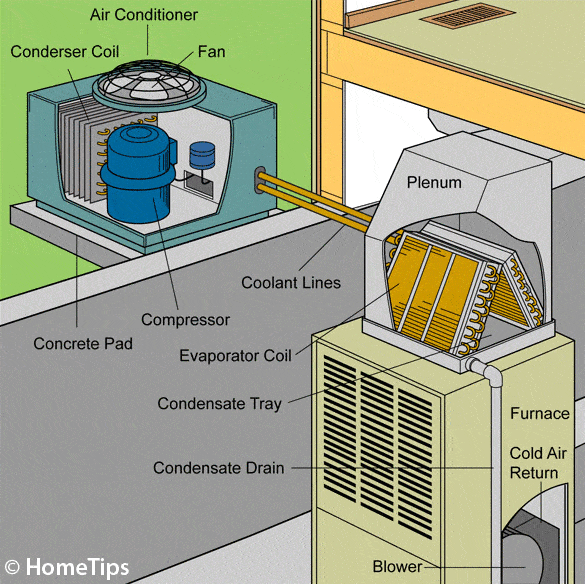
Refrigerant circulates through copper tubing that runs between the evaporator and the condenser. This refrigerant receives and releases heat as it raises and lowers in temperature, changing from liquid to gas and then back to liquid. The refrigerant is especially cold when it begins to circulate through the indoor coil.
As the air handler pushes warm air across the coil, the refrigerant absorbs so much heat from the air that it turns into vapor. As a vapor, it travels to the outdoor compressor, which pressurizes it and moves it through the outdoor coil. There it jettisons the heat through coils or thin metal “fins.” A fan in the compressor also helps to dissipate the heat. The refrigerant then passes through an expansion device that converts it to a low-pressure, low-temperature liquid, which returns to the indoor coil. And so the cycle goes.
The following video gives you a clear idea of how the components of a central air conditioner work to cool down your house.
If your air conditioner is not working properly, please see Central Air Conditioner Troubleshooting & Repair.
NEXT SEE:
• Central AC Overview
• How Your Home’s Heating & Cooling System Works
• What Is Relative Humidity and Why Is It Important to Your Home?