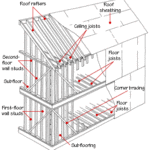
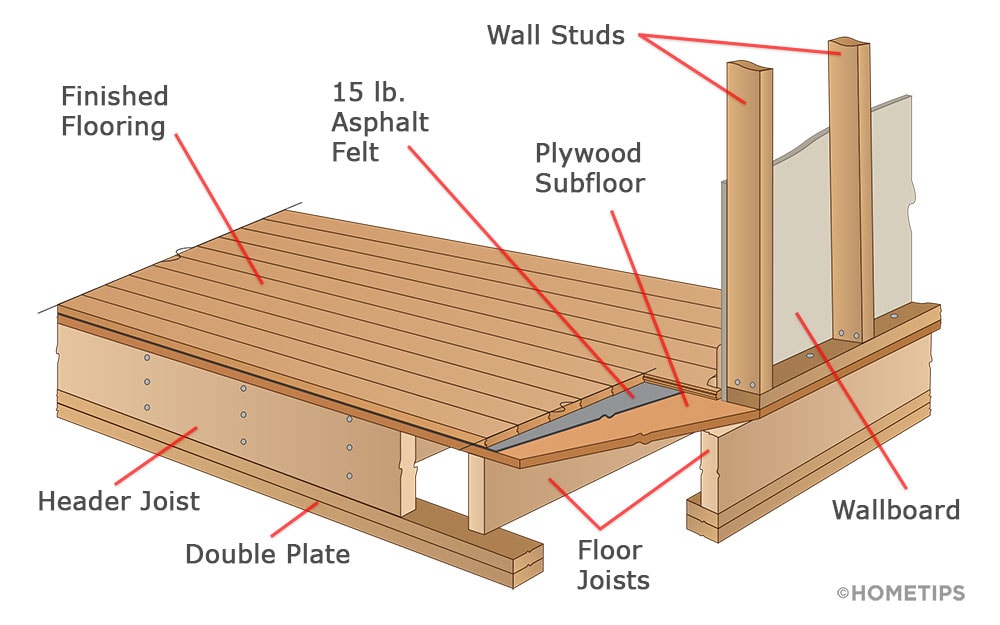
This illustrated guide has diagrams that show how a typical wood-frame floor is built, from floor joists to subfloor and the sill plate.

What Are Floor Joists?
What Is a Subfloor?
What Is a Sill Plate?
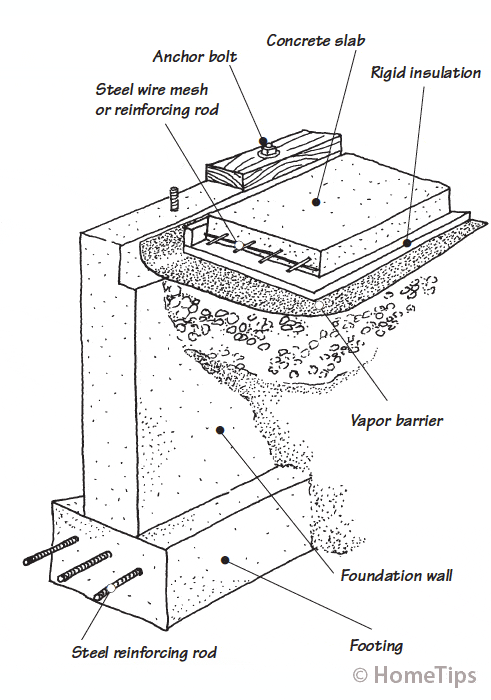
Though some floors of houses are built on a concrete slab flat on the ground, most residential floors are raised above the ground. Raised floors are more resilient under foot and provide access for heating equipment, insulation, plumbing, wiring, and other mechanical equipment.
A raised floor is constructed with a wooden framework that bridges from one exterior wall to another. This framework may or may not be supported intermediately by girders, beams, or walls.
On upper levels of a house, the underside of the floor framing generally serves to back ceiling materials. Ceilings are usually built just like floors, only they’re usually constructed of lighter materials because they’re not intended to carry the same loads.

What Are Floor Joists?
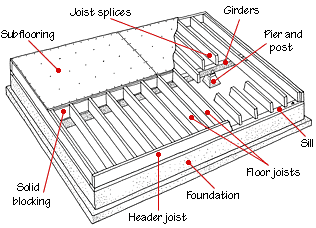
A floor’s framework is made up mostly of wooden joists (thin wooden beams) that run parallel to one another at regular intervals. Floor joists are typically 2 by 8s, 2 by 10s, or 2 by 12s; ceiling joists are usually 2 by 6s or sometimes 2 by 4s if it is an older home. Some newer homes have manufactured, I-beam–shaped joists.
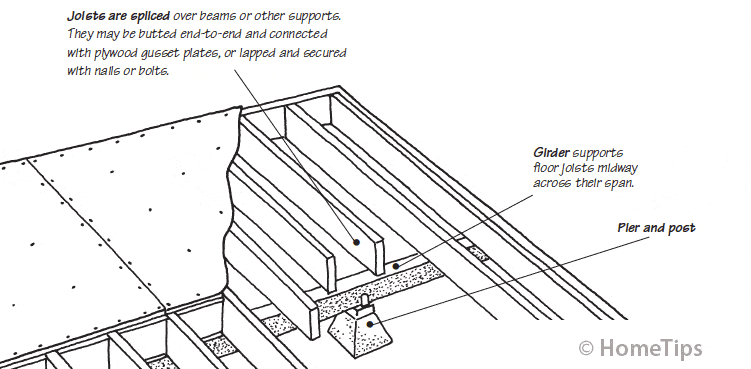
Floor joists, spaced on regular intervals, span the areas between supports such as walls, foundations, girders, and beams. Normal spacing is 16 inches “on center” (from center to center), though some floors may have joists on 12-inch or 24-inch centers. Joist sizing and spacing are determined by building codes, which are based on engineering requirements. Joist headers run perpendicular to the joists, capping their ends.
Joists are spliced over beams or other supports. They may be butted end-to-end and connected with plywood gusset plates or lapped. Solid blocking or metal bridging prevents joists from twisting and helps distribute loads evenly.
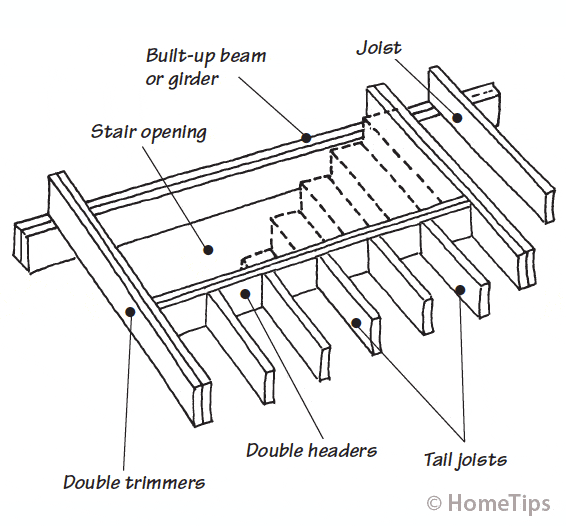
Wherever an opening occurs, such as for a staircase, joists are doubled up at the perimeter and capped with perpendicular headers.
What Is a Subfloor?
Subflooring provides a base for finish flooring and also serves as a platform during construction. It may be made of boards laid either at right angles or diagonally across joists. Or the subfloor may be made of plywood or other panel products that are laid perpendicular to the joists.
A plywood subfloor has panels that are laid in a staggered fashion, with the ends and edges butted together; the panels are nailed (and sometimes also glued with construction adhesive) to the floor joists.
The thickness and stiffness of the subfloor determine the types of finish materials that can be laid on top of it. If your house is built on a concrete slab, the slab can serve as a base for almost any type of flooring. But, if your home has a plywood or board subfloor, it’s important to check out the type and thickness of the material you intend to use to determine what your limitations are. For instance, a floor that is slightly flexible or springy is not suitable for rigid materials such as ceramic tile and stone because the grout or materials will crack with movement.
What Is a Sill Plate?
At the foundation level, floor joists rest directly on a sill that is treated with preservative so that contact with the foundation will not promote termites or rot. Their exact construction and connection with the wall studs depend on the method of framing that is utilized.
Featured Resource: Get a Pre-Screened Local House Framing Contractor