How do central heating systems work? The diagrams and descriptions in this section define central heating and air conditioning, forced-air furnaces, as well as radiant heating systems.

Need Help NOW? Get a Local Heating Pro Fast!
A central heating system has a primary heating appliance such as a furnace or boiler located in an out-of-the-way place such as a basement or garage. It delivers heat throughout the house either by pumping warmed air through a system of air ducts or sending hot water or steam through pipes to room radiators or convectors.
With both forced-air and gravity systems, one or more thermostats turn the heating or cooling unit off and on as room temperatures rise and fall. Homes without central heating normally utilize electric baseboard heaters or, in some cases, in-wall or in-floor gas heaters or radiant heat.
In contemporary homes, ducted air systems are the most common type of central heating and cooling. If your home has an air conditioner, heat pump, or furnace, it is a ducted air system. There are two main types: forced-air and gravity.



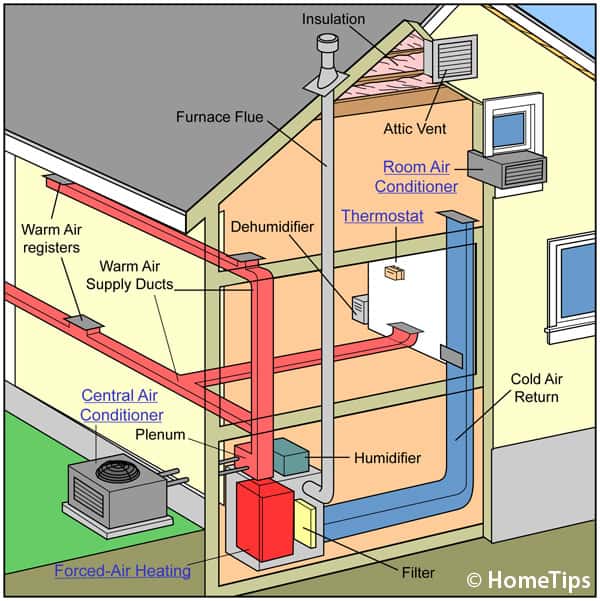
With a forced-air system, a furnace warms air, an air conditioner cools air, a heat pump either warms or cools air, and then a blower forces the heated or cooled air through the system and out into the living spaces.
With a gravity furnace, convection currents (caused by the natural tendency of hot air to rise) carry heated air through the system from a furnace located on or below the main floor. Gravity systems do not have blowers, tend to have very large air ducts, and can only deliver warmed air.
If your system includes an air conditioner or heat pump, it is a forced-air system. With these, cooled (and sometimes humidified or electronically cleaned) air is usually delivered through the same duct work and registers employed by heated air. An air conditioner runs on electricity and removes heat from air with basic refrigeration principles.
A heat pump can provide both heating and cooling. In the winter, a heat pump extracts heat from outside air and delivers it indoors.
On hot summer days, it works in reverse, extracting heat from room air and pumping it outdoors.
Like air conditioners, nearly all heat pumps are powered by electricity.
They have an outdoor compressor/condenser unit that is connected by refrigerant-filled tubing to an indoor air handler. As the refrigerant moves through the system, it completes a basic refrigeration cycle, warming or cooling the coils inside the air handler.
The blower pulls in room air, circulates it across the coils, and pushes the air back into rooms through duct work. When extra heat is needed on particularly cold days, supplemental electric-resistance elements kick on inside the air handler to add warmth to the air passing through it.
NEXT SEE: How to Buy a Furnace
This FREE service by Angi will help you find a qualified local heating & AC professional.