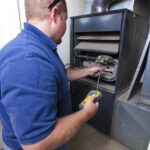
This illustrated guide diagrams the various parts of a gas furnace and explains how they all work together.

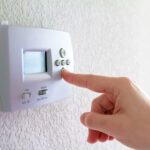
A gas forced-air heating system goes into action when the thermostat tells it that the room temperature has dropped below a preset comfort level. The thermostat sends a low-voltage electrical signal to a relay in the furnace, which signals a valve to open and deliver natural gas to the burners and for the blower to turn on.
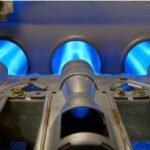
The furnace’s pilot light or electronic ignition lights the burner inside the combustion chamber. This creates heat in the furnace’s heat exchanger, a metal chamber around which the moving air flows.
Need Help NOW? Get a Local Heating Pro Fast!
Once warmed, the air is pushed into the hot-air plenum and then out to the rooms through duct work. The combustion gases created by burning fuel are vented through a flue in the roof or, with high-efficiency furnaces, through a wall.



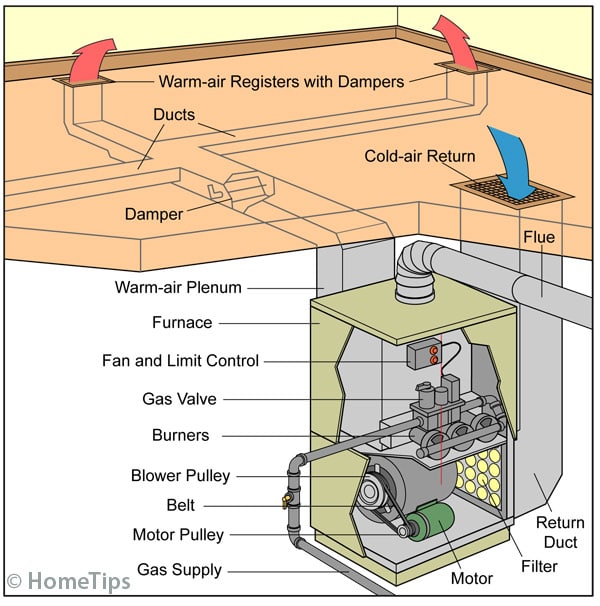
One of the benefits of a forced-air system is that it can receive a whole-house air-conditioning unit, a humidifier, and an electronic air filter—all of which can take advantage of the furnace’s air handler and ducts for delivery of conditioned air to rooms. Duct work is generally metal wrapped with insulation or a flexible plastic-wrapped insulated material that helps retain heat.
The following video will give you a clear idea of how every part of a furnace works to heat your home.
NEXT SEE:
• How to Buy a Furnace
• How to Save Money on Your Heating Bill
• How to Replace a Furnace, AC or Heat Pump Filter
Featured Resource: Get a Local Heating Repair Pro