An in-depth step-by-step guide that shows how to perform range and oven repairs, from performing the first check to troubleshooting common problems.

As more and more features of ranges become computerized, the list of things you can do to repair them grows smaller and smaller. Beyond that basic maintenance, only a couple of repair jobs are within the skills of most homeowners because most repairs require a thorough understanding of the appliance.
With the help of an owner’s manual, you can replace door gaskets, adjust the feet beneath a range to correct for uneven cooking, and relight a pilot. Of course, you can also reposition racks if foods are cooking unevenly, and you can check cords, circuit breakers, and fuses.

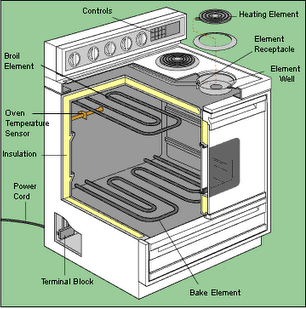
If components of your range don’t work, check the circuit breaker or fuse that governs the circuit first. Also check the connections between the range and the power cord.
Always refer to your owner’s manual when you encounter problems. Always turn off the power and/or the gas to a range or oven before working on the appliance.
On a gas range, if the burners don’t light, be sure the pilot light is lit. (Note: If your appliance has electronic ignition, it doesn’t have a pilot light.) Read more about Gas Cooktop Burner Repairs .
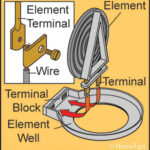
If your range or oven has an electric element that you know is faulty, replacing it is usually fairly easy. Just remove the element as shown in the illustrations below, take it to an appliance parts store to get an exact replacement, and install the new part. Don’t forget to reconnect the power when you’re finished. Before doing any work on the stovetop, always unplug the range or turn off the power at the main electrical panel. Do not hesitate to call a professional appliance repair person if you have any doubts about your knowledge or abilities to repair an electric range. Read more about Electric Cooktop Repairs.
A microwave oven is a completely different beast altogether. For information on microwave repair, please see Microwave Oven Repairs.
What to Check First
If an electric oven or range seems to be receiving power (the light works, for example) but doesn’t get hot, it may have an independent circuit breaker that has tripped or a fuse that has blown. This device is usually located under the cooktop or at the back of the oven. (Refer to your owner’s manual.)
A common complaint with an oven is that the set temperature doesn’t match the temperature inside the oven. First, make sure no one is allowing the heat to escape by repeatedly opening the oven door. If not, the problem may be caused by an improperly calibrated or defective thermostat.
If you suspect this, buy a box of simple white cake mix and bake the cake, following the directions exactly. If the cake is too dry or, conversely, undercooked, you may have to call a technician to recalibrate or replace the thermostat. Then again, a less-expensive alternative is to buy an oven thermometer that will allow you to monitor the temperature through the oven window.
If the oven temperature drops or the oven “sweats,” the oven may have a faulty door gasket. Gaskets can be replaced easily; be sure to get an exact replacement from an appliance parts dealer.
Oven Bakes Poorly
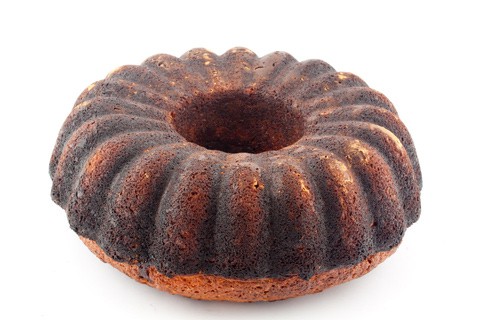
When foods come out of the oven burned, soggy, or unevenly baked, it generally means heat isn’t being distributed evenly throughout the oven, it’s escaping out the door, or the controls are out of adjustment.
- Remove any aluminum foil from racks or the bottom of the oven.
- Check the door gasket, and, if necessary, replace it.
- Be sure nothing is obstructing the vent.
- Reposition the oven racks so baking pans aren’t too close to the heat sources.
- Check your baking pans. If they’re dark, they may be burning your food. Reduce the temperature by 25 degrees Fahrenheit when baking in dark metal or glass pans.
How to Recalibrate an Oven
You can also recalibrate the controls. If your oven has calibration right on the knob, you can calibrate the appliance as follows. If it doesn’t, call an appliance repair person. To adjust the thermostat’s calibration:
- Remove the oven temperature knob by pulling it off its shaft.
- Notice the current setting, and then move the pointer in either direction to adjust its temperature slightly up or down. It’s intentionally difficult to move the pointer on some models; if this is the case, you’ll have to remove a couple of screws. Figure that moving it one notch will change the setting by 10 degrees Fahrenheit.
- For more accurate calibration, call an appliance repair person.
Faulty Bake or Broil Element
The solution to this problem depends on whether the oven is electric or gas.
Electric Oven
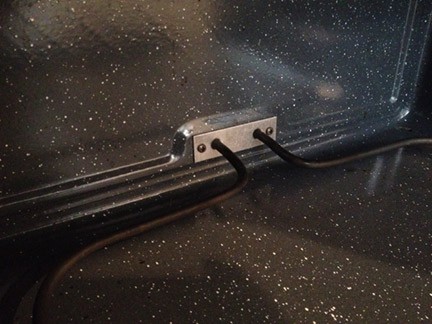
If your electric oven’s bake or broil element isn’t working properly, either it isn’t receiving electric power or the element or oven control may need to be replaced. In many cases, the wiring to the elements can be burnt or broken.
Be sure the controls are set on the proper setting and that the stove is plugged into its receptacle. Also check the circuit breaker or fuse that serves that circuit. Call an appliance repair person, or replace the element yourself as follows.
1. Unplug the oven, and let any hot parts cool. Remove the oven racks.
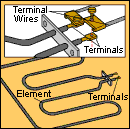
2. Unscrew the mounting screws that secure the element bracket to the oven, and pull out the element far enough to access its terminals. Note which wires are attached to each of the terminals, and then disconnect the wires (pull off the wire clips or unscrew the wires).
3. Take the element to a parts dealer, along with your oven’s model and serial number, and buy a replacement (preferably the manufacturer’s suggested replacement part).
4. Reverse the process to install the new part.
Gas Oven
When a gas oven doesn’t get hot, it generally means that it isn’t receiving gas, the gas valve isn’t distributing gas to the oven burner, or the ignition system—either an electronic ignition or pilot light—isn’t working properly. A common problem with ovens that have a pilot light is that the pilot light has gone out. Note: Gas ranges younger than 10 years old have a sophisticated fault code system that governs their ignition. Always call an approved warranty service provider to handle problems with these ranges.
Here’s how to troubleshoot your gas range:
- Be sure the controls are set to the proper setting.
- Be sure the stove is plugged in, and/or check the circuit breaker or fuse that serves that circuit.
- Check the gas valve to be sure the gas supply is turned on (also make sure the house’s main gas valve is turned on).
- On a stove with a pilot light, make sure the pilot light is burning. If it isn’t, relight it as discussed in your owner’s manual.
- Adjust the pilot flame (older stoves only).
- Turn off the gas, and unplug the stove (or turn off its circuit at the electrical panel). Remove the oven shelves and clean out the oven burner ports, using a stiff wire.
- Plug in the stove (or turn on its circuit), and turn the gas back on. Relight the pilot (if it has one). Return the oven shelves.
- If the oven still doesn’t work, call an appliance repair person.
Tips for Cleaning Your Oven
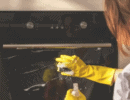
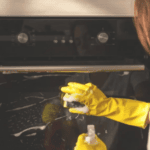
The key to keeping a kitchen range operating properly is to clean it regularly. Here are a few tips for cleaning your range:
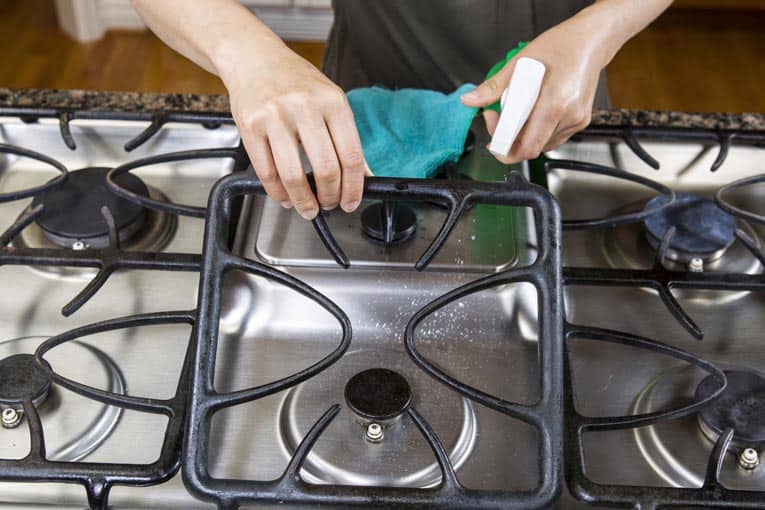
• Clean up spills soon after they occur. Some acidic foods, such as tomato products, can damage the surface of the cooktop or interior of the oven.
• Loosen cooked-on gunk with water or baking soda and water; do not use abrasive materials, which can scratch surfaces.
• Keep the reflector bowls of gas burners clean; it’s not only more pleasing to look at, but the shiny surface makes cooking more efficient.
• Wash burner controls and other knobs with warm water and detergent. Some knobs have markings that can come off, so take care not to soak or scrub them too much.
• Clean gas burners and grates thoroughly.
• Use commercial oven cleaners very cautiously because they are highly toxic. Follow instructions carefully. As an alternative, fill a glass bowl with half a cup of ammonia and let it stand in the oven overnight. Wipe the walls clean with paper towels or newspapers.