This expert article by Don Vandervort, author of Making Your Home Child Safe (Sunset), will teach you how to keep your small kids safe both inside and outside your home.

Childproofing a Bathroom
Baby-proofing a Baby or Toddler Room
Childproofing Stairs
Child-Friendly Interior Surfaces
Electrical Cords, Outlets, and Devices
Protecting Your House from Damage by Kids
Childproofing Garage & Shop
Keeping Kids Safe in Your Yard
Child-Friendly Furniture
Safe Baby Strollers, Carriers & Walkers
Providing a healthy physical environment for your baby means more than safety gates and cuddly toys. In fact, it begins from the moment of conception.

Making your home safe for baby begins by making it healthy and safe for you. It means ensuring that no harmful microscopic particles or gases are contaminating the air in your home. It means being prepared to cope with unexpected disasters in the world outside your front door. And it means adapting various systems or rooms in your home to create an environment that is user-friendly and safe for people of all abilities and ages.
Childproofing a Bathroom
Medicines that look like candy, slippery tubs and floors, hot water—these are some of the hazards that bathrooms present to curious young children. Here are steps you can take to make your home’s bathrooms as safe as possible.
As with the kitchen, first store away and lock up all toxic substances and install a safety lock on the medicine cabinet if it does not have one.
General Bathroom Safety
Keep radios, hair dryers, curling irons, and other electrical appliances out of the bathroom. If there are some you consider essential to your comfort, install GFCIs, unplug the appliances when not in use, and allow them to cool off well out of your child’s reach.
And, keep all electrical appliances a safe distance from the bathtub and sink. Never use extension cords or a portable heater in the bathroom.
So your toddler can’t explore the toilet bowl, buy a simple self-gripping strap to keep the lid down. For the first stage of toilet training, use a “potty chair” that sits on the floor. Then, when your child is ready, move to a step-up training seat that lets him or her use the adult toilet safely.
Or you can get a two-stage toilet trainer that does both. Choose a sturdy step-up trainer with a nonslip step and handles to assure that your child can get up and down safely.
To add an extra layer of safety when your child is old enough to use the regular toilet, you can look into a model with a soft close lid. Toto toilets have several different models like this but they also provide soft close lids that will work with any toilet.
When childproofing a bathroom, look at the location of the towel bars from a toddler’s vantage point. Could they be used as handrails by a climbing child? Could they poke a small face? If so, change them or move them.
Hide the wastebasket inside a safety-latched cabinet. You can purchase lid-locking diaper pails, a design so practical that you may wish to use a second one as a wastebasket. Even with this precaution, wrap up disposable razors and razor blades and place them in outdoor trash cans immediately after use.
Check the laundry chute or hamper to be sure that baby can’t get trapped in it or fall through it.
Certain kinds of tile and linoleum bathroom floors can be very slippery whether they’re wet or dry. If yours presents this hazard, lay down a rubber-backed bath mat.
Bathtub Safety
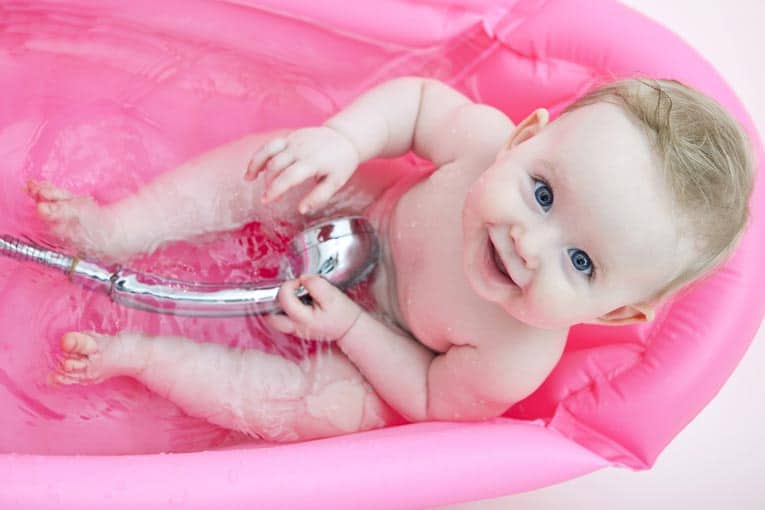
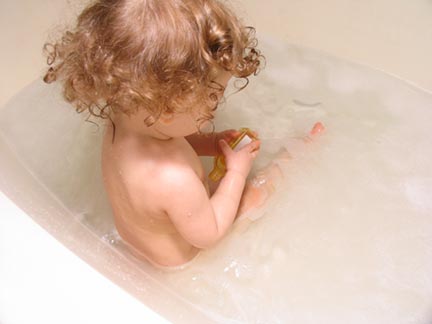
Tragically, every year there are incidents of children drowning in the bathtub, so this is an area requiring the strictest vigilance. Never leave your child during a bath—not even for an instant. If you must answer the door or telephone, wrap your baby in a towel and take him or her with you. Drownings can occur in just one or two inches of water and in only a matter of seconds.
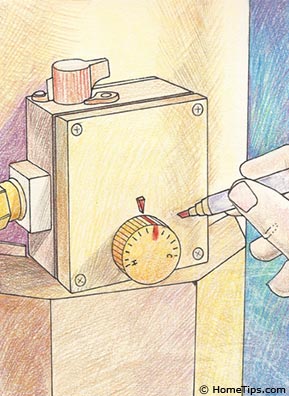
Burns from scalding water are a common, yet highly preventable, accident. Reduce the risk of a severe tap-water burn by taking one simple step: Adjust the thermostat on your water heater so that your tap water is no more than 120 degrees F. (This is hot enough for washing dishes and laundry.)
About an hour after turning down the water heater’s thermostat, measure the tap water temperature by placing a cooking thermometer in a glass, running hot water over it for a couple of minutes, and then reading the temperature. You may need to adjust the thermostat dial slightly and test again. When the temperature is right, mark the new, safe level on the thermostat so you will be able to tell if the thermostat has been turned up accidentally.
You can also double-check the water’s temperature with a bathtub thermometer, available at most children’s stores. But you don’t really need one; just feel the water with your elbow (not your hand, which is less sensitive). Fill a baby’s bath with cool water first and then add warm water. Finish with a little cold water to cool off the spout. Check that the water is comfortably warm, about 90 degrees F.
For bathing a baby, use a steady, stable, baby-sized tub either inside the main tub or set on a wide, sturdy counter. Or, while your baby is still small enough, you might prefer using the kitchen sink. For nestling baby comfortably on a hard tub or sink, purchase a special baby-sized sponge mat, and always use one hand to support the baby.
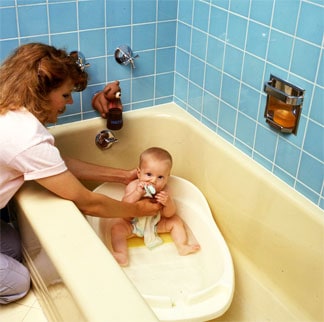
After your child outgrows the infant tub, provide a rubberized mat, bathtub friction decals, or nonslip tape in the main bathtub to prevent slipping. Or, for kids from about 6 months to 2 1/2 years old, a special suction-cupped baby support is available at children’s stores. Here, you can also find protectors to cover the tub spout to minimize head bumps and burns.
Sunken and extra deep bathtubs present more than the usual hazard. The closer the tub’s rim to the floor, the more easily a child can climb it and tumble in. If your bathroom has a low-rimmed tub, keep the bathroom door closed at all times.
Be cautious about bathing a child in a spa-type bathtub. Children under 3 often can’t support themselves in the swirling water. If you have this type of tub, don’t run the pump during your young child’s bath.
If your shower does not have thermostatic shower valve for scald protection, don’t bathe your baby in the shower, because the water can unexpectedly become scalding hot. And if your shower or tub has a glass door, it must be safety glass to guard against injury on the day your child decides to pound it with something heavy.
TIP: If you’ve been using automatic toilet-bowl cleaner, remove it from the tank, discard it in the outside trash, and use an alternative means of cleaning the bowl.
Baby-proofing a Baby or Toddler Room
As you have all the other rooms in the house, baby-proof the nursery by studying it from an infant’s point of view and implement the safety precautions already detailed here.
Then you can turn your attention to the gear you will need upon baby’s arrival.
Keep the crib free and clear of long ribbons, cords, hanging toys, and mobiles. Industry standards recommend that all crib or playpen toys have strings no longer than 12 inches, as well as a label that cautions against use when a baby can push up on hands and knees.
Childproofing a Toddler Room
When your baby stands up and takes off one day—look out! With a toddler’s mobility, the world is soon at his or her fingertips.
Because toddlers spend many hours in their rooms playing, stacking, climbing, chattering, learning, laughing, and sleeping, you’ll want to make that room is as safe as possible.
Following all the precautions mentioned in this section’s other articles won’t prevent every accident, but it will reduce the chances of serious harm. In addition, consider these measures:
Safe Toddler Beds
If your child stands taller than 35 inches or can climb out of the crib, even with its gate up, it’s time to graduate to a standard bed.
The bed is often safest in a corner, surrounded by walls on two sides. If it stands more than a foot off the floor, a low guard rail along the open side will help prevent falls. Make sure that the space between the rail and bed frame will not allow a small child to slip or wiggle through. Bunkbeds are not recommended.
A simpler and often safer option is a Japanese futon (a long, folding cushion) or a firm mattress laid on a carpeted floor.
For toddlers, the best bed frames have very simple headboards and footboards free of decorative cutouts or protrusions that might catch or poke.
Electric blankets are best saved for adult use.
Safe Playpens & Play Yards
Also called a play yard, the playpen offers a safe place for baby to play and, as a result, a short respite for exhausted parents. For assurance of high standards, look for the JPMA “Certified” seal.
Playpens are generally meant for children no taller than 34 inches, no heavier than 30 pounds, and under the age of about 2. Much like a baby’s crib, the playpen is a safe sleep-and-play space if well designed.
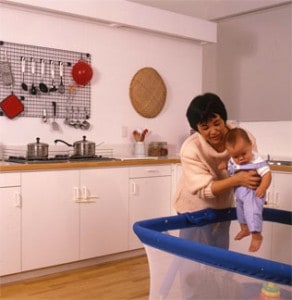
Look for these safety factors:
* Many mesh playpens are designed so that one side drops down (making it easier to lift the child in or out). Never leave the side dropped down while your baby is in the playpen. It can entrap and even suffocate a small child. For added safety, choose a mesh playpen designed without a drop side.
* Make sure that all the support structures are well protected. If the playpen is made of wood, the top rail should have a sturdy plastic teething edge. Also check all edges to be sure that they’re smooth and rounded. In addition, check that hinges and other hardware can’t cause injury.
* A well-designed playpen should be at least 20 inches high, from its base to the top of its sides. Wood bars should be spaced no wider than 2 1/8 inches, and mesh openings should be no bigger than 1/4 inch.
* Sharp hardware should be covered by caps or plugs that a child cannot remove. The playpen should have sturdy locks to prevent a child from lowering or collapsing it.
* Like baby gates of similar design, accordion-style playpens have caused enough accidents that the CPSC now warns that older types are unsafe because they have openings large enough to entrap a small child’s head.
How to Buy a Safe Baby Crib
The U.S. Consumer Product Safety Commission (CPSC), a federal agency founded in 1973, regulates the manufacture of cribs and permanent and portable cribs, which means that any new one you buy should meet its safety regulations. However, the CPSC doesn’t necessarily catch everything, and missing something like a defect in crib construction can turn out to be devastating.
Below are a few basics that you should be aware of:
Crib Specifications
A baby’s bed serves as a cozy home for both sleep and play. By far the favorite bed for today’s baby is the crib: It’s convenient, practical, and comfortable up to the age of about 2 1/2. And, because it comes under federal safety regulations (which were first enacted in 1974), it is generally the safest baby bed.
Check that the crib you plan to use has the following safety features, particularly if it is second-hand or custom-made.
- Slats are spaced no wider apart than 2 3/8 inches. Some babies’ bodies can slip between wider spaces.
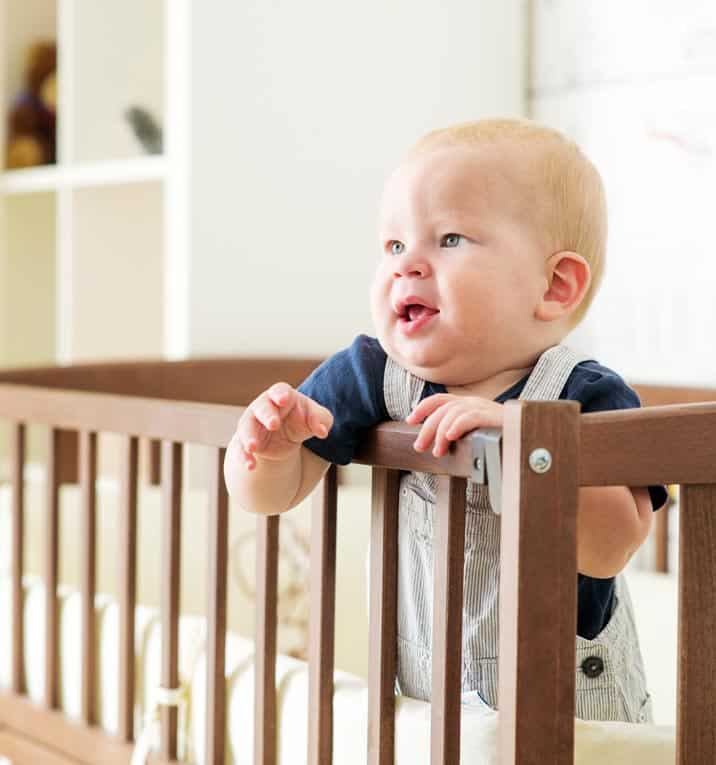
- End panels (or headboards) don’t have decorative cutouts that might entrap a baby’s head or other body part.
- The distance from the mattress support in its lowest position to the top of the end panels or rails in their highest position is at least 26 inches to prevent baby from falling out. The minimum safe distance from the mattress support in its highest position to the top of the drop side in its lowest position is 9 inches.
- The crib has no corner posts, even if less than an inch high. These can catch on children’s clothing or anything that might be around a child’s neck.
- Interior dimensions are between 51 3/4 and 53 inches long and 27 3/8 and 28 5/8 inches wide.
- The mattress fits snugly and that no more than two fingers can fit between the crib and the mattress. (Babies have become trapped in these spaces, even suffocating as a result.)
- The latching mechanisms or locks that release the drop side are well out of baby’s reach and require dual action for release, or at least 10 pounds of force.
- All hardware is free of sharp edges.
- Rails are supported properly at corner posts so they cannot drop or be pulled down. In this regard, please note that 1 million Simplicity cribs have been recalled because of faulty or improperly attached hardware and refer to the CPSC bulletin and the alert below.
CPSC Infant Crib Recall Alert
On November 23, 2009, the U.S. Consumer Product Safety Commission (CPSC) announced the recall of about 2.1 million drop-side cribs sold in the United States and Canada. With these cribs, the drop-side can detach from the crib, allowing a dangerous gap that may entrap and suffocate infants.
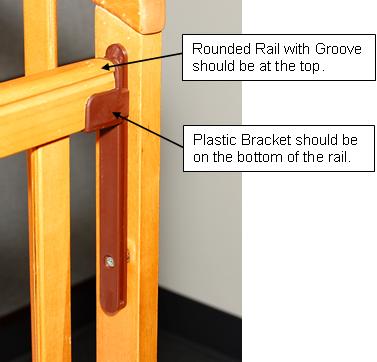
The drop side on these cribs is attached with plastic hardware that can detach. If this occurs, a dangerous space is created between the mattress and the crib wall—a space that is large enough for an infant to drop through and fall to the floor or become trapped between the mattress and the side.
Cribs sold by Stork Craft Manufacturing Inc., of British Columbia, Canada, between January, 1993, and October, 2009, should not be used. The recall includes approximately 147,000 drop-side cribs sold under the Fisher-Price brand. Those made by StorkCraft with the Fisher-Price logo manufactured between October, 2007, and December, 2004, have also been recalled.
Major retailers who have sold these cribs include BJ’s Wholesale Club, J.C. Penny, Kmart, Meijers, Sears, USA. Baby, and Wal-Mart stores. The cribs have been sold online by Amazon.com, BabiesRUs.com, Costco.com, Target.com, and Wal-Mart.com.
If you suspect that you own one of these cribs, locate the crib name, manufacture date, model number, country of manufacture, and the manufacturer’s name, address, and contact information on the assembly instruction sheet attached to the mattress support board. Contact StorkCraft with this information via phone or its Web site, www.storkcraft.com. Be advised that the Web site may be overloaded with visitors.
This is not the first time drop-side cribs have been recalled. Other 2009 recalls have included 400,000 drop-side cribs made by Simplicity and 600,000 drop-side cribs made by Delta Enterprise. Because drop-side cribs are inherently dangerous due to multiple moving parts, safety advocates recommend not using them at all.
Safe Crib Use
Remove the plastic wrapping from the mattress and any other parts before use; tie the wrapping in knots and discard in the outdoor trash. Never use plastic bags as mattress covers because the clinging film can suffocate babies.
Always lock crib rails in their upright position when baby is in the crib and unattended.
Until baby can stand, line the crib interior with bumper pads that tie or snap in place in at least six places. When baby can stand, remove the pads so they can’t be used for climbing out and lower the mattress to its lowest position. A child who is 35 inches tall should graduate to a low toddler’s bed.
Other Baby Beds
Cradles, bassinets, and portable beds are alternatives to cribs for the first few months of life, but you must prevent baby from tumbling out!
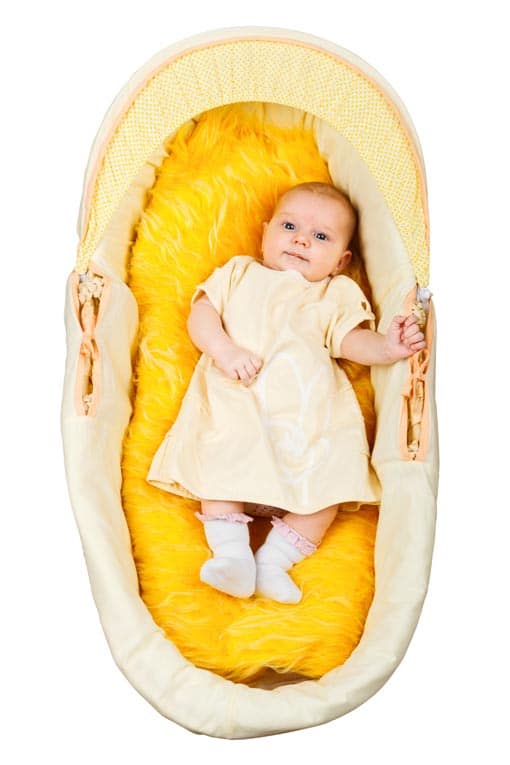
On a suspended cradle, check for a wide, sturdy base; secure pivoting hardware; and a design that lets you lock the cradle in a non-swinging position. No matter which design you choose, discontinue use of the cradle at 3 months or when your baby can raise up.
Wicker bassinets. Also not regulated completely, bassinets, like cradles, are safe to use only for newborns under 3 months. Make sure that the lining is securely attached and free of ribbons or buttons and that there are no loose, protruding reeds. If the bassinet is second-hand, look it over carefully, following the guidelines for second-hand cribs.
Portable cribs. Measure to make sure that the distance from the mattress support in its lowest position to the top of the side in its highest position is at least 22 inches. Make sure that any folding hardware locks securely and cannot collapse.
Keep in mind that a cradle, bassinet, or portable crib should never be used for transporting a baby in the car. It is not a safe substitute for an up-to-date car seat.
Safe Storage
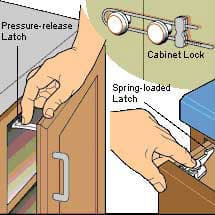
Save low drawers and shelves for toys and bulky items. Use upper drawers and shelves that are out of your toddler’s reach for potentially messy items such as art supplies. Store fragile baby treasures and all dangerous articles in high, safety-latched cupboards in a different room.
If you’re choosing a traditional toy chest, look for a spring-loaded support that prevents the lid from slamming shut, as well as construction that prevents the hinge sides from pinching little fingers. The chest should also have ventilation holes in the base in the event your toddler empties it out and manages to crawl in. Safer choices for toy storage are coverless plastic tubs or bins or low, sturdy shelves. Cardboard boxes are good, too, and are easily replaced.
Child-Safe Chairs & Tables
Choose stools, chairs, and tables that are quite stable because your child will climb on them, invent many new uses for them, and maybe even stack them up.
When buying new furniture, look for stability, durable materials, softness, rounded edges, and adjustability.
A Clean, Safe Closet
Young children sometimes like to hide in closets. Be sure your child can’t get trapped inside accidentally. Be sure that any closet hooks, including ones on the inside or outside of the door, are placed well above a child’s eye level. Periodically check the closet for small stray items. Do not keep any of baby’s clothes in garment bags or dry cleaner bags.
TIP: Provide a nightlight so both you and your child can navigate the room in the dark.
Childproofing Stairs
For small kids, stairs and landings look like a lot of fun, but can be very hazardous unless you take certain childproofing precautions.
Safety gates. At both the top and bottom of open stairs, install safety gates.
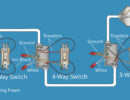
Lighting. Be sure all foot-traffic areas are well lighted without glare or shadows. Three-way light switches (to turn lights off or on from either end of a hall or stairs) are helpful. If your house isn’t wired for these, plug a nightlight into a nearby outlet (include an outlet cover).
Sure footing. For clear, easy passage, regularly remove obstacles, eliminate throw rugs, and install non-slippery surfaces underfoot. Clean up spills immediately, and prevent a child from walking on wet floors.
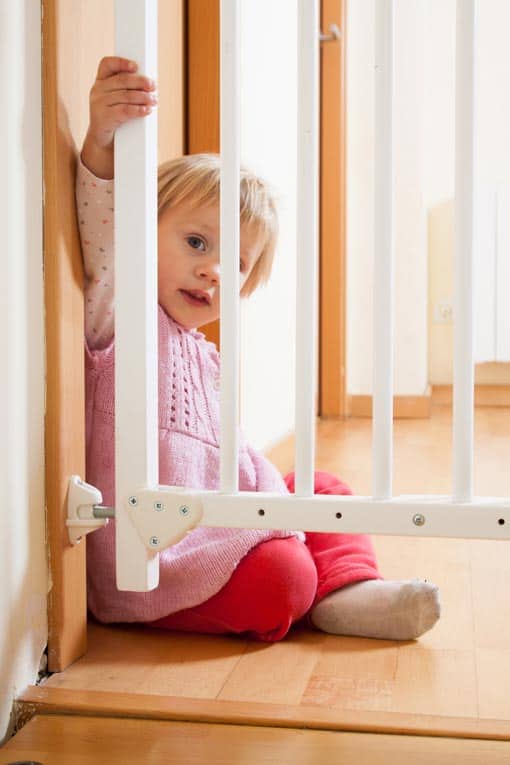
Climbing skills. To a toddler, climbing stairs is an exciting accomplishment, as well as an exercise that develops coordination and muscle. Small children need to learn how to go up and down stairs properly (crawling down backwards is safest for toddlers). Accompany them while they’re learning.
Treads & risers. Make sure that stairs are in good structural condition and have slip-resistant tread surfaces. Wall-to-wall, low-pile carpeting is soft underfoot for both stairs and hallways and provides some cushioning in case of a fall.
Stairs with open risers are dangerous for young kids, who can crawl right through them. Be especially watchful if your home has such a staircase. Also be vigilant if you have a spiral staircase because its turns can be difficult to negotiate; metal spiral staircases can have hard, sharp edges. Block all such staircases at top and bottom with safety gates.
Keep stairs free of clutter. You’ll invite stumbling if you use them for collecting items that need to go to the upper or lower floor.
Railings. An ideal child-safe stairway would have two parallel handrails on each side: one placed at a comfortable level for adults (30 to 34 inches above the tread’s nosing) and a lower one placed where it can be easily grasped by children. You can buy railings and brackets at a building supply store. Screw the railing securely into wall studs.
Open railings of sturdy and smooth balusters can also give children a good grip as they climb stairs. These open railings on stairs, landings, and upper levels should be at least 36 inches high. If balusters are spaced wide enough that a small body could squirm between them, provide a barrier by temporarily clamping sheets of 1/16-inch clear acrylic or styrene plastic to the railing or balusters using electronic cable ties.
Toddler Safety Gates
At both the top and bottom of open stairs, install safety gates. Several styles are available for blocking children at an open doorway, at stairs, or from entering a hallway. Most range from 24 to 32 inches in height; most can be adjusted to various door widths up to about 42 inches.
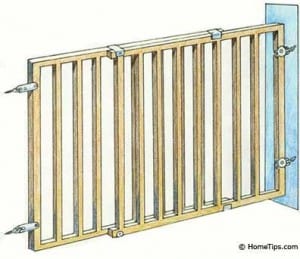
For very wide openings, you can get a wooden bar gate that will expand to 8 feet. The typical minimum width that gates will fit is 27 inches; one model will compress to 22 inches.
Some gates are pressure-mounted between walls or doorjambs and are very easy to install. However, test it first to make sure it can be installed so tightly that your child can’t budge it.
Others have a fixed (often hinged) attachment at one or both sides; these are generally more secure for blocking off stairs or where an extra measure of security counts.
Do not use older accordion-style gates because these can entrap a child’s head. Even though the CPSC has found these to be dangerous, many are still passed around or sold second-hand. Newer designs with openings no bigger than 2 3/8 inches are safer.
Baby gates are certified by the JPMA. Look for the association’s “Certified” seal. Here are a few important rules for buying and using safety gates:
- The gate’s construction should be free of sharp or pointed hardware as well as areas that could entrap a child. Minimum spacing between bars should be 2 3/8 inches. Make sure that your child cannot climb over the gate.
- The latching mechanism should work effectively, consistently, and easily (for you).
- The gate should be mounted according to the manufacturer’s instructions. Assure yourself that the mounting is secure.
The gate is not a substitute for your attentiveness. Be watchful; don’t rely completely on the gate to contain your child who, at one time or another, may learn how to get over or around it.
TIP: Choose a baby gate that is easy for adults to open and close so it will be used consistently.
Child-Friendly Interior Surfaces
Sticky fingers, smeared crayons, spattered orange juice—with a small child around, your house is bound to receive plenty of colorful wear and tear. Some wall- and floor-covering materials are more durable and easier to clean than others. More important, certain materials are simply safer.
While it may not be practical or affordable to launch into even a minor remodel of your home, there are some relatively simple things you can do to make it a gentler environment
Washable Walls
If wall coverings are durable and easy to clean, they’ll continue to look as good below the 3-foot level as they do above it.
Paints. Nontoxic, water-based acrylic paint offers a low-luster finish, washability, and chip resistance.
For trim and areas that receive considerable wear and tear, choose a nontoxic, water-based, semigloss enamel. Glossy finishes are easier to clean, but every nick or bump will be highlighted by the paint’s sheen. Buy high-quality paints and choose neutral rather than primary colors since they will show smudges the least.
Wallpapers. As children discover crayons and paint, sometimes they can’t resist a little scribbling or dabbling on the wall. One of the easiest-to-wash wall coverings is fabric-backed vinyl. Other relatively durable choices include solid vinyl and vinyl-coated wallpaper.
Woven-fabric plastic coverings are also excellent choices for durability. All sponge off easily. Random or free-flowing patterns help hide dirt and damage.
Other wall materials. Some children’s room designers opt for industrial carpeting on one or more walls. It’s rugged and easy to clean (just vacuum); it also cuts down on noise and provides a padded, soft surface.
Kid-friendly Flooring
When choosing new flooring with children in mind, decide whether the room or area will need a hard floor covering or soft carpeting, depending on its use..
Carpeting. This is the friendliest choice for nursery, family room, living room, hallway, and stairs—wherever comfort, safety, and sound absorption are important. Because it can be damaged by moisture and spills, carpeting is less practical in kitchens, bathrooms, and dining areas.
Because of its wearability and commercial grade, 100 percent nylon carpeting is a good choice for kids. Nylon carpets tend to be more stain resistant than wool ones, as well as less expensive to buy and keep clean. If treated with a stain repellent, spills will be even easier to wipe up. Most nylon carpets have a built-in static guard. By law, all carpets are fire retardant.
Pick low cut-pile or short-loop, dense-weave carpets. Don’t choose deep shags, which can conceal dangerous small objects. Choose a mid-range color—neither too dark nor too light. A variegated texture or pattern will camouflage stains.
Carpet tiles are another good option for floors, though somewhat expensive. You can install them yourself; if one section gets stained or damaged, you can replace just that piece.
Resilient flooring. Vinyl, rubber, or linoleum flooring is relatively soft underfoot, yet firm, durable, and easy to clean. A textured surface guards against slipping.
Electrical Cords, Outlets, and Devices
Some childproofing measures, such as protecting windows or electrical outlets, apply to the entire house. Here we’ll look at these, beginning with electrical outlets since these pose a serious hazard to small children. Then, please see the listing at top right for information on childproofing stairs, doors, and windows.
Home Electrical Devices
Since 1984, the Uniform Building Code has required ground fault circuit interrupters (GFCIs) in bathrooms; more recently, they’ve been required for kitchens and outdoor circuits, too. The reasoning is that these are the likeliest areas, because of their proximity to water, where serious electrical shock could occur.
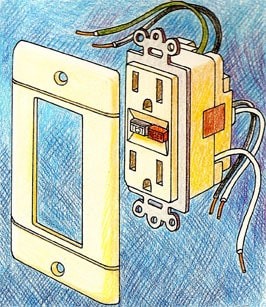
GFCI receptacles sense a leak in the current and break the circuit almost instantaneously, thus preventing electrical shock. If wired correctly in line, one unit can serve several receptacles. Or, you can replace ordinary circuit breakers that serve your kitchen, bath, and outdoor receptacles with GFCI breakers. See more about GFCI receptacles.
Electrical Cords
All electrical cords throughout the house must be kept in good repair first and foremost to avoid the potential for fire. Worn, cloth- covered cords are especially dangerous, so replace them with up-to-date rugged plastic cords.
Electrical cords must be kept out of easy access. A baby or toddler can receive severe electrical burns and permanent scars from chewing on one or may topple a heavy appliance by tugging on one.
Eliminate extension cords from view wherever possible by rearranging furniture. If you must use an extension cord, unplug it when not in use. Where practical, affix electrical cord to baseboards with staples or clear masking tape. If two or more cords run to the same location, cover them with a cord sleeve.
Electrical Outlets
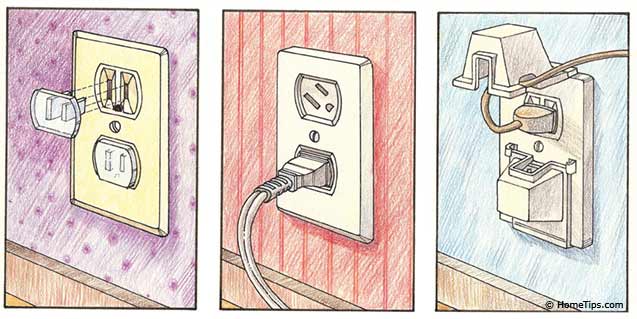
There are three types of safety devices for electrical outlets: outlet caps, offset cover plates, and protective covers. Whichever type you choose, be sure to protect all outlets your child can reach.
Although young children can remove outlet caps, caps do discourage them from inserting objects into unused outlets. Spring-loaded offset cover plates block direct access to outlets. To insert a plug, twist 1/4 turn clockwise until the holes in the plate and the outlet line up. Protective covers prevent accidental shocks. Covers flip out of the way for insertion or removal of a plug.
TIP: Manufacturers of GFCIs recommend checking the devices monthly by triggering the test button.
Protecting Your House from Damage by Kids
While the purpose of childproofing is first and foremost to protect your child from household hazards, you also want to protect your house and its contents from your child. Here are a few techniques.
What you prize, move to where small children can’t reach (after all, why shouldn’t that crystal bird be able to fly?).
You may want to leave a few safe and replaceable items within reach to teach the meaning of “touch with only one finger.” And don’t forget the obvious: No one wants to find his or her 3-year-old carefully snipping $20 bills into shreds with kiddie scissors.
Stow visually tempting objects behind closed doors, where they won’t lure your child to climb shelves. A clarinet, set of golf clubs, or pair of satin shoes look irresistible to a young, imaginative child. It’s easiest if such objects stay hidden except on rare occasions. If they have to stay in view, place them well out of reach.
Store valuables and delicate items—cameras, table linens, and jewelry, for example—in drawers or cabinets with childproof latches.
But there’s no need to shut everything out of sight. You might want to hang favorite china plates high on the kitchen or dining room wall. Let children peep at delicate collectibles in a glass-fronted display cabinet. Make use of such out-of-reach locations as the fireplace mantel, piano top, or upper bookcase shelves.
Childproofing Garage & Shop for Safety
Fascinating tools and machinery make garages, garden sheds, storage areas, and workshops dangerously appealing to children. But unless you’re working on a special project with your child, keep these areas strictly off limits.
Most garages and workshops contain so many sharp power and hand tools, as well as chemicals and fuels, that it is impossible to make them entirely safe, so your strategy should be to block entry but also to try to minimize risk if your child does get in.
Locking Shop & Garage Doors
Despite the slight inconvenience, simply keep doors to the garage, workshop, garden shed, and similar areas securely locked when not in use.
If your garage has an automatic garage door, be sure that its operating switch is placed well out of your child’s reach. Many kids discover the thrilling—and perilous—game of racing under the door before it closes.
As a partial safeguard, however, be sure the door operator has a pressure-sensitive device that will cause the door to stop or reverse direction when an object is encountered. But even this technology offers no iron-clad guarantee against at least minor injury to adventuresome kids.
If the garage has a roll-up garage door, be sure the channels between each panel have a rubber cushioning strip or are shaped to prevent finger pinching.
Last but not least, if you have an unused refrigerator stored in your garage, lock or block off the door to prevent kids from climbing in, becoming trapped, and suffocating. Better yet, have the refrigerator removed entirely.
Organizing for Safety
Store harmful objects as inaccessibly as you can. Keep work areas as clutter-free as possible. Put away hand tools after use, and unplug power tools after use.
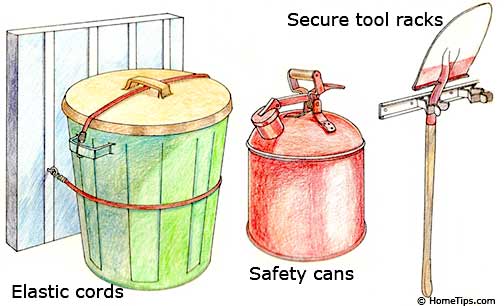
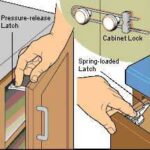
To stop pint-sized intruders, put child-safe latches on cabinets. To stop older kids who can get past the latches, install locks on cabinets storing dangerous materials.
Store flammable liquids in safety cans with a spring closure. Buy cans with the UL (Underwriters Laboratory) or FM (Factory Mutual) mark. Rags that have soaked up flammables should be disposed of in the outdoor trash after hanging outdoors to dry. Install a smoke detector in the work area. Keep an A-B-C fire extinguisher near the garage or workshop exit.
To stop kids from overturning trash cans, secure them to a wall—and the lids to the cans—with heavy elastic cords.
Spring-clip garden tools to brackets securely attached to a wall.
Keeping Kids Safe in Your Yard
Children have an amazing ability to ferret out anything that’s potentially harmful. In your garden, if there’s glass to be stepped on by a bare foot, a beehive to unsettle, or a hole to fall into, kids are apt to oblige. One of a parent’s jobs is to eliminate such potential accidents as much as possible.
Start by combing the ground, little by little, for anything that might cause trouble: bottle caps, sharp sticks and rocks, protruding pipes or wires, old containers of fertilizer.
Your yard may not conceal any of these troublemakers, but then again, you just might find a few hidden under bushes or in an overgrown corner.
Cover any ponds or abandoned wells. Also fill in any holes, including areas that become puddles after rainfall (small children can drown in just a few inches of water).
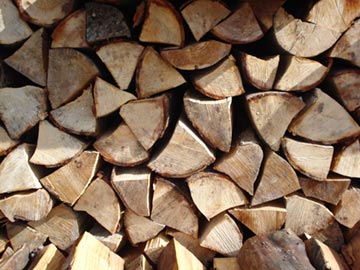
Stack firewood and lumber away from play areas. Such piles are tempting to climb but can topple easily; they can also attract rodents, spiders, and snakes.
Securely fence off any dangerous areas of the yard, such as a steep drop-off or thorny growth. It’s especially important to fence off pools, hot tubs, and spas. For more about this, please see Child Safety Around Swimming Pools.
Child-Safe Play Structures
Most kids can spin creative play from rocks and pinecones, sticks and leaves. But nothing quite stimulates a young child like a well-designed outdoor play structure. Swings, slides, and climbers are a child’s dream come true.
In recent years, outdoor play structures have undergone a design revolution. Old pipe- frame swing sets have taken a back seat to complex outdoor edifices of plastic, timber, tires, and rope. Intended to inspire children’s imaginations, most of these playground creations have also been built for safety.
Even so, inspect them yourself for secure fastenings, sure footing, solidity of rope and net, smooth and un-splintered wood, and absence of openings that could entrap a child’s body or head.
When building a play yard, do not use treated wood because of toxicity, unless there will be only occasional skin contact.
Instead, use naturally weather-resistant redwood or cedar. Here are some further considerations:
Taking a fall is one of the common mishaps when children play on swings, slides, or climbers. It helps if play equipment is located over a soft, cushioned surface, such as a thick layer of wood chips, bark, sand, grass, or rubber. Play equipment should not be set up over concrete or asphalt.
Place play equipment at least 6 feet from house walls, fences, trees, or other obstacles, especially if the equipment includes swings. Make sure the equipment is level and anchor it firmly in the ground.
Set each post for a swing set in a concrete hole at least 9 inches square. Tighten all nuts and bolts. Cut off protruding bolt ends with a hacksaw. Attach each swing to wood only with a heavy bolt or eve bolt that penetrates all the way through and is secured by a locknut. A screw eye will loosen with the swing’s motion and eventually come loose.
To prevent serious injury in the event a swing seat hits a child, make sure that it’s made of a soft material, such as rubber or rubberized canvas. For small children up to about age 3, provide full support bucket seats. For older kids, a big inner tube makes a safe, inexpensive swing. Smooth, strong plastic ropes are gentler for young children than chains. Take the ropes down during rain or snow. Instead of S-hooks, which can disconnect, use connector hooks equipped with spring closures or locking O-rings.
A favorite of very young children, the sandbox is usually the safest piece of play equipment. Keep it covered when not in use so cats cannot use it as a litter box. Make sure its frame is free of loose nails and splinters. Fill it with coarse washed ocean sand or river sand.
A slide for small children should be wide, not too high, and not too steep. All slides should have steps that are easy for a tot to climb and a solid railing to grip. The sliding surface should have sides at least 2 1/2 inches high. Slides built into the side of a hill are safer because there’s less chance of injury; also safer are slides enclosed by a chute. If you’re building a slide yourself, face it with cool plastic laminate in a light color to reflect heat. Apply a nonslip coating on steps (or on ladder rungs of a purchased slide).
Make sure that all components of a climbing structure are sturdy and securely fastened together. Check for areas between railings or surfaces that might entrap a small head or body part, or snag clothing.
Children should use climbing equipment only when it’s dry since moisture will make it slippery. Make sure that a wood climber is free of splinters. Though toddlers are unlikely to use them anyway, don’t allow play with rings that could entrap a child’s head or limb.
Small children love to splash in a wading pool during hot weather. The soft, inflatable kind is safest, as well as inexpensive. No matter how shallow the water, do not leave your child even for a minute while he or she is in the pool.
Child-Friendly Ground Surfaces
Are the ground surfaces around your house hard, soft, or likely a combination? Here’s how to deal with both:
A concrete slab or asphalt is a great surface for wheeled toys. But underneath play equipment, it makes for a hard landing. Restrict play on these surfaces only to bike riding and the like.
Wood chips, bark, or sand can help absorb the impact of a child’s fall and in most cases prevent injury. Under play equipment, spread a 6-inch layer of sand or 5 to 6 inches of bark or wood chips. (Coarsely ground fir bark causes fewer splinters than pine bark.) Wet it down to keep it from blowing in windy weather. However, wet sand can become quite hard.
Sawdust is not safe, since it may harbor splinters or even nails and can be allergenic. Since most of these ground covers can be scooped up into baby’s mouth, be vigilant. Though a little swallowed sand hasn’t hurt most of us, children can get worms if cats have used the sand as a litter box.
Grass lawns create broad, relatively soft expanses, inviting for all kinds of children’s games. Most seed companies sell rugged grass mixtures; choose one without clover, which attracts bees.
Child-Safe Outdoor Play
Anyone who has ever walked through a preschool yard during recess knows that most young kids love loud, active play. Small daredevils pilot kiddie cars and trikes through tot-sized demolition derbies; junior little-leaguers zip balls back and forth; budding contractors build cities and freeways, while pint-sized cooks stir up sandbox cuisine.
Such play usually involves toys. Fortunately, today’s children’s products are often designed and tested to meet industry and sometimes government safety standards.
These standards generally ensure that an item won’t present a hazard—if it’s used appropriately. Of course, children have a way of stretching a toy’s use to brave new dimensions.
Before purchase, give all outdoor gear a careful inspection to be sure that it will hold up to years of hard use. Choose quality equipment suitable for your child’s age and skill level.
Stay away from breakable plastics. It’s better to buy a few items of good, durable design than to buy many of cheaper construction.
Also basic to play yard safety, whether at home, at a park, or at preschool, are a few rules. Even very young kids catch on quickly if taught simple rules in a friendly spirit.
• Don’t throw—or try to eat—sand, wood chips, toys, pebbles, or other play yard materials.
• Use equipment as it is meant to be used. When a crowd of kids plays together, this rule has to be enforced even more stringently.
• Watch out for yourself and others. Being hit by a swing is one of the biggest causes of playground injury; all kids need to watch out where they and others walk. Falling from a climber or slide ladder is another common accident. Teach kids to wait their turns and not to push others.
Child-Friendly Furniture
If chairs and couches are well padded with rugged upholstery and if tables have smooth, rounded edges and corners, your child and your furnishings can coexist happily with minimal risk.
Choose easy-care upholstery fabrics in patterns and colors least likely to advertise stains and wear-and-tear. Look into stain- repellent fabric finishes, whether applied by the manufacturer or sprayed on by you.
Childproofing Tables & Chairs
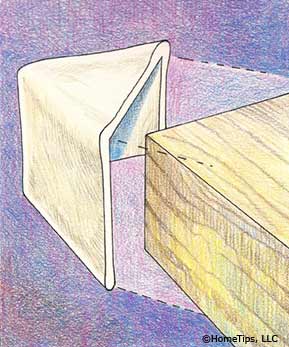
Tables with sharp, hard edges (especially marble or glass) injure many stumbling toddlers. Attach edge protectors and add corner guards. Better yet is a table with smooth, rounded edges or one made of soft wicker (without protruding reed ends) or plastic.
Sturdy Furniture for Kids
Make sure that all tabletops are anchored securely to their bases. Also, a draping tablecloth is an invitation to an accident: A small child can grab the cloth for support (or simply out of curiosity) and pull down everything that rests on the tabletop.
Tuck dining chairs under the table so your child won’t be tempted to use them to climb up onto the tabletop.
Childproofing Bookshelves
Check freestanding bookshelves for stability. If at all unsteady, they can be anchored with screws to wall studs. If that’s not possible, use spreading anchors. Bookshelves with cabinet doors at the bottom are harder for kids to climb. And such cabinets provide a good place to keep small paraphernalia out of sight.
Wedging books tightly on shelves helps to foil the toddler’s game of pulling them off the shelves. Breakables should go out of reach or behind locked doors. Be sure that china cabinets are stable, unclimbable, and have locks or safety latches on their doors.
Keeping Kids Safe Near Electronic Equipment
For the safety of both your child and your expensive equipment, place your television, stereo, and other gear out of reach in cabinets, or at least against a wall (but with allowances for air circulation on all sides and on top to prevent overheating.) If you keep the television behind closed doors now, it will also be easier to monitor your child’s viewing later on. See more about childproofing electronics.
Lamps & Kids
All freestanding lamps, especially floor lamps, are easily pulled over. For ideal lamp safety, temporarily eliminate table and floor lamps in favor of ceiling-mounted lighting. If that’s not possible, make sure that your lamps are sturdy and are placed where their cords drop out of sight and reach. If necessary, use 2-inch-wide clear packing tape to secure cords along the floor or baseboards. Reduce the wattage of lamps that have hot, bare bulbs exposed beneath shades. Never leave a lighting fixture without a bulb in its socket.
TIP: Don’t forget to add corner guards to any kitchen or bath countertops that do not have rounded edges.
How to Buy Safe Baby Strollers, Carriers & Walkers
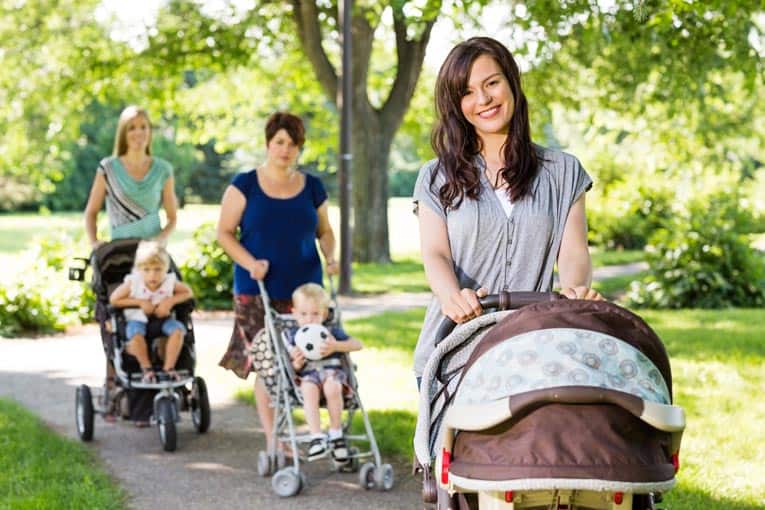
We’re a mobile society, so it’s not surprising that we enjoy a variety of excellent designs for moving our young along with us. Here we take a look at strollers, carriers, and walkers, and the innovations that have made this gear for on the go safer than ever.
Safe Strollers
For walks to the park or shopping at the mall, a stroller can become almost as essential as the family car. It lets baby lounge in comfort, and it frees a parent from lifting and carrying.
A stroller that reclines completely and is well protected by a canopy can carry newborns. Otherwise, when your baby is about 3 months, start using a canopied stroller that supports the infant in a semi-reclining position. Many parents continue to use the stroller for tired kids up to about age 4.
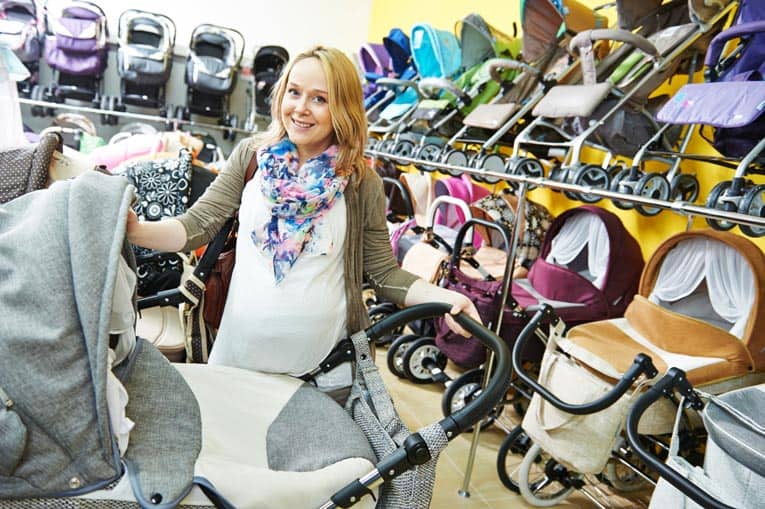
In 1983, the Juvenile Products Manufacturers Association developed a voluntary program for certification of strollers. Look for its certification seal and these safety features when picking one out:
- It must have a wide wheel base to guard against tipping, even when your child leans far over one side or reclines backward.
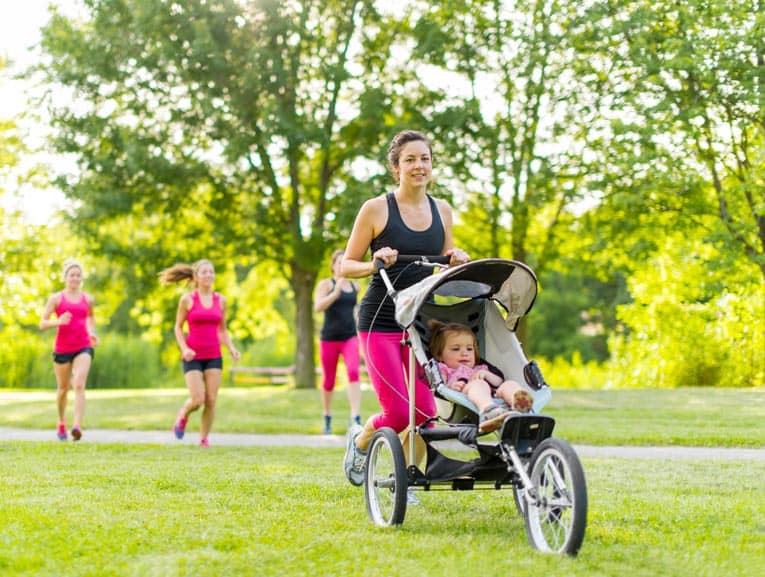
- Choose large wheels or sets of double wheels that help stabilize the stroller. Models with swiveling wheels give a smoother ride.
- Make sure that the seat belt is durable for it will get hard use for several years. Is it easy to use? If not, you may not want to bother with it. But, to be safe, you must fasten it whenever you seat your child in the stroller.
- Test the brake to be sure it is easy to find and operate in a hurry and that it locks the wheels securely. Don’t leave your child unattended in a stroller, no matter how good the brakes are.
- The basket for carrying supplies should be mounted low on the back of the stroller, in front of or directly over the rear wheels.
TIP: Try to resist the urge to sling purses and shopping bags on a stroller’s handles as the weight could tip the stroller.
Safe Baby Carriers
Backpacks, front packs, and infant “carrier” seats have become almost standard equipment for the recently born. Largely, safety depends on their correct and careful use.
Front packs. Designed to keep young babies snug against the chest of a parent, front packs are useful until baby weighs about 15 pounds. Choose a front pack that provides good head and neck support, especially if your baby is under 3 months.
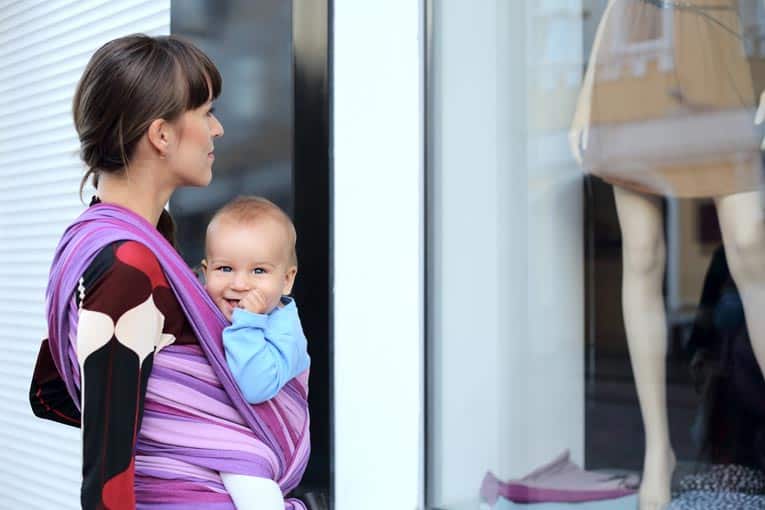
While you’re carrying the baby this way, it’s unsafe to do anything you wouldn’t do if you were holding the baby in your arms. If you have any kind of back trouble, a front pack may aggravate it.
Backpacks. Intended for older, bigger babies, the backpack you choose should have leg openings that are neither too small nor so large that your youngster could slip through.
It should have a well-padded edge wherever your baby might bump. It should fit comfortably on you and be easy to take off with minimal risk of accidentally dropping it (there are models that stand on their own). There should be a waist strap to help distribute the weight evenly.
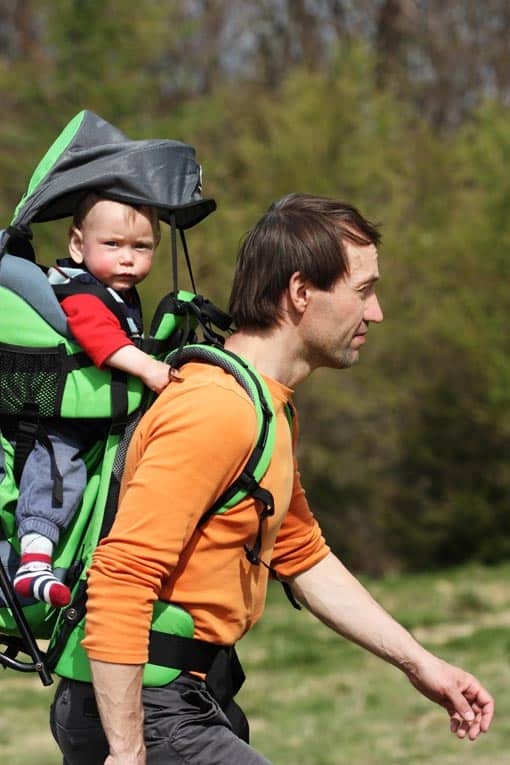
As you carry your baby in a backpack, be sure that he or she is seated deep inside it, with the back fully supported. Bend from the knees—not the waist—while wearing the pack to lessen the risk of baby falling out (it’s easier on your back, too).
Infant carriers. These come in a variety of designs, from a plastic lounge chair to a bouncing sling of fabric stretched over a metal frame. Unless used carelessly by adults, carriers are convenient and can be safe and fun.
Make sure that your baby is the right size for the seat, usually under 16 to 20 pounds (follow the manufacturer’s guidelines). Make sure that the carrier or bounce seat has a wide, stable base. Test it to be sure the base won’t skid as your baby wriggles. If the seat has a metal support that snaps into its back, make sure that it locks securely and won’t pop out.
These chairs must have easy-to-use seat belts, and the seat belt must be used or baby could propel right out.
Always place the seat where there is no chance of baby toppling over an edge or pushing off with his or her feet. A tabletop is not safe unless you are sitting right next to your child. Never consider these seats as babysitters, even briefly, and never consider them a safe substitute for a car seat.
Safe Baby Walkers
Baby walkers are much loved by some parents and their small offspring. But other parents and some pediatricians consider walkers unsafe. The main problem is that in the blink of an eye walkers can roll perilously down a flight of stairs—the number one cause of injuries related to them.
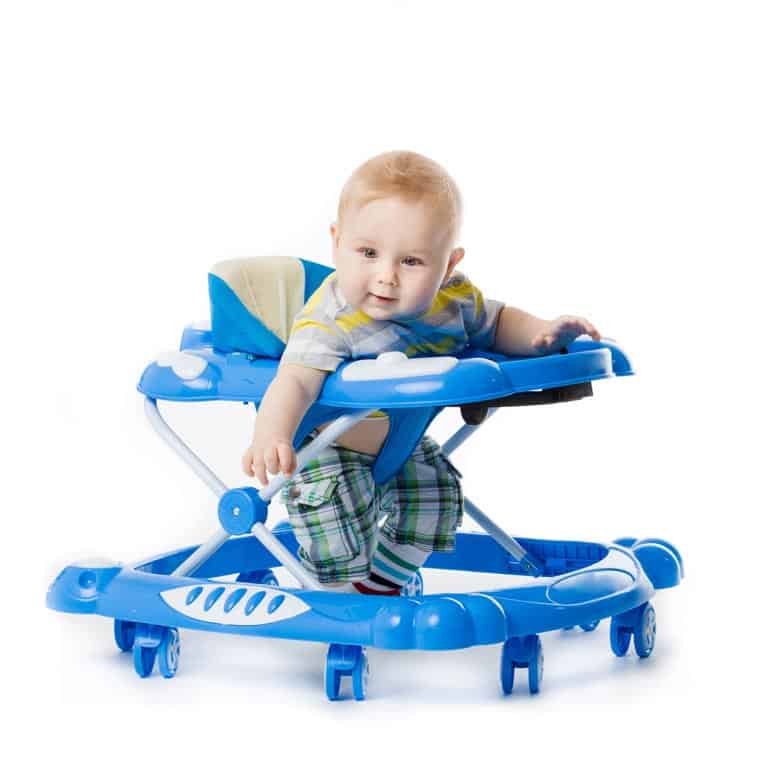
This is why, a decade ago, in conjunction with the Consumer Product Safety Commission, the Juvenile Products Manufacturers Association sponsored voluntary certification standards for walkers. Today, to be certified, a baby walker must be too wide to fit through a standard-size doorway and must feature some mechanism that prevents the walker from rolling down stairs.
If you are considering a baby walker, look for the “Meets New Safety Standard” label. If you have an old baby walker that you still want to use, the CPSC recommends taking the following precautions:
- Close off the top of the stairs, though the safest idea is to keep the walker on the ground floor, blocked off from the door to the basement. Remove throw rugs, which can cause a walker to tip over. Most important of all, stay close and attentive.
- Make sure the walker has no scissoring, shearing, or pinching hinges, springs, or other hardware accessible to your child. There must be no holes (or slots) larger than 1/8 inch in which a finger could get trapped. Make sure the walker can’t collapse accidentally while in use.
- Make sure that the base is wide enough and the wheels are large enough to minimize the risk of tipping. In addition, the seat should be recessed enough to prevent a child from gaining access to hot surfaces, liquid containers, dangling appliance cords, and other dangerous objects.
- Never allow a baby in a walker near a swimming pool or any other source of water, even a toilet.