The simple but ingenious mechanics of the toilet have changed very little since the earliest "water closet" was invented by Thomas Crapper in the nineteenth century. The toilet, though not one of the more glamourous of home fixtures, is designed to do a very specific job-to carry away waste and prevent sewer gasses from entering the house. And unless something goes wrong with a toilet, it handles its role adroitly.
Opening the back lid, it's easy to be intimidated by all of those strange-looking parts. But a toilet actually operates quite simply.
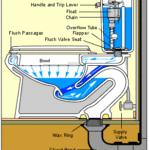
As shown in the drawing, a toilet has two main parts made from vitreous china: a tank and a bowl. Some toilets are cast as a single piece; others are made in two separate parts that are joined together.
When a toilet is ready for use, both tank and bowl are partly filled with water. Passages between the bowl and the closet bend (the top of the waste pipe) form a trap that remains filled with water at all times, blocking the rise of sewer gasses.
When you flush the trip lever, it lifts a stopper between the tank and bowl, called a flush valve, letting the water in the tank flow into the bowl.
Click Image to Enlarge
|
The pressure of the cascading water forces the bowl's water and waste down the waste pipe. The water flowing into the bowl also cleans the bowl. The bowl's water is replenished by water entering from the tank through a refill tube.
As the tank of a conventional toilet empties, a float ball drops, activating the ballcock (simply a water valve), which releases water into the tank. Some new ballcocks operate on water pressure-they don't have a float ball. The water is delivered to the ballcock through a supply tube that's connected to a valve at the wall or floor. When turned clockwise, this valve will shut off the flow of water to the tank.
To prevent overflow and flooding, the top of the overflow tube is open and acts as a drain if the tank's water level rises too high.
Older toilets use 5 to 7 gallons of water to complete the flushing action, wasting a lot of water. All new toilets are made to use a maximum of 1.6 gallons or less per flush.
A minimum-flush mechanism seals the flush valve seat when the tank is still partially full, keeping full pressure on the flush but using less water.
A pressure-activated ballcock is activated by a drop in the tank's water pressure. This type, easily adjusted to deliver various amounts of water to the tank, eliminates the need for a float.
The cut-away view shown at top shows relationship of tank to bowl and how the toilet's base forms a trap to block sewer gasses. Flush handle raises trip lever, raising the flush valve or seat ball from the flush valve seat, letting water rush into the bowl. Stop valve at the wall delivers water through a supply tube to the ballcock. When the float ball drops, the ballcock opens, filling the tank until the ball floats back to its upper position. Overflow tube sends excess tank water to bowl. Refill tube replenishes water in tank through the overflow tube.
A pressurized cylinder inside the toilet tank cuts water usage by putting a small amount of flush water under pressure-either from compressed air or from the house supply line's water pressure.
The conventional float-ball, lift wire and tank ball mechanism has been the standard flushing device for many years.
Get a Pre-Screened Bathroom Remodeling Contractor in Your Area