This expert, unbiased water softener buying guide will help you choose the best water softener for hard water problems. Includes salt-free-water-softeners, dual-tank softeners, and more.


What is a water softener? Water softener systems (often misspelled “water softner systems“) are products that solve hard water problems. Hard water is simply water that is rich in minerals such as calcium, magnesium carbonate, and manganese. If you find that soap and shampoo don’t lather well, dishes have spots, the bathtub has a ring, laundry looks dingy, and the coffee maker has scale deposits, your home probably has a hard water problem. In this case you might consider purchasing a water softener.
Though the natural minerals in hard water don’t typically pose health risks, they can create damaging deposits in your plumbing, water heater, and other water-using appliances, and make washing dishes, clothing, skin, and hair more challenging. According to the U.S. Geological Survey, 85 percent of American homes have problems with hard water.
Solving Hard Water Problems
Hard water comes from aquifers and other underground sources that collect dissolved minerals from rock—particularly calcium, magnesium carbonate, and manganese. These minerals give water undesirable characteristics that collectively are dubbed “hardness.” The severity of hardness is measured by grains (of mineral) per gallon (GPG) or, in some cases, by parts per million of mineral (PPM). One GPG equals 17.1 PPM.
What Is Hard Water?
Technically, any water that contains more than 1 GPG of dissolved hardness minerals is considered hard, but, realistically, water with up to 3.5 GPG is relatively soft. Water with more than 10.5 GPG is very hard. Between these extremes is typical, moderately hard water. You can buy a water test kit on Amazon.
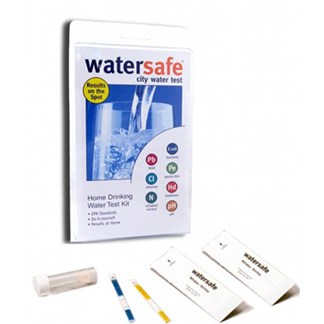
Hard Water Problems
Hard water is less an issue of health than of potential expense. Many of the problems created by hard water stay hidden until some type of malfunction occurs in your home’s plumbing system or in a water-using appliance. When heated, dissolved hard-water minerals recrystallize and form scale that eventually clogs plumbing, reducing water flow. Scale and lime deposits also take their toll on water-heating appliances such as dishwashers and coffee makers, increasing the need for repairs.
Worse yet, scale cakes onto interior surfaces of water heaters, making them more likely to fail. According to a study commissioned by the Water Quality Research Council at New Mexico State University, water heaters operate 22 percent to 30 percent less efficiently when plagued with hard-water scale.
Hard-water problems reveal themselves as a nuisance when you bathe and cook, do laundry, and clean house. Calcium and magnesium react with many soaps, shampoos, cleansers, and detergents, diminishing their lathering and cleaning capability so you have to use more and rinse longer. They also form a scum on tile and what appears as difficult-to-clean bathtub ring. In the kitchen, this “soap curd” translates into spotted dishes and scale on cookware. Additionally, certain hard-water minerals, such as iron and manganese, can give water an undesirable appearance, odor, or taste.
Hard water does enter the health arena in one area: People who have hard water are more prone to rashes and skin problems because it changes the skin’s pH so that soap remains on the skin, clogging pores.
Water Softener Types
By far the most popular and commonly used type of whole-house water softener is an ion-exchange or “cation exchange” unit, but a couple of other technologies are also available. The following will explain the differences.
Salt-Based Ion Exchange Softener
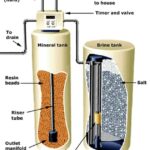
This type of water softener cycles household water through two tanks: one with special resin beads and the other filled with brine. It works on the principle of ion exchange, softening hard water by substituting sodium (salt) for hard minerals such as calcium, magnesium, and iron. For a complete explanation of how a conventional water softener works, please see How a Water Softener Works.
Salt-Free Water Softener
A salt-free water softener regenerates with a potassium-chloride salt substitute rather than sodium. This type of unit may be a better option for people who are concerned about salt intake. This type of water softener is actually a descaler—it doesn’t reduce the hard water minerals but rather prevents minerals from being deposited as scale to the surfaces of water-using appliances and pipes.
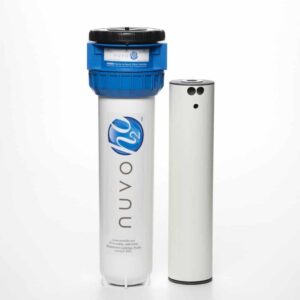
The general consensus is that this type of water treatment is better than no water softener at all, but not as effective as conventional water softening. For more, please see the article Salt-Free Water Softeners.
Dual-Tank Water Softener Systems
When a water softener is recharging, it is designed to disconnect from the water system, so it is basically out of commission. For this reason, the regeneration cycle is usually set to occur at night. If softened water is needed during the regeneration cycle, this can be problematic.
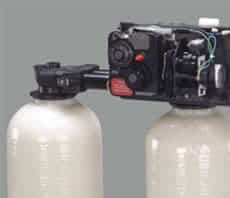
If the down time of the water softener is an issue, or if a family is large or lives where water is particularly hard, it may be smart to consider a dual-tank water-softening unit with two resin tanks. With a dual-tank unit, when one tank is in use, the other is regenerating. As a result, softened water is being supplied continuously, without any break in service. And because these units operate on demand, they can be sized smaller than single-tank units.
Several models are available. One popular product, the Fleck 9000, has a fully adjustable valve that is controlled by a meter. When the water softener starts backwashing one tank, its control switches the water supply to the other tank, offering a continuous flow rate of 21 gallons per minute. With this model, you can buy various tank capacities—24,000-, 32,000-, 40,000-, 48,000-, 64,000-, 80,000-, and 110,000-grain capacity per tank. These range in price from $950 to $2,000.
Dual-Tank Considerations
When shopping for a dual-tank water softener, keep in mind the space it will require. Install it where it can serve the main inbound water line so it can supply the entire house. It will also require a drain for backwashing. If you choose a model that requires electrical power, be sure a circuit is located nearby. For more about placing your water softener, see How to Install a Water Softener.
Also look for features such as NSF (National Sanitation Foundation) certification and a solid warranty on the control valve and mineral tank such as three years for the valve and 10 years for the mineral tank. A good water softener should last at least 20 years.
Magnetic Water Softener vs. Water Descaler
In the Salt-Free Water Softeners article, you’ll also find a discussion of a more controversial option—the electronic or magnetic water softener or descaler. According to manufacturers, this plug-in device, which clips onto the incoming pipe, sets up a magnetic field that changes the electromagnetic properties of the calcium-carbonate minerals so they are repelled by pipes and each other. Please see the article for more about this.
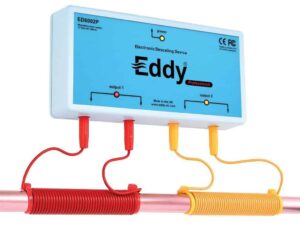
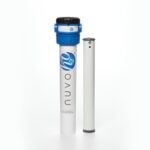
If you would like to try out one of these, please check out and read the user reviews for the Eddy Electronic Water Descaler (buy on Amazon) shown here. Note that the manufacturer offers a 12-month money-back guarantee. If you do try it out, please send us your feedback.
Water Softener Size & Features
What separates one conventional water softener from another? Basically: Size and features.
How to Choose Water Softener Size
When buying or leasing a new water softener, selecting one that is the right size is important. You’ll want to get one that can handle the demands of your household but is not unnecessarily large (and expensive). Physical size isn’t the issue—the unit’s ability to remove “hardness” minerals from water without frequent regeneration is.
Water softeners are sold in several sizes, each rated by the number of grains of hardness they can remove from water between regenerations. The idea is to get a unit that will go at least three days between recharges. Ideally, the water softener can also handle periods of larger-than-normal water usage.
What size water softener do I need?
You can calculate the size of water softener your family needs by multiplying the number of people in your household by 75—the average number of gallons used per person per day—to figure out the total amount of water your household uses daily. Then multiply this number by the number of grains per gallon (GPG) of hardness minerals in your water to figure out the capacity of whole-house water softener you need.
So, for example, figure that a family of five uses 375 gallons of water per day (5 X 75). If your water has 10 GPG, you have 3,750 GPG of hardness minerals (375 X 10) requiring removal each day.
Water Softener Features & Controls
Before leasing or buying a water softener, become acquainted with its features and controls. For example, check out what controls the regeneration cycles, how long each cycle takes, and the amount of water and salt needed for recharging. Be aware that even fully automatic types require occasional refilling with salt. Several different methods are used to control the cycles, but the two main types are:
Water softener timer controls. Clocks or electronic timers automatically recharge the unit at a preset time and day, based on your average usage. This type may fall short if you have unusually large water usage on a particular day. They also waste sodium and water because they regenerate whether or not recharging is necessary. They usually do this in the early morning hours.
Softener DIR controls. A more sophisticated method, called demand-initiated regeneration (DIR), senses when the resin needs recharging, either electronically or with a meter that measures and calculates usage. A demand-initiated regeneration system saves on salt and regeneration water because it does not recharge unless necessary. In addition, it provides for abnormally large water usage.
Water Softener Buying & Renting Tips
Should I buy or rent a water softener?
In the short run, renting a water softener is often the most attractive option because there are no significant upfront costs. Depending on the level of service and materials the company offers, you can pay from $15 to $50 per month or more on a lease. If you buy, you will pay about $150 per year for materials. And, of course, you’ll have to pay for the unit. Depending upon the features, prices range from about $400 to $2,500 or more.
Here is a video of insider buying tips that can be helpful in gaining an overview of things you should consider when buying a new water softener.
Finding the Right Water Softener Company
Get at least two quotes from different water softener companies. And be sure the quotes are based on exactly the same type of considerations: regeneration cycle, type of controls, level of service, and, of course, warranty on both the control valve and the resin tank.
It is usually best to work with an established company. That way, you’ll get a quality product backed by a company likely to remain in business for a while.
Find out whether you will need a plumber for installation or whether the work must be done by a special factory service person. And pay attention to the monthly fee for maintaining the softener.
Some softener firms provide a service where they regularly exchange exhausted with charged units. This type of service is a good bet if you live in an area where waste water from sewers is recycled for municipal watering because sodium may be considered a pollutant.
Water Softener Certification
Also look for certification. NSF International is an independent testing organization that tests and certifies water-treatment products. The water industry’s trade organization, the Water Quality Association, also certifies equipment, so look for the WQA Gold Seal. Although neither of these certifications guarantees performance, they signify that the equipment has successfully passed testing for industry standards and the manufacturer’s claims have been validated—an important step toward ensuring that the unit you buy or lease will offer years of trouble-free service.
Featured Resource: Find a Local Water Treatment Pro
NEXT SEE:
• How a Water Softener Works
• How to Test for Hard Water
• How to Install a Water Softener
• Salt-Free Water Softeners or Conditioners
• How Pipes Work