Problems with no hot water? Quickly diagnose your water heater issue with this comprehensive troubleshooting guide. Videos, drawings, and easy to understand step-by-step DIY advice show you how to fix your water heater or let you know if it’s time to call a pro.

 When diagnosing this issue, I’ve often found pilot lights in gas water heaters need to be relit or circuit breakers in electric water heaters need to be reset. Use the list below to jump to the specific problem you’re dealing with and find the answers you need.
To jump to the exact advice you need, select your specific problem:
• No Hot Water Anywhere In the House
• Hot Water Not Working In Part of The House
• No Hot Water In An Apartment
• Water Is Not Hot Enough
• Not Enough Hot Water Supply
• No Hot Water In The Morning
• Hot Water Has Low Pressure or No Pressure
• Hot Water Is Too Hot
This article will show you how to troubleshoot and fix both gas and electric storage water heater problems. If you have a tankless water heater that is not working, see Tankless Water Heater Repairs.
Find A Professional Water Heater Repair Person Near You
How to Tell If Your Water Heater Is Gas or Electric
For many water heater repairs, it makes a big difference whether the water heater is gas or electric.
These links will take you down the page to HomeTips advice for each type:
Gas Water Heater Troubleshooting and Repairs
Electric Water Heater Troubleshooting and Repairs
The two types heat water differently.
Here is advice for homeowners who aren’t sure which type of water heater they have.
A gas water heater is a combustion appliance that burns gas—it must vent the exhaust fumes to the outdoors through a flue (a round chimney pipe). So first look for a flue. A flue indicates that the water heater burns gas or another combustion fuel, such as propane.
In addition, a gas water heater has a gas pipe going to it, a pilot light, and a burner at the bottom of the hot water tank. An electric water heater doesn’t have any of these. The burner is typically behind a small metal access panel or viewing door. If you look past the access panel or viewing door, you should see a flame unless the pilot light is out. If the pilot light is out, that’s probably why the water heater doesn’t work. See how to relight it, below.
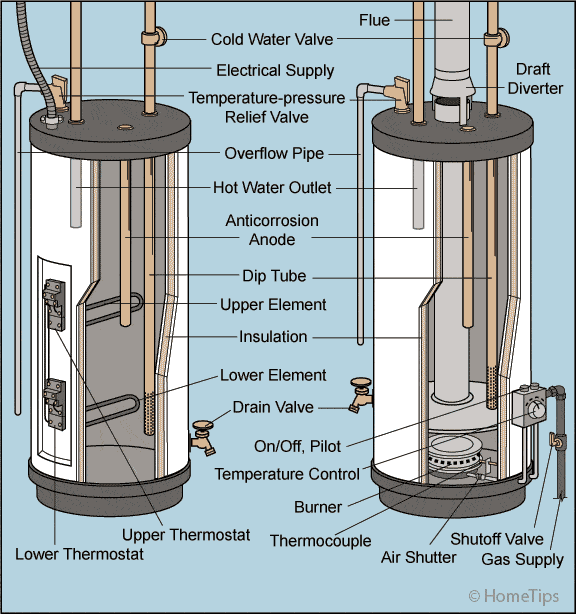
An electric water heater doesn’t produce combustion gasses, so it doesn’t have a flue at the top. It does, however, have an electrical cable or electrical conduit that connects it to an electrical panel. It has one or two thermostats on the side of the tank, as shown in the left part of the drawing below.
Water Heater Diagrams

No Hot Water Anywhere In the House
If there is no hot water throughout the house, the water heater’s gas burner or electric heating elements are probably not producing heat.
- To be sure your entire house is without hot water, check every hot water faucet and fixture. If you find one or more fixtures have hot water, skip to Hot Water Not Working In Part of The House.
- Also check other gas appliances in the house—such as a gas range or furnace—to see whether they work. If they don’t, your home’s gas supply has been interrupted—call the gas company.
- Next, touch the water heater’s temperature-pressure (TP) relief valve and the hot water outlet pipe above the water heater (see water heater diagrams above) to see if it’s warm or cold.
- If you feel warmth, your water heater is probably working. The hot water may be getting blocked somewhere in the pipes between the water heater and the fixtures. Of course, the TP valve or pipe could still be warm if the water heater stopped working within the last 3 or 4 hours because the water inside would still be holding some heat.
- If the TP valve or outlet pipe is cold, the water heater hasn’t been working for several hours. If this is the case and hot water is not available at any fixture, do the following, depending upon the symptoms.
Because methods for repairing the problem may depend on whether your water heater is gas or electric, these are discussed separately below. We’ll discuss gas water heaters first. if your water heater is electric, jump down the page to No Hot Water—Electric Water Heater for DIY fixes.
Browse Helpful Items on Amazon
• TP Valves
• Thermocouples
• Electric Water Heaters
• Gas Water Heaters
No Hot Water — Gas Water Heater
If a gas water heater isn’t heating, a common problem is usually that the pilot light has gone out. This may be caused by the gas valve, the natural gas supply, or—more likely—the thermocouple, a part that’s located next to the pilot light.
The following training video for water heater service people is excellent for gas water heater troubleshooting. Skip forward to the 11:15 mark in the video if you want to jump to dealing with no hot water.
Gas Water Heater Troubleshooting Video
Here is the procedure:
First, look inside the inspection window at the bottom of the water heater tank for the small pilot light flame. In some cases, this may look like a small LED light. In fact, it may be so small that you’ll need to dim the room lights to see it.
If the pilot light is out, follow the instructions posted on the water heater or the details below here to relight the pilot light.
The first thing to check on a propane water heater is the gas level in the propane tank outside. If it’s low, have it refilled.
The pilot light can go out if the natural gas supply is interrupted, the gas valve is turned off, or a gust of wind blows out the pilot light.
This video guides you through the process of relighting a typical water heater’s pilot light. The good thing about this video is that the service person is working on an actual water heater rather than a disassembled model like the one in the video above. For more about this, read on.
How to Relight a Gas Water Heater Pilot Light
The problem is often that the pilot light has gone out. This can be caused by the gas supply being interrupted, the gas valve being turned off, or a gust of wind blowing out the pilot flame. Look for a very small flame—the pilot light—through the viewing window at the bottom of the water heater. If you don’t see a pilot light, try relighting the pilot. Instructions are almost always posted on the water heater, but these generic directions work for most water heaters:
- 1. Turn off the water heater’s gas shut-off valve.
- 2. Wait 5 minutes for gas to clear from the water heater.
- 3. Open the access cover to the pilot light (under the gas valve).
- 4. Turn the gas valve to “Pilot.”
- 5. Push down the knob (or a separate pilot button) to start the flow of gas to the pilot. Continue holding it down.
- 6. Use a long lighter to reach into the access and light the pilot. Keep holding the button down.
- 7. After holding down the knob or button for about one minute, slowly release it. Make sure the pilot flame stays lit.
- 8. Turn the water heater’s gas valve to “On.” When you do this, you may hear the burner ignite.
- 9. Secure the access cover back in place.
To relight the pilot light of a water heater like the one shown in the above video:
- Hold down the pilot switch and click the ignitor button repeatedly. A tiny spark should ignite the pilot when you click the ignitor.
- When the pilot ignites, continue holding down the pilot switch for one minute. During this minute, the pilot flame heats the thermocouple or thermopile. This device, when heated, provides the tiny amount of electricity needed to operate the water heater gas valve.
- After one minute, slowly release the pilot switch and make sure the pilot light stays lit. If it doesn’t stay lit, repeat the process.
If the Water Heater Pilot Light Won’t Light
If you the pilot flame won’t light when you click the ignitor, look to verify that a tiny spark is happening by the pilot. If necessary, dim the room lights. If there is a spark, gas isn’t reaching the pilot. The cause may be:
• Air in the gas line. If the water heater was newly installed, the gas line is probably full of air. You’ll need to purge this air from the line by holding down the pilot knob longer.
• The gas valve on the gas supply pipe may be turned off. Be sure it is open. The valve handle should be parallel to the pipe.
• The thermocouple may be defective. See more How to Replace a Water Heater Thermocouple below. Call a water heater repair person if you don’t have the tools or skills to handle this.
• Low gas pressure or a malfunctioning gas control valve could also cause a pilot light to go out repeatedly. Call your gas company or a water heater repair person if you suspect this is the case.
If the Pilot Flame Keeps Going Out
If the pilot flame lights but keeps going out, its orifice could be dirty and clogged, making the flame small and unsustainable. Check to make sure there is no obvious dirt and debris clogging it.
If the pilot light goes out after you light it, click the high-limit reset switch (sometimes called a door switch), located down by the viewing door at the bottom of the water tank. Please refer to the video at the top of this article and advance to the 18:30 point in it to see a detail of how to reset this switch. Just push the button of this switch and listen for a click.
Then try relighting the pilot again.
If it still doesn’t stay lit, the problem is almost always a defective thermocouple. This is an inexpensive part—about $20. Professional installation, which we recommend unless you are an experienced do-it-yourselfer, should cost about $150, part included. Instructions for replacing it are in the video below.
Video: How to Replace a Water Heater Thermocouple
A malfunctioning thermocouple is a frequent cause of gas water heater problems. The pilot light may not stay lit if the thermocouple is faulty. If you are handy, you can adjust, clean, or replace this part yourself.
The following video shows how to diagnose and fix or replace a thermocouple.
Be sure to turn off the gas supply valve before working on these parts.
When you’re finished, turn the gas back on, relight the pilot flame as discussed above, and see if the burner works properly.
This video does a particularly good job of detailing how to remove the thermocouple and burner assembly, and how to replace it.
Once the burner and thermocouple assembly are reinstalled and the gas supply valve is turned on, relight the pilot flame as discussed above.
Water Heater Burner Troubleshooting
If the pilot stays lit, as it should when working properly, turn the gas valve to ON. The burner should ignite.
If the burner ignites, turn the thermostat back to an appropriate heat setting. Your hot water heater should work now.
If the burner does not go on, set the thermostat at about 120 degrees F. and turn on a hot water faucet. Wait a few minutes to see if the water heater burner ignites. If it doesn’t ignite, leave the hot water running and try lowering and then raising the temperature setting on the dial until the burner ignites.
If the burner still doesn’t ignite, turn off the hot water and read on. The water heater’s gas valve and thermostat may be defective.
Gas leaks. If you smell gas near it—the smell of rotten eggs or a garlic-like scent—turn the gas valve control to OFF (you may have to push down to turn it). That is the smell of natural gas. Wait until the gas smell has dissipated before relighting the pilot light.
If the gas smell is strong and doesn’t dissipate, immediately turn off the gas supply valve, ventilate the space, and call a plumber or your gas utility company from a remote location.
Browse Helpful Items on Amazon
• TP Valves
• Thermocouples
• Electric Water Heaters
• Gas Water Heaters
Water Heater Gas Valve Troubleshooting
Two main types of water heater gas valves are commonly used on storage water heaters: mechanical and electronic. These two valves are thoroughly discussed in the following video and the video at the top of this article.
If you’re a service professional or an avid do-it-yourselfer, and you want to understand the differences between classic mechanical gas valves and a newer electronic gas valve, watch the video here. It also discusses how to diagnose and handle problems.
Mechanical gas valve. Repair people speak highly of classic mechanical-style gas valves because they have served tried and true for decades. You can replace a simple part such as the thermocouple without replacing a major component.
Electronic gas valve. Many newer water heaters use a new electronic control valve called the Honeywell Smart Controller. Helpful for diagnostics, it has blinking lights that inform you or the service person about the water heater’s status.
As you might expect, this controller is more expensive than a mechanical gas valve, as are its replacement parts. Replacement of this may cost $300 to $400, installed.
No Hot Water — Electric Water Heater
When an electric water heater doesn’t heat water, either the power to the water heater has been interrupted or the controls or heating elements are not working.
Always shut off the power to an electric water heater before working on it. And never work on it if water is pooled on the floor near the appliance. Shut off the circuit to the water heater at the circuit break box and call a qualified water heater repair person.
Perform these diagnostics:
- Be sure electricity is being delivered to the appliance. Check the main switch on the water heater and the circuit breaker (or fuse) that serves the water heater. If the circuit breaker has tripped, reset the circuit breaker by flipping it all the way to OFF and then back to ON. If a fuse has blown, replace it with a new fuse with the same rating. If the circuit breaker or fuse repeatedly blows out, call a qualified electrician to check and repair the circuit. Note that the water heater should not share a circuit with another appliance—it draws too much power when heating.
- Check the high-temperature cutoff on the water heater. Open the panel and look for a reset button. Push it. If the button doesn’t make a clicking sound or you still don’t have power after pressing it, then your high-temperature cutoff switch is probably bad. Call an electric water heater repair person.
- Look for leaks. If there is any water inside the compartment, this could cause the thermostat to malfunction. Leaking water means that your water heater may need to be replaced. See Water Heater Is Leaking.
If these steps don’t solve the problem, one or both heating elements may be defective. You can replace these yourself following the manufacturer’s instructions, or call a water heater service professional. See the following video for additional help.
Videos: No Hot Water—Electric Water Heater
Here are two helpful videos that show how to troubleshoot an electric water heater that doesn’t heat water.
In most cases, if the water heater isn’t heating water, the electrical elements inside it are not getting hot. This may be happening because the circuit breaker that controls the water heater has flipped off, the lower or upper thermostat stopped working, or electrical elements are defective.
To see more about troubleshooting and repairing your electric water heater, refer to this video:
If you find that a heating element needs replacement, check out the informative video below by Dan Jiles. Pay attention to the fact that, even after the circuit breaker was shut off, the power to the water heater was still on. WOOPS! This video shows you how to avoid this potentially shocking—if not deadly—mistake!
A particularly helpful aspect of this video is that Mr. Jiles shows you how to remove the heating element when the tank is still full of water. This saves you from having to drain the entire water heater. Be sure to turn off the power first! Also turn off the water to the water heater and release pressure by lifting the lever on the TP valve as he shows.
Note: Unless the water heater stopped working more than a few hours ago, the water spilling out will be hot.
Tools and supplies you’ll need:
• Inexpensive water heater element wrench
• Replacement water heater element
• Phillips screwdriver
• Voltage testing meter
• Towel
Electric Water Heater Troubleshooting
This video does a good job of illustrating how to make sure electrical current is flowing to the electric water heater. Similar to the video directly above, it also shows how to test the thermostat and elements, but it does a particularly good job of showing details such as the exact screws and terminals to test with a multimeter and how to use the multimeter.
Hot Water Not Working In Part of The House
Unless you have two or more water heaters, hot water in some part of your house means that the water heater is working. But something is keeping the hot water from traveling to the faucets or fixtures that don’t work. A typical example of this would be that the kitchen faucet produces hot water but you can’t get a hot shower.
Common reasons are:
• A cross connection. If you’re getting full pressure on the hot water side of your faucets but no hot water, then the problem probably isn’t a valve or a blockage. In that case, there may be a cross connection in the plumbing.
A cross connection can occur in a failing shower valve (or any mixing valve) that allows cold water to pass to the hot side, letting cold water into the hot water pipe. Or it can happen if a plumber makes a mistake when installing pipes.
• A closed valve. If there is a valve on the hot water pipe that exits the tank and goes to the non-working fixtures, be sure it’s all the way open.
• Mineral deposits in the pipes. If old steel water pipes have never been replaced, they may be filled with deposits that restrict water flow. Or chunks of mineral deposits may have broken loose from pipes or the interior of the water heater and traveled through the pipes to a place where they lodge (such as at an elbow), blocking water flow.
• Ice, if the pipes have frozen recently. Frozen pipes can restrict flow to part of the house. See How to Repair Frozen Water Pipes. Of course, if the weather isn’t freezing, this isn’t the problem.
• Distance. If the water heater is far from the fixtures that aren’t getting hot water, the pipes from the water heater may go through an unheated space such as a basement or attic where they give off their heat. Once the pipes warm up, this shouldn’t be a problem.
Answers to this issue are turning up the heat dial on the water heater, insulating the hot water pipes, moving the water heater, installing a second water heater or adding a recirculating pump system. Foam pipe insulation minimizes heat loss through hot-water pipes. If you can gain access to your hot-water pipes, from the basement, for example, put foam water pipe insulation sleeves onto them.
• A water recirculating pump system. If you have one of these, a defective check valve could allow cold water into the hot water pipe.
No Hot Water In An Apartment
One of the downsides of apartment living is that you’re not necessarily in control of your own water heater. In addition, your neighbors’ usage can affect your supply of hot water if you share a water heater.
Your first step should be to contact your landlord and alert them to the problem. Even though it may not be specified by your lease, your landlord is responsible for providing a healthy, safe space. Hot water is considered essential to healthy living. Documenting your complaint in writing is a good idea.
Someone will need to find out whether or not your unit is the only one with hot water problems. If it is the only one, a plumber should be dispatched to check your plumbing. If not, building-wide pipes and water heaters will need to be fixed.
The issues that may be restricting your hot water are all the same as those discussed above. With that in mind, the repairs will be the same.
If you’re lucky, the solution will be relighting the pilot flame as discussed above for gas water heating or resetting a circuit breaker for electric water heating.
Browse Helpful Items on Amazon
• TP Valves
• Thermocouples
• Electric Water Heaters
• Gas Water Heaters
Water Is Not Hot Enough
Before you do anything else, adjust the temperature control on the water heater toward hot. On a gas water heater, his is the dial on the gas control. On an electric water heater, it is the thermostat controls for the elements.
Wait a little while, then check the water temperature at a faucet. Don’t overdo this—the water shouldn’t be scalding hot.
If raising the heat doesn’t do the job, the dip tube that supplies cold water to the tank may be broken or cracked. (You can see this in the illustration above.)
This plastic tube is supposed to direct cold water to the bottom of the water heater tank. However, if this tube breaks or splits (which is a common problem over time), cold water pours in at the top of the tank and mixes with the hot water that is on its way to the hot water pipes. The result is lukewarm water.
Either have the dip tube replaced by a water heater repair pro (HomeAdvisor), or, if the water heater is out of warranty and appears to have reached the end of its lifespan, consider replacing it—a new water heater is likely to operate more efficiently. You can see more about how to replace the dip tube in the Ron Hazelton video below.
Not Enough Hot Water Supply
Another common water heater problem is that the water heater doesn’t produce enough hot water. In other words, the problem is with the amount of hot water available.
You can try raising the temperature on the water heater, as discussed directly above. If adjusting the temperature doesn’t do the trick, try the water heater troubleshooting methods below.
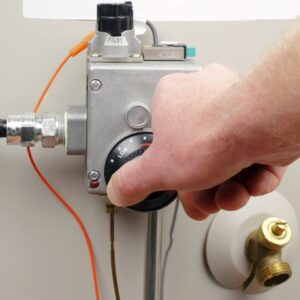
Never Enough Hot Water
If it seems like you never have enough hot water in your home, your water heater may be too small. If you never have enough hot water or your needs for hot water have increased because of a big new soaking tub or high-flow shower head, you’ll probably need to get a new, larger water heater. See our Water Heater Buying Guide.
Be sure to look into tankless water heaters because, with this type, you never run out of hot water.
Not Enough Hot Water Recently
If your water heater supplies less hot water recently (you’ve had enough hot water in the recent past but not now), first check the dial on the water heater, as discussed above. Then continue with the following water heater troubleshooting advice.
Common reasons are:
• Cold weather. In cold weather, your water heater must work harder to heat-up the cold water coming from the water supply. In addition, the water cools more as it travels through pipes that run through unheated spaces. Adjust the water heater to a slightly hotter temperature to make up for the cold.
• A leaking water heater. You’d probably know if it’s leaking but, just in case, check around its base for signs of water. If it is leaking, see Water Heater Is Leaking. Do this right away to prevent water damage.
• Sediment buildup. Over time, mineral deposits collect at the bottom of the water heater. These eventually build up. When they do, they diminish the transfer of heat to the water.
This cuts down on the water heater’s efficiency and its ability to adequately heat the water.
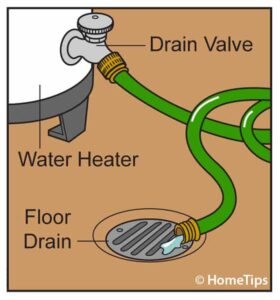
The answer is to flush the water heater tank, which removes deposits. See How to Flush or Drain A Water Heater.
No Hot Water In The Morning
A water heater’s thermostat is actually a temperature probe—a metal rod—that expands and contracts with changes in the water temperature inside the water heater. It is less precise than a furnace or air conditioning thermostat, so temperature swings of up to 30 degrees or more are normal.
Keep in mind that the water sitting in the pipes is cold, particularly in the morning. When you turn on the first shower, that cold water moves to the water heater. But the water heater’s burner hasn’t had time to warm it. So it mixes with the warm water in the tank and travels to the shower head as lukewarm water.
You can try turning up the temperature adjustment valve a little, but be careful not to make the water scalding hot!
Hot Water Has Low Pressure or No Pressure
First, determine whether the problem is with only the hot water or if it is with both hot and cold water.
Low Hot and Cold Water Pressure
If both cold and hot water pressure are low, this low water pressure is caused by:
• A partially closed shutoff valve. Inbound water passes through at least one shutoff valve before it reaches your house. The first one is out by the meter.
See How to Turn Off the Water to a Fixture or the House for locations of various valves. Be sure valves are all the way open by turning them fully counterclockwise. Check all valves.
• Low pressure being delivered by the water company. Call the water department and ask what the water pressure should be at your home.
You can buy an inexpensive water pressure gauge online or at a home center. Screw this onto an outside hose faucet, and open the faucet fully.
Good pressure is between 45 and 55 psi. If your pressure is below 40 psi, it is low. Investigate having a plumber install a water pressure booster. But don’t overdo it: Pressure above 80 psi will cause excessive wear on plumbing.
• Physical restriction in the pipes. Either some of the pipes may be too small or, if they are galvanized steel pipes, they may be clogged with mineral deposits. Replacing pipes is the only answer for this. Call a plumber.
For more, please see How to Solve Water Pressure Problems.
[Ad_content POS]
Only Low Hot Water Pressure
Follow the same advice as directly above, but consider that you’ve narrowed down the problem to hot water pressure only. This means that the cause is somewhere between the water heater and the fixtures.
Most likely, the culprit is a partially closed valve, a constriction such as old steel pipes clogged with deposits or too-small pipes, or a chunk of deposits has broken loose from the water heater and jammed in a hot water pipe.
The next step in diagnosing a low hot water pressure problem is to define where the problem exists. Is it in one area of the house, at the shower in one bathroom, or at the kitchen sink?
Low Hot Water Pressure In Whole House or Several Fixtures
If you have low hot water pressure throughout the house or in an entire area (such as a bathroom), make sure there are no partially-closed valves on the hot water pipes that serve them.
If the pressure drop was sudden, it could be caused by a leak somewhere in the system (see Water Heater Is Leaking). If you don’t find any signs of a leak, figure that the cause is likely a chunk of deposits has lodged in the pipe somewhere.
If the problem is chronic, re-piping is probably going to be necessary to solve it.
Either way, call a plumber.
Low Hot Water Pressure from a Shower Head
Low hot water pressure from a shower head is often caused by limescale mineral deposits clogging the shower head.
Here is how to dissolve mineral deposits in a shower head:
- Fill a resealable plastic bag with equal parts white vinegar and hot water.
- Fit this bag over the shower head so the head is fully submerged, and secure it with rubber bands or a twist tie.
- Allow the solution to dissolve the deposits for several hours.
- Remove the bag, and turn on the shower to rinse the shower head and wash away deposits.
If that doesn’t work, see How to Replace a Shower Head for instructions on how to remove it. Look for a little plastic disc—a flow restrictor. Remove this disc, reassemble the head, and try the shower again.
Low Hot Water Pressure from a Faucet
First look to see whether the faucet has an aerator screwed onto the end of the spout. If it does, unscrew the aerator and rinse out its screen, holding it upside down under a strong stream of water. If you need pliers to break loose its connection with the spout, wrap the aerator with duct tape first so you don’t scar the finish with the pliers.
If the faucet spout shows signs of limescale mineral deposits, dissolve them as discussed above for shower heads.
Another cause of pressure loss in a faucet is misalignment of its interior workings. Please see How to Fix a Leaking Faucet for disassembly and repair information.
Low Hot Water Pressure In a Washing Machine
Turn off the hot water supply valve. Then remove the hot water supply hose from the back of the washing machine.
Check the hose and/or the water inlet valve that the hose screws onto for a small screen that’s meant to catch any debris in the water supply. Using a small screwdriver, carefully pry out the screen. Thoroughly rinse the screen and reinstall it.
Hot Water Is Too Hot
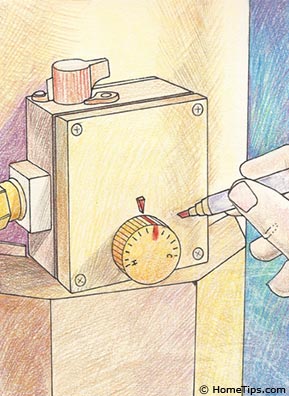
Clearly, the first thing to do if your hot water is too hot is turn down the water heater’s temperature control. Note the present setting (or mark it with a felt-tip pen), and then turn it toward a cooler setting, wait a couple of hours, and see if the problem is solved. If it isn’t, continue with the following water heater troubleshooting advice:
If steam or excessively hot water shoots out of faucets, or you hear boiling sounds inside the water heater, the appliance may not be shutting off at its set temperature. This condition can be dangerous, both because hot water and steam can scald people, and because the water heater could rupture from excess pressure. Note: The sound of water boiling is not the same as a rumbling sound near the base of the water heater caused by mineral sediment being churned by heat.
A high-temperature limit switch down by the viewing door at the bottom of the tank should protect the water heater from overheating. See the video at the top of this article and move to the 18:30 mark in the video to learn how to reset this switch. Push the button of this switch and listen for a click. If it doesn’t work, it will need to be replaced.
The job of the temperature-pressure (TP) relief valve is to release excessive pressure from steam buildup, but the TP valve may have been improperly installed, or it may be faulty.
Check the TP valve. Lift or lower the lever on this valve. Water should drain from the overflow pipe. If the valve is not working, turn down the water heater’s temperature and allow the water to cool, then replace the water heater’s pressure relief valve.
Find A Professional Water Heater Repair Person Near You