Is your AC not working? If your central air conditioner is not cooling right, save money, time, and get comfortable again with these expert DIY air conditioning repair techniques.

If your AC is not working at all:
- Be sure it is receiving power at the electrical panel.
- Reset the equipment’s switches and/or overloads.
- Check the thermostat settings.
- Check the condensate overflow switch.
- Check the capacitor and contactor in the compressor.
If your AC is not cooling but runs:
- Turn off the power.
- Clean or change the air filter to improve airflow.
- Look to see if ice has formed on the coils and, if it has, turn on the power and the fan to melt it.
- Clean the condensate drain.
- Finally, check and clean the outdoor compressor.
Now, In-Depth Answers to These and Other AC Problems:
Several different kinds of problems can occur with a central air conditioning system. We discuss the following common ones below:
- AC not cooling well but runs
- Room temperature too hot or too cold
- Desired set temperature not reached
- Water leaks from air conditioner
- Air conditioner makes strange noises
- Air conditioner won’t turn off

Although a qualified air-conditioning repair person (HVAC technician) should handle certain types of central air conditioner repairs, homeowners can handle a number of problems. You’ll find methods for handling simple repairs and maintenance yourself in this article.
AC problems usually happen in a heat wave, when you need your AC the most and when HVAC repair people are very busy. It really pays to do your own repairs, both in cost savings and in getting your AC system back in working order as quickly as possible.
In addition to the information below, see these two articles for the general care and maintenance of your air conditioner: Preparing Your Air Conditioner for Summer and How to Replace Furnace & AC Filters. Most noteworthy, you should replace the filters at least twice a year, before the heating and cooling seasons. For information on furnace problems, please see Furnace Not Working.
Central AC Not Working At All
If your central air conditioner won’t go on automatically when the thermostat signals the need for cooling:
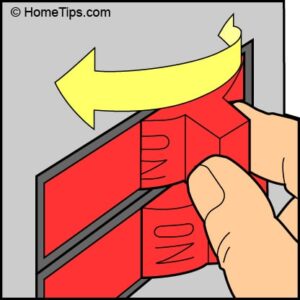
1 Check the main electrical panel and any secondary circuit panels for a tripped breaker or blown fuse. If you find the problem there, reset the breaker by turning it off and then on or replace the fuse. A central air conditioner typically connects to a dedicated 240-volt circuit.
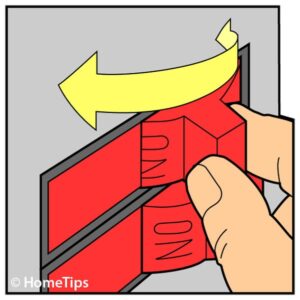
If the breaker continues to trip, suspect a short in the system—in the compressor, capacitor, or the fan motor. Hire an electrician or HVAC contractor to track down and solve this problem.
2 Make sure the thermostat is set to COOL and its temperature setting is at least 3 degrees below the ambient room temperature. If the thermostat doesn’t work at all, you probably need to change the battery or batteries. See Step 4.
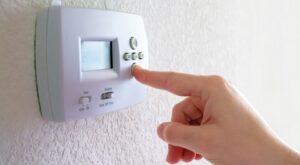
3 Make sure the power is on. Check the switch in or on the furnace or air handler cabinet. Also make sure no one has shut off the compressor’s 240-volt disconnect, typically in a metal box mounted near the compressor.
4 Remove the thermostat’s body after turning off the power to the air conditioner. Separate the body from the base (usually by pulling straight out) and replace the batteries (if it has batteries).
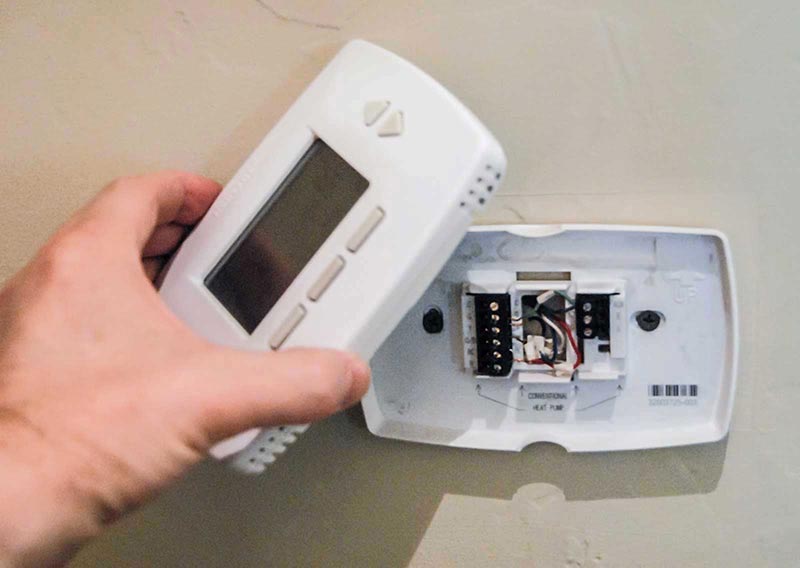
Make sure all wires securely attach to their terminals and that the cover won’t pinch them. Replace the cover and wait 3 or 4 minutes, and then try the system again.
5 If that doesn’t do the job, open the thermostat and unscrew the wire from the Y terminal. Turn the power back on. Holding the wire by its insulation only, touch the bare end to the R terminal and hold it there for about two minutes.
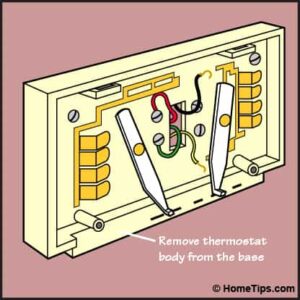
If the compressor kicks on when you do this, then the thermostat is faulty. Replace it as discussed in the article How to Install an Electronic Thermostat.
If the compressor doesn’t go on when you hold the Y wire to the R terminal, turn the power back off and either call a qualified local AC professional or check the capacitor as discussed next.
6 Last but not least, check the compressor’s capacitor and contactor. The capacitor is often the problem.
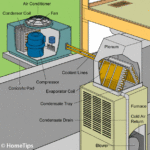
The capacitor (also called a run capacitor) is in the big compressor unit that sits outside (or sometimes on a flat roof). It starts both the condenser and the fan. If the run capacitor has failed, the outside unit will not run.
First, make sure the problem is the capacitor and not the contactor.
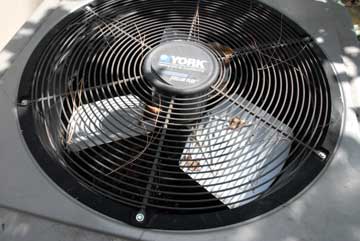
If you hear clicking that is followed by a hum or buzz, you’re probably hearing the fan motor attempting to start without the boost it needs from the capacitor. You can almost always conclude that the capacitor has failed. Sometimes you can get the compressor fan spinning (clockwise) by pushing it with a thin stick or long screwdriver poked through the grille. But the chances are good that this might work for one cycle, but the capacitor will fail next time the AC goes on. It’s best to replace the capacitor.
If the compressor clicks when you turn on the thermostat but doesn’t hum or buzz, the contactor probably needs to be replaced.
If you are an accomplished do-it-yourselfer and can work safely around electricity, you can easily test whether it works and replace it if it doesn’t. (You’ll be happy to know that it is cheap and easy to replace.)
Beware: The capacitor holds an electrical charge even when the power is turned off to the equipment. This is why it is generally best to have an HVAC professional do this repair.
AC Not Cooling But Running
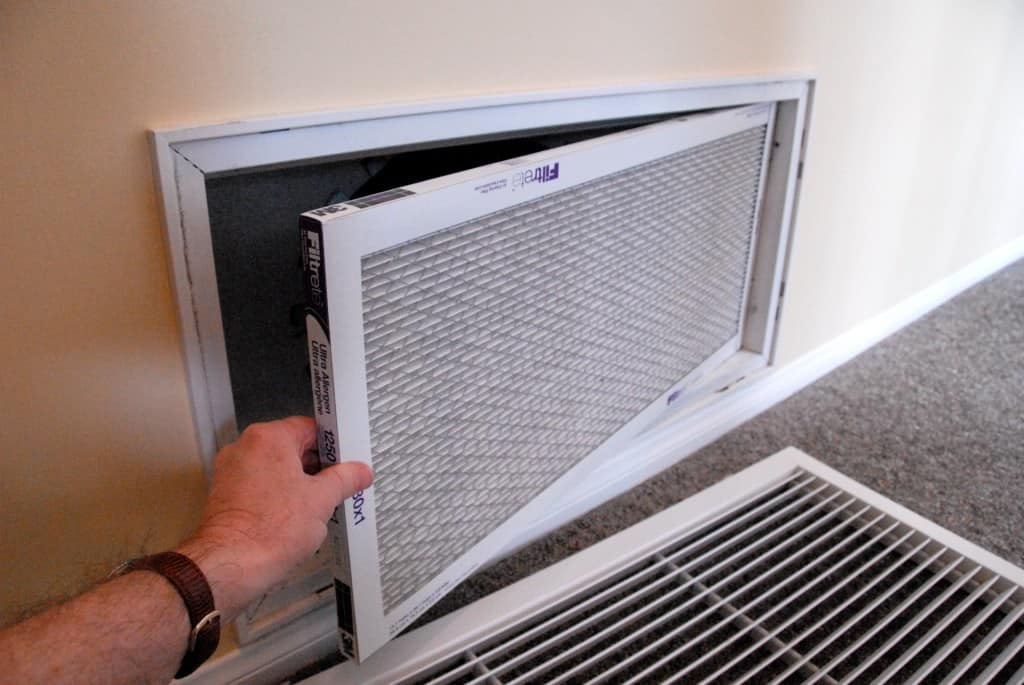
If you can hear your central air conditioner running, but it doesn’t cool well or produce cool air at all, make sure nothing is blocking or limiting air flow anywhere in the system—the air filters, registers, and the compressor (outdoor unit). The problem is often dirty air filters—filters clogged with a buildup of dirt and debris—restricting airflow. For more about filters, see How to Replace Furnace & AC Filters.
Is the thermostat working properly? If you have an electronic thermostat that isn’t displaying any information, its batteries may be dead, or it may be wearing out. Please see Home Thermostat Troubleshooting & Repairs.
If you turn the thermostat to “Cool” and absolutely nothing happens, please see Central AC Not Working At All. This information will also guide you through checking the air handler, clearing the condensate drain, and checking the outdoor compressor.
If you can hear the AC running but it isn’t blowing air, please see Air Conditioner Not Blowing Air.
Does the AC blow air that isn’t cold? If the AC doesn’t blow cold air, this would indicate that the thermostat and the blower motor are operating, but the refrigeration system (outdoor compressor) is not working right or air isn’t circulating properly, usually because of dirty filters. In some cases, the system may be low on refrigerant (sometimes called “freon”). Low refrigerant levels are often caused by refrigerant leaks, which must be handled by an HVAC technician.
A kinked refrigerant line, or a blower fan that isn’t running right can cause this, too.
Next, check the air handler:
How to Check the Indoor Air Handler
1 Turn off the power to the air conditioning air handler or furnace. If the air handler is a gas furnace, turn off the gas at the gas valve that serves the furnace.
2 Remove the door on the front of the air-handler cabinet so you can access the air filter. Pull out the filter and clean or replace it as necessary.
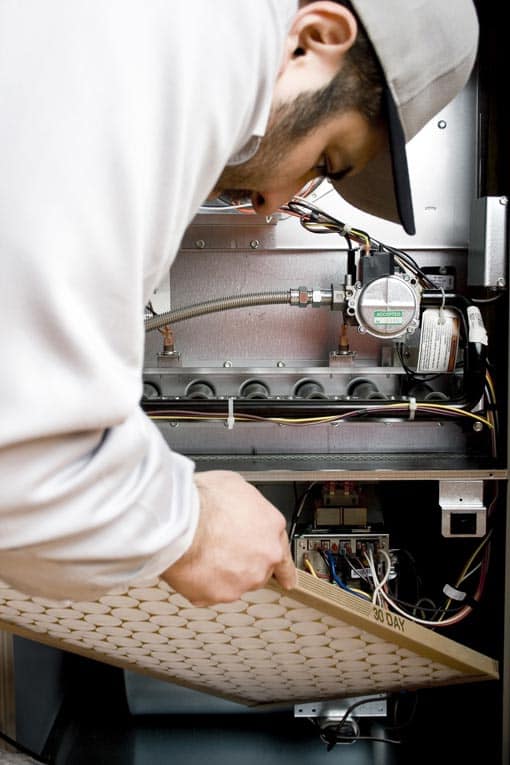
3 Look for ice. If you see ice in the area around the coils, close the indoor unit back up, turn the power back on, and turn on the fan. The ice should melt within an hour or two.
Ice In the AC Air Handler
Only two things cause an AC air handler to freeze up: 1) reduced air flow because of dirty filters, coils, or poorly working fans, and 2) low refrigerant level, which a pro must check and, if necessary, recharge. More often than not, the problem comes from reduced air flow.
Again, be sure nothing is limiting air flow to the HVAC system—the air filters, registers, and the outdoor unit. For more about changing filters, see How to Replace Furnace & AC Filters.
Clear the Condensate Drain
Air conditioners can create a lot of water because they remove moisture from the air. To get rid of this, they have a [usually plastic] drain pipe that comes out of the side of the air handler. Over time, algae can block this pipe and, when it does, the AC won’t work. In fact, some condensate drains have a float switch that won’t let the AC run if water backs-up. Water can also puddle around the air conditioning unit or flood the area. To deal with condensate problems, please see Air Conditioner Leaks Water, below.
How to Open, Check & Clean the AC Compressor (Outdoor Unit)
If your central air conditioner will not cool but you can hear it running, it may just need to be cleaned. Whether or not this is the cause of the problem, it’s a good early remedy to try. Plan to do this on a relatively warm day. Never use a power washer for this—it can damage the fins. The following are guidelines; always refer to your owner’s manual. Note: Always turn off the power before cleaning the unit.
This is the best video we found to give you a brief overview of the process. We like this video because it shows how to clean the unit from the inside—not how to simply wash-down the coils from the outside.
The video below gives you a little more information about how to get the top off the compressor:
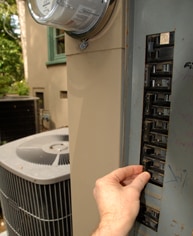
1 Turn off the power to the AC unit. There is normally a shut-off or disconnect panel on the wall next to the outdoor compressor. Also shut off the air conditioner’s 240-volt circuit at the main electrical panel. Also shut off power to the indoor air handler or furnace and verify that the power is off.
2 Rake leaves and debris away from the outdoor condenser. Trim any bushes that might block airflow.
3 Unscrew and remove protective grilles and the top cover or grille from the compressor. If the fan is attached to the grille, be careful not to pull any wires loose.
4 Use a soft brush to clean dirt and debris from the fins, and then vacuum the fins with a brush attachment (taking care not to damage them).
5 Use a hose and nozzle with a trigger grip to spray debris from the fins (from inside the unit). Protect the wiring and motor from water with plastic sheeting or a large plastic garbage bag. If your owner’s manual calls for lubricating the motor, do that now—but don’t over-lubricate.
6 Reassemble the unit. Just reverse the disassembly steps given above.
7 To test it, turn the thermostat to OFF, reset the power at the disconnect next to the compressor and the main panel. Set the thermostat to a temperature below the room temperature, and then switch it ON. To avoid straining an air conditioner’s compressor, wait at least five minutes between turning it off at the thermostat and turning it back on. You should hear the outdoor compressor run and see the fan turning inside the top. If the fan isn’t turning, look for an overload button or switch to reset (not all types have this).
If your compressor doesn’t have an overload button and you hear it humming or buzzing, poke a screwdriver or stick down through the top grille and try to spin the fan blades clockwise. If doing this gives the fan enough of a boost to get it going, the unit has a faulty capacitor that must be replaced. See How to Test and Replace an AC Run Capacitor, above.
Let it run for a few minutes, and then feel the two pipes that connect the condenser unit to the air handler (slide any insulation back). One should feel warm, the other cool.
8 Finally, have the coolant checked. If none of these steps worked, the coolant may need recharging by an air conditioning professional. Call a qualified local AC professional—this is not something you can do yourself.
If your room has dramatic swings in temperature before the system kicks on, see Room Temperature Too Hot, Then Too Cold.
Air Conditioner Not Blowing Air
If your AC doesn’t go on at all when you set the thermostat for a cooler-than-room temperature, please read Central AC Not Working At All, above. Then, if you have fairly good DIY skills and a digital multimeter, go through the diagnostic steps in this video to determine whether the problem may be a condensate pump switch.
If Your Air Handler Doesn’t Blow Air Properly
If the air handler doesn’t blow air properly, the indoor evaporator coil may be dirty or frozen up. Reduced air flow, whether caused by dirty filters, a dirty coil, dirty squirrel cage blower, or a broken fan motor can cause the coil to freeze up, blocking air flow.
If your air handler’s motor runs but the blower doesn’t move air, the belt that connects the two probably has broken. Replacing it is an easy fix if you have a few tools and do-it-yourself skills.
Replacing an AC Blower Belt
Here’s how you can replace the air conditioner’s blower belt:
1 Turn off all power to the unit and, if the air handler is a gas furnace, turn off the gas at the gas valve that serves the furnace.
2 Remove the door on the front of the air-handler cabinet to give you access to the blower (it might be on a slide-out drawer.) Check the number stamped on the belt and get an exact replacement from a home center or heating supply outlet.
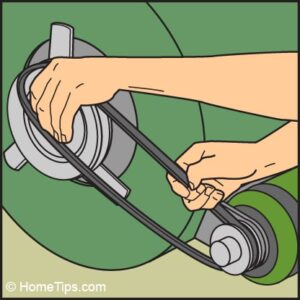
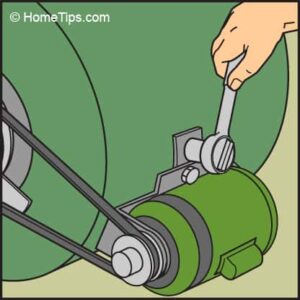
3 You can usually slip the belt onto the motor’s (smaller) pulley first and then start it on the blower pulley, as shown here. Rotate the blower pulley by hand, holding the belt in place but keeping your fingers from getting caught between the belt and the pulley.
The belt should slip right into place. If it seems to be too tight or difficult to set in place, it may be necessary to adjust the motor mount to provide more slack. Then you can re-tighten the tension once the belt is in place. Check the manufacturer’s specifications for proper tension—in most cases, the belt should deflect about an inch when you press down on it.
4 Lubricate the blower. Finally, some blower motors need oiling. Note: Those with sealed bearings don’t. If recommended by your maintenance manual, oil the bearings according to the manufacturer’s directions.
AC Blower Hums But Doesn’t Run
If the air handler’s blower motor hums but doesn’t run, you’ll probably need to replace the blower motor. This video shows how to replace the motor.
AC Air Handler Doesn’t Run
If the air handler doesn’t run at all, it may not be receiving power. Check its circuit breaker, and any switch that controls it at the air handler or furnace cabinet.
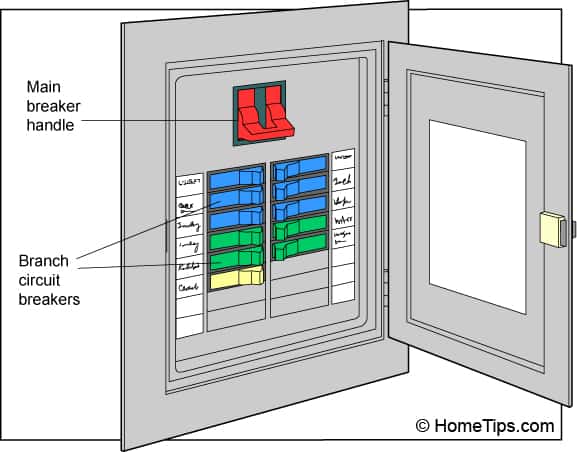
Then check the door switch—a small switch inside the metal door that prevents the appliance from running when the cabinet is open.
Also check the thermostat. For more, see Central AC Not Working At All, above.
Water Leaking from AC
Air conditioners and high-efficiency combustion furnaces create significant condensation—we’re talking about a lot of water, especially in humid climates—several gallons per day.
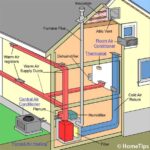
Consequently, this water must exit the air handler—typically through plastic pipe or a drain tube. That drain tube goes directly outside, often terminating near the compressor, or to a floor drain or to a small electric “condensate pump” located by the air handler. Where a condensate pump is used, it connects to a 1/2-inch vinyl or rubber tube that exits outdoors or to a drain.
Water at the Base of the Air Handler
Water dripping or pooling at the base of the air handler indicates: 1) a leak from one of the plastic pipes or tubes that carry it, 2) something may be blocking the water’s flow, or 3) the condensate pump may not be working. If the pump stops working, it will overflow.
Condensate Float Switch & Pump
On some air handlers, the condensation drainpipe has a small safety float switch (see photo) connected to it. If the drainpipe backs up with water, the float switch will shut off the air conditioner. This is a sure sign that it’s time to clear the condensation drainpipe.
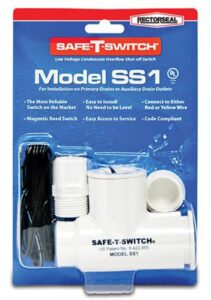
1 If your system includes an electric condensate pump, make sure it is connected to a working electrical outlet. Then look to see if the tubing that carries away the water has come loose from the pump. If it has, reconnect it.
More likely is the possibility that the tube or the pump is clogged with algae. If this is the case, use a wet-dry vacuum to suck all of the water out of the tube. In some cases, it might be easier to replace it with new 1/2-inch tubing purchased online, at an HVAC supply shop, or at a well-stocked home improvement center.
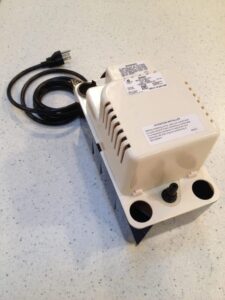
2 Test the pump by pouring water into its collector. The pump, which is turned on by an inner ball float that rises with the water level, should start.
A stuck or broken ball float won’t rise. If it’s stuck, disconnect the pump from the power and from the inbound tubes, disassemble the top, and clean it out thoroughly. With an old or broken float, you’re probably better off replacing the condensate pump so you don’t have to do this again in the near future.
To kill algae, pour a dilute solution of bleach (1 part bleach to 16 parts water) into the pump’s trough and pump it out through the tube. Don’t do this on you lawn—it will kill the grass.
3 If the pump runs but doesn’t empty the trough, the ball-like check valve just before the discharge tube is probably stuck. Unscrew the check valve, loosen the ball inside, and look for an obstruction and a build-up of algae.
If it appears that a condensation drain tube is clogged with algae, remove it if possible (you may have to cut it and replace it later with a coupling). Blow it out or run a wire through it to clear it—or, better still, replace it with new tubing.
4 Ice may be blocking the tube. If this is the case, clean or change your AC filters. If the filters appear to be fine, the air conditioner’s refrigerant supply is probably low. Call a qualified local AC technician to have the unit recharged.
For more about filters, see How to Replace Furnace & AC Filters.
Air Conditioner Makes Noise
Noises sometime occur in the indoor air handler, the outdoor compressor, or the ductwork.
Air Handler or Furnace Makes Noise
Problem noises in an air handler (or furnace cabinet) are squealing, grinding, and buzzing.
AC air handler squealing or grinding noises. Though most air handlers have direct-drive motors, some older units may be belt-driven. Squealing sounds from a belt-drive air handler generally occur when the belt that connects the motor to the blower slips. In most cases, the belt is improperly aligned or worn and needs replacement. Follow the instructions above under Air Conditioner Not Blowing Air and refer to your owner’s manual.
If a direct-drive blower is squealing or making a grinding noise, shut off the unit and—unless you’re an accomplished do-it-yourselfer—call an HVAC professional—the motor’s bearings are probably shot. If you can handle this type of work, you can order and replace the motor.
AC air handler buzzing sounds. Do you hear a buzzing sound when you turn on the thermostat? The only thing that comes on in the house when you turn on the thermostat is the fan relay and fan in the air handler or furnace. Try switching the thermostat HEAT/COOL switch to OFF. Then switch the fan switch from AUTO to ON. The fan (only) should come on. If the air handler makes a buzzing sound, it probably has a bad fan relay or, more likely, blower fan.
Outdoor AC Compressor Makes Noise
Outdoor compressors sometimes make buzzing, humming, or grinding noises.
AC compressor buzzes. If the outdoor AC unit makes a buzzing sound, as though it wants to turn on but can’t, the run capacitor may be defective. If that capacitor goes bad, the motor will overheat when it tries to turn on but can’t get started. When the motor overheats, a thermal overload switch will shut it off.
When it buzzes, poke through the grille with a long screwdriver or stick to try to spin the fan clockwise (be careful!). If it starts spinning, it will run for one cycle but then stop working again. This indicates that the capacitor is bad and needs to be replaced. (See How to Test and Replace an AC Run Capacitor, above.)
AC compressor hums. If the outdoor compressor hums when you switch the thermostat to COOL, the problem could be a bad capacitor, as discussed immediately above, or the low voltage transformer on that unit—something that would need to be checked by a pro.
AC compressor grinding noise. Over time, the bearings in the motor can wear out. The result is a grinding sound and, in many cases, the motor will overheat and shut off. When this happens, it’s time to replace the motor.
Noisy Ductwork
Many heating/cooling ducts are metal so they conduct noise quite readily from the air-handling unit to your rooms. To break the conduction of sound, you can have a heating contractor insert flexible insulation ductwork between the heating/cooling system and the metal ductwork.
Get an HVAC pro now
Ductwork pinging or popping. If you hear a pinging or popping sound coming from metal ductwork, this may be caused by thermal expansion or by air blowing past a loose flap of metal. Track along the duct runs, listening for the sound. If you find it, make a small dent in the sheet metal to provide a more rigid surface that’s less likely to move as it heats and cools.
Furnace or air handler rattling ductwork. If the furnace makes rattling noises when it runs, be sure the cover panels are screwed on tight. If they aren’t, tighten them.
Air Conditioner Won’t Turn Off
If your AC doesn’t turn off when room temperature reaches the temperature set on the thermostat, the problem is generally occurring either at the thermostat or in the electrical system that runs the outside condensing unit. You can use the AC’s circuit breaker to shut off the unit, but that should not be a permanent solution—circuit breakers are not designed to be used like light switches.
If the thermostat is blank—not displaying any values—or if the AC shuts off when you switch the thermostat to HEAT, the thermostat is probably broken and needs to be replaced. Please see Home Thermostats Buying Guide.
If the thermostat works fine with the furnace, the issue probably isn’t the thermostat unless one of the wires has disconnected or arced. When the AC is running, try removing the yellow low-voltage wire from the thermostat. Then:
If the unit turns off, either the thermostat is broken or it is wired improperly. Make sure it is wired correctly—with no cross-connected wires. If the wiring appears to be okay, buy a new thermostat and install it according to the instructions.
If the AC doesn’t turn off, it may be time to clean the condensing unit. Dirty condenser coils won’t give off heat efficiently and will keep the unit running. Another possibility: The contacts on the outdoor run relay may have welded together—something that can happen over time because of frequent electrical arcing at the relay. Before checking the run relay, turn off the power to the furnace and the condensing unit. Next, disassemble the relay and pry apart the contacts. This should do the trick until you buy a replacement—which you should do soon.
More Answers Below!
Hey, if we didn’t answer you question yet, check the conversation board at the bottom of this page…lots of new answers and help there!
Getting the Work Done
By keeping your AC unit working well, you can save energy and, as a result, money. If a central air conditioner is in ill repair, it probably won’t work when you need it most.
If you would rather hire an air-conditioning pro to inspect and maintain your AC equipment, HomeAdvisor’s FREE service will help you qualified local AC professional.
NEXT SEE:
• Central AC Overview
• How to Prepare and Clean Your Central Air Conditioner for Summer
• How to Replace Furnace & AC Filters
• Central Air Conditioner Buying Guide
• How Your Home’s Heating & Cooling System Works
• Buying the Best Window Air Conditioner or Room AC Unit