Diagrams and helpful advice on how kitchen and bathroom sink and drain plumbing works

Kitchen and bathroom sinks are connected to a home’s water supply system, which supplies the faucets, and to a home’s drain-waste-vent (DWV) system for the drains. Both kitchen and bath sinks operate very similarly; the main difference is that kitchen sinks are designed to be hooked up to more fixtures than a faucet, such as a water filter, a garbage disposal, and a dishwasher. Most bathroom sinks just have a faucet and a drain.

How a Sink Drain Works
A sink drains by way of several components. Kitchen sinks and bathroom sinks are slightly different.
Kitchen Sink Drains
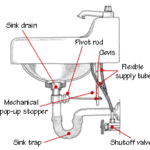
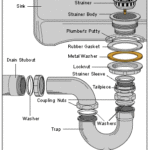
Kitchen sinks have a strainer fitted into a strainer body that’s inserted down through the sink hole and sealed to the sink with a bead of plumber’s putty. Beneath the sink, the strainer body connects to the drain’s tailpiece and the rest of the drain plumbing. A garbage disposal, if there is one, mounts directly to a special strainer body. (See How a Garbage Disposal Works.)
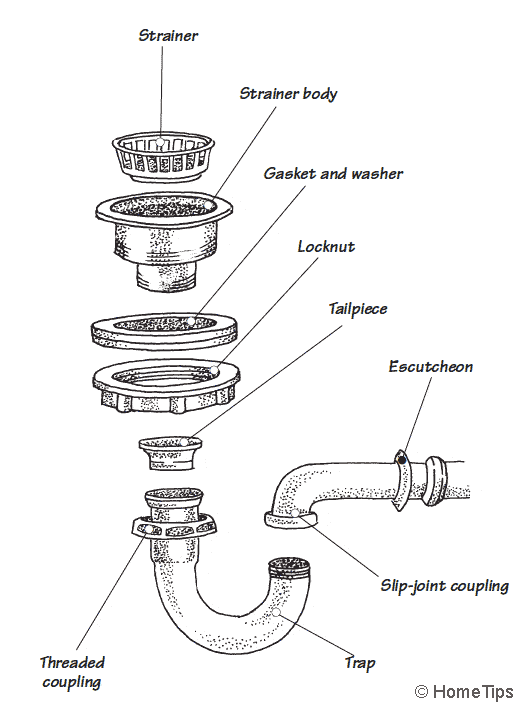
Underneath the sink, a rubber gasket, metal washer, and large locknut or retainer tightens the body to the sink. A straight tailpiece mounts to the strainer body with a threaded coupling. Slip-joint couplings connect the tailpiece, the main parts of a drain trap, and a short threaded nipple at a tee in the drainpipe. At the wall or the back of the cabinet, a trim piece called an escutcheon hides the connector and the nipple. Waste water exits through the trap and down the vented drainpipe to the main stack.
Bathroom Sink Drains
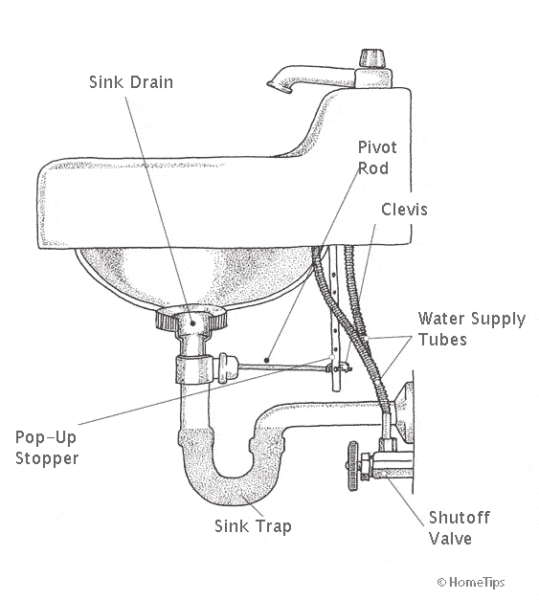
Most bath sinks don’t have a strainer, but they do have a pop-up stopper so the sink can be easily filled with water. The pop-up stopper fits into a drain body that is connected just like a kitchen sink’s strainer body, as shown at right. (For more information, see Bathroom Sink Plumbing.
What Is a Sink Trap?
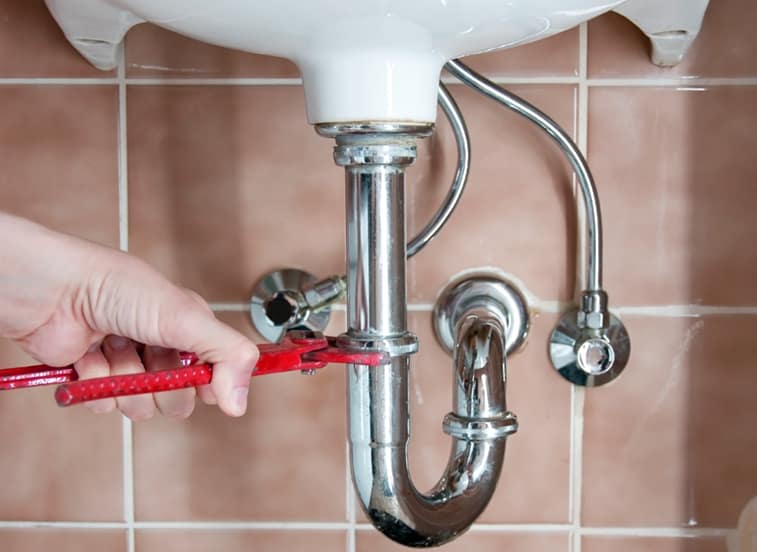
A sink trap is a J-shaped pipe beneath a sink, designed to trap noxious sewer gases before they enter the house. The most common trap is sometimes called a P-trap (because it’s shaped like a P that has fallen face down).
When water runs down a sink drain, it moves through the trap and exits out the drainpipe. But because the drainpipe exits at a higher level than the curved portion of the pipe, some water is captured and held in the trap’s curve. This water provides a seal, blocking sewer gases from rising up through the sink drain. Every time you use the sink, the water in the trap is replaced.
The trap is connected to the sink drain’s tailpiece and the drainpipe with threaded couplings. A large rubber washer beneath each coupling provides a watertight seal.
If a sink becomes clogged—or if you drop a small object down the drain—the first place to look for the clog or the lost object is in the easily removed trap (be sure to put a bucket underneath before disassembling the pipes). Some traps have a clean-out plug at the bottom so you don’t even have to remove the trap.
Get a Pre-Screened Plumber Near You